

Audio By Carbonatix
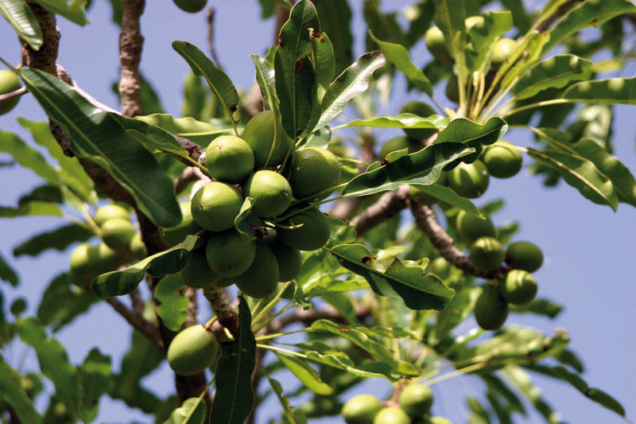
The Global Shea Alliance (GSA) and Food and Agriculture Organization of the United Nations (FAO Regional Office for Africa), have released a study which underscores the shea tree’s potential to mitigate climate change in West Africa.
The study found that, at present, the shea value chain fixes 1.5 million tons of CO2 every year in West Africa.
Relative to production volumes, every ton of shea kernel produced has a negative carbon footprint of 1.04 tons of CO2.
The study, titled ‘Shea Value Chain as a Key Pro-poor Carbon Fixing Engine in West Africa’ evaluated the shea value chain’s contribution to climate mitigation, climate resilience, and socio-economic impact. The research leveraged the EX-ACT Value Chain tool (EX-ACT VC), developed in 2016 by the FAO.
According to the study, increasing the tree population by 7 million trees per year over 14 years raises the CO2 fixed to about 9 million tons per year, leading to an aggregated carbon fixing impact of 180 million tons of CO2e over 20 years. The net present value of this investment is $1.9 billion, resulting in an internal rate of return of over 100% when accounting for both public and private investments.
The report affirmed the shea value chain as a critical income generation activity for women in rural areas. In 2018, every day of work generated $ 1.9 of value-added for women.
Overall in the region, the value chain has an annual gross production value of about $284 million and a value-added of $203 million, which is mostly captured at the local production level by women collectors and local processors.
Improvement of collectors’ productivity and shea parkland expansion can increase the gross income per woman collector to $167 per year, or $2.30 value-added per day of work, factoring seasonality.
President of the Global Shea Alliance, Badiè Marico, in acknowledging the value of shea, observed, "Investing in shea value chain is the key to ensuring a better world for future generations. While the world is looking for innovative and sustainable solutions to protect our planet, I would like to invite both the public and private sectors to join forces to protect and regenerate our shea parklands.’’
Policy support Economist at the FAO Regional Office for Africa, Louis Bockel (PhD) said, “Functioning partnerships, like FAO-GSA, are drivers to addressing worldwide issues. FAO is proud of contributing to unveiling the shea value chain as a pro-poor carbon fixing engine in West Africa.’’
Latest Stories
-
Prof. Mike Oquaye recounts how he blocked Special Prosecutor’s attempt to arrest Bawku Central MP
10 minutes -
Make health sovereignty a priority for Africa – Mahama
22 minutes -
Dorimon Naa, Wa West DCE lead massive clean-up exercise; threaten sanctions against recalcitrant residents
39 minutes -
Photos From Adom FM Y2K Jam
42 minutes -
Praye Tiatia steals the show at Adom FM Y2K Jam [Watch]
50 minutes -
Boakye Agyarko congratulates John Boadu, pledges support for NPP leadership
1 hour -
Antwi HiMight thrills fans with Antwi ne Antwi hits at Adom FM’s Y2K Jam [Video]
1 hour -
Amb. Edward Boateng congratulates Boadu, Kodua on election wins
2 hours -
John Boadu pledges to rebuild NPP from grassroots and restore ‘winning machinery’
2 hours -
Ashaiman Assembly deploys monitoring system to curb dumping in storm drain
2 hours -
John Boadu must rebuild, unite NPP for 2028 – Edward Boateng
2 hours -
Executive intimidation of opposition undermines separation of powers – Prof Oquaye
2 hours -
I have no issue with John Boadu; we’ll work together – Justin Kodua
3 hours -
Adom FM Y2K Jam delivers a night of music, fashion and nostalgia
4 hours -
Lawrence Kobena Nsarko Otoo, Esq
5 hours