

Audio By Carbonatix
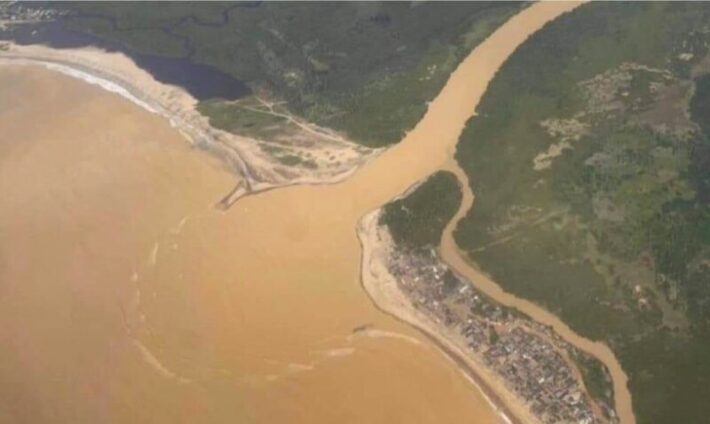
The Deputy Director at the Ministry of Sanitation and Water Resources has stated that Ghana’s new water policy will help address the illegal mining ‘galamsey’ menace.
Kwaku Quansah said the nation could not continue to allow its water bodies to be polluted with heavy metals, and therefore, called on those involved to stop mining in these rivers, to save them for posterity and the future.
Mr Quansah stressed that if the current rate of pollution continued, the country would have no option but to import water, which would be very expensive for Ghanaians.
The Deputy Director disclosed this to the Ghana News Agency in Ho at the just-ended MOLE XXXV WASH conference.
The conference was organised by the Ghana Coalition of Non-Governmental Organisations (CONIWAS), on the theme: “Looking Back on SDG Six Implementation in Ghana: Progress, Challenges and the Way Forward”.
Mr Quansah said another important area the Ministry wanted the new water policy to work on was the increasing cost of water in rural areas.
“The critical challenge that we want the new policy to address is the fact that some Ghanaians who live in the rural areas are paying more for water than the urban areas.
“Since water is a public good there is the need to reverse it by increasing access to water for all,” he said.
The Ministry of Sanitation and Water Resources has outdoored the 2024 Water Policy which is a revised version of the 2007 document and sought to look at issues on sustainable financing to bring on board Small Water Enterprises.
He said this would help the enterprises to play their roles effectively and support the delivery of water for all Ghanaians.
Again, the 2007 Water Policy was able to achieve the Millennium Development Goals, (MDGs) far before the end of the MDG period.
Mr Quansah was of the view that with concerted efforts and with everyone on the table even in the midst of all the challenges facing the sector, they would implement the new water policy to be able to serve water to all.
Some topics that were discussed at the conference included; policy and sustainable financing for WASH and building community resilience through water resources management and Leveraging Local Government -led partnerships to reach the last mile.
Others were looking back on the implementation of SDG six: progress, challenges and way forward; the role of the Parliamentary Select Committee for WASH in accelerating progress institutional framework among others.
Latest Stories
-
Kenya confirmed hosts of World Athletics Championships 2029
4 minutes -
No more pothole ambulance rides: Mahama’s roads will change lives – Agbodza tells Upper West farmers
29 minutes -
‘Physically better’ Kudus can start against Liverpool – De Zerbi
34 minutes -
Bonsu Baah sets up opener in Al Qadsiah win over Al Wasl
48 minutes -
Ghana has now become a distribution hub for drugs
1 hour -
Africa Nations Volleyball Championship: Ghana’s Black Spikers leave for tournament in Tunisia
1 hour -
Today’s Front pages: Tuesday, September 15, 2026
2 hours -
Auditing the Auditor-General: How special audit understated a COVID-19 expenditure
2 hours -
A Partnership for Progress: Why the ProMark–KPMG collaboration matters for Africa’s digital assets future
3 hours -
Catholic Bishops pressure gov’t to sign long-delayed mission schools agreement
4 hours -
Cedi under fresh pressure as Christmas import demand drives dollar surge
4 hours -
Ato Forson eyes first-week November for 2027 Budget, promises jobs and major infrastructure push
4 hours -
Catholic Bishops demand probe into ‘protocol admissions’ amid SHS placement challenges
4 hours -
SHS placement: Catholic Bishops demand probe into alleged payments for school places
5 hours -
Facts about Nigeria’s Dangote oil refinery Initial Public Offering
5 hours