

Audio By Carbonatix
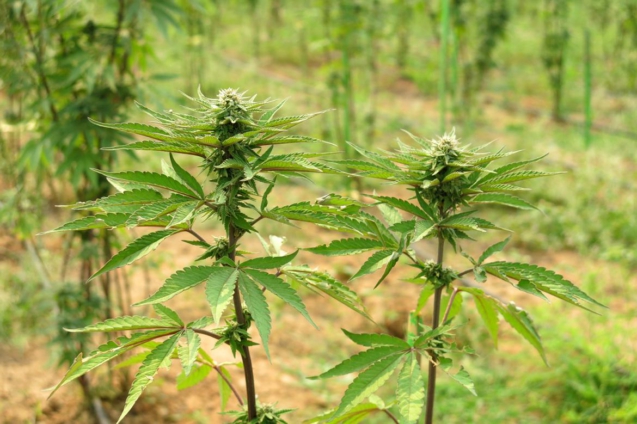
Parliament has passed into law the Narcotics Control Commission Bill 2019, legalising the growing of some cannabis for health purposes.
The Narcotics Control Commission Bill, 2019 which transforms the Narcotics Control Board (NACOB) into a commission with enhanced powers was passed late Friday night.
It empowers the Minister for Interior in consultation with other institutions like Ministry of Health to grant licenses for the production of cannabis of not more than 0.3 per cent Tetrahydrocannabinol (THC) for industrial and medicinal purposes.
THC is one of the about 113 chemicals found in cannabis.
It, however, does not give a blanket license for the growing of cannabis in the country.
“It is illegal to grow or posses cannabis without a license. And also growing cannabis of more than 0.3 per cent THC (the one people smoke) remains illegal,” Kunbungu MP Ras Mubarak clarified after parliament approved the bill.
He urged members of the public to respect the law and desist from abusing it.
“Parliament hasn't legalized cannabis for smoking. Possession of cannabis without lawful authority remains illegal.
"What we have approved is a different strain of cannabis, and vastly different from recreational cannabis which has more than 0.3 THC. This is not a license to smoke,” Mr Mubarak cautioned.
“There are real concerns about abuse. What we have approved is not the type people smoke. So those who are worried can be rest assured.
"And the law provides for stiffer punishment for people who cultivate or possess without lawful authority,” he added.
“What we have approved is not recreational marijuana. It's important for people to understand the difference.
"As a country, we have to follow the science and numbers for the good of our country,” Mr Mubarak said.
The bill also gives the narcotics Control Commission the mandate to control and eliminate trafficking of prohibited narcotic drugs to ensure public safety and oversee the rehabilitation of people who become addicted to drugs.
The bill also ensures drug abuse will be treated as a public health issue and not only a law enforcement one.
The bill will now go to the president for assent before it becomes law.
Latest Stories
-
GNFS rolls out automated fire compliance system
1 minute -
SOE profit at GH¢19.8bn: I call it a miracle, but it’s not operational efficiency – Dr Atuahene
3 minutes -
SHS violence: Government must review discipline policy – IFEST
11 minutes -
Nana Akomea leads NPP First Vice Chairman race in new poll
16 minutes -
Ato Forson begins groundwork for Mahama’s $10bn New Economy agenda
19 minutes -
SHS violence: Peter Anti demands intelligence-led security in schools
22 minutes -
‘Presidents can’t have unfettered powers’ – Sophia Akuffo
23 minutes -
Kwame Agbodza cuts Wenchi-Bole road contracts by 25km over slow work
29 minutes -
Ghana’s borrowing costs plunge as inflation eases sharply – World Bank
35 minutes -
Unnecessary appeals delaying justice – Sophia Akuffo calls for tighter Supreme Court limits
41 minutes -
Breastfeeding can reduce breast cancer risk – but it does not rule out the disease
48 minutes -
Kadjebi gets Farmer Service Centre
1 hour -
Aspiring NPP national first vice chairman pledges hard work to return party to power
1 hour -
Gov’t seeks additional funding for Damongo Science and Technology University
1 hour -
Suame Municipal Assembly constructs police station at Maakro
1 hour