

Audio By Carbonatix
The first full day in power of Nigeria's new president has seen people panic-buying fuel following his decision to scrap a decades-long subsidy on petroleum products.
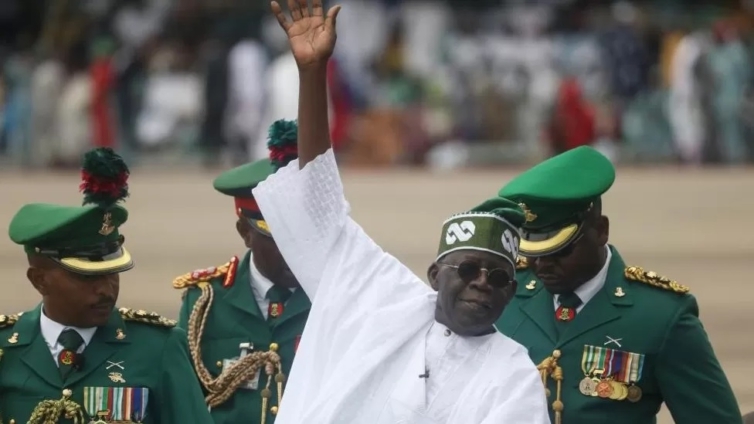
In Monday's inaugural address, Bola Tinubu said the subsidy was "gone".
But he gave no timeframe or any more details of this major policy move.
On Tuesday, his team clarified that he meant the end of June and that the panic buying was "needless", as the policy will not take immediate effect.
President Tinubu wants to ease pressure on government finances, but ending the subsidy will increase the cost of petrol and hit other prices too, at a time when inflation is already high.
In response to his comments on Monday, many filling stations hiked the petrol price, while others stopped selling altogether.
Nigeria's state-owned oil company, the sole importer of petroleum products, assured the public that it had enough supplies.
But this did not prevent the panic-buying, with most people fearing a drastic rise in the price of petrol, which should be sold at the regulated price of 185 naira per litre (32p, 40c).
Some people have posted videos online of filling stations already increasing prices, in some cases by more than 200%.
Some drivers of private buses, which many Nigerians rely on to get around, have also been unable to fill up their vehicles.
This has left people stranded at major bus stops in the capital, Abuja, and the country's biggest city, Lagos.
Despite its oil wealth, Nigeria is unable to refine enough crude to meet local demands, so it imports petroleum products, which are then sold at a government-set price.
But the subsidy is a huge drain on public finances. Last year, it gulped 4.3trn naira ($9.3bn; £7.5bn) and for the first half of this year, 3.36trn naira was budgeted for it.
On Monday, Mr Tinubu said It could no longer be justified and that the funds would instead be spent on public infrastructure and to improve the lives of people.
But the subsidy has long been seen by many Nigerians as one of the few perks they receive from the state.
The last attempt to remove it in 2012 led to nationwide protests and then President Goodluck Jonathan had to perform a policy U-turn.
So far, a powerful association of those who sell petroleum products has come out to say it does not support President Tinubu's plan. It said the new government should begin a dialogue before taking the decision.
The spokesman of the Independent Petroleum Marketers Association of Nigeria, Ukadike Chinedu, is quoted by Nigeria's Punch newspaper as saying that the move will cause "galloping inflation and inflict more hardship on the masses".
Latest Stories
-
3 Co-wives, 5 children perish in canoe disaster – Maritime Authority insists life jackets use mandatory for all water transport
8 minutes -
Iran war lands ‘triple blow’ to flood-ravaged Sri Lankans
42 minutes -
Gunmen kill at least 11 people at Afghanistan picnic spot
56 minutes -
Woman, 25, in court for stealing baby at Bogoso
57 minutes -
Trump unveils giant gold-accented victory arch design for US capital
60 minutes -
We spoke to the man making viral Lego-style AI videos for Iran. Experts say it’s powerful propaganda
1 hour -
Hungarians vote in big numbers on whether to end Orbán rule and elect rival
1 hour -
At least 30 feared dead in crush at Haitian tourist site
1 hour -
Boxing: Abdul Ahmed wins WBA Africa Cruiserwight title after dispatching Nigeria’s Eradeye
1 hour -
Nearly 2,000 displaced, schools damaged as windstorm wreaks havoc in Gushegu
2 hours -
Ghana’s Derrick Kohn to work under Marie-Louise Eta as she becomes first woman to coach men’s Bundesliga team
2 hours -
Accra Open Championships conclude with strong performances ahead of African Championships
2 hours -
Ghana to begin camping with 12 athletes after Accra Open Championships – Bawa Fuseni
2 hours -
Anthony Joshua declines showdown with Tyson Fury but admits they ‘probably’ clash next
2 hours -
Tyson Fury dominates Makhmudov, calls out Joshua next
3 hours