

Audio By Carbonatix
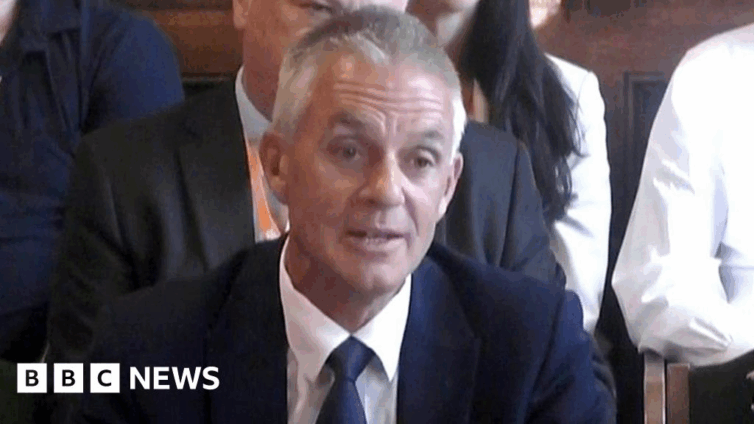
BBC director general Tim Davie has said "no one is irreplaceable", following a series of high-profile scandals at the corporation over the summer.
Davie and BBC chair Samir Shah faced questions from the Culture, Media and Sport Committee on a wide range of issues, including culture at the BBC, its Glastonbury coverage, its Gaza documentary and the MasterChef crisis.
Shah told MPs that he was determined to "stamp out" bad behaviour, adding: "It doesn't matter how grand you are, how famous you are, how important you are. If you behave badly and abuse your power, we don't want you working for the BBC."
Asked by MPs to guarantee there would not be another "scandal of BBC talent abusing their position", Davie replied: "I don't think you can change culture in six months and suddenly say nothing's going to occur... we may see more things coming out."
Davie added he was "not letting anything lie" when it came to rooting out abuses of power within the corporation.
The director-general said: "No-one's irreplaceable, we're all dispensable. That's an absolute, unequivocal position being given to the whole BBC."
He said he would not be offering a "running commentary" on whistleblowing, adding: "I don't think it's right for me to talk about the specifics of what the whistleblowing team are dealing with day to day."
Asked if he had considered resigning in light of the scandals, Davie said the job of director-general was "not for the faint-hearted".
"If I said I wasn't feeling the pressure, I think I'd be inhuman," Davie said. "When you're in these jobs, you should be held accountable.
"We want to grip the issues, that's at the forefront of our minds," he added.
During the hearing, the two BBC chiefs discussed some of the changes that have been made to how abuses of power are dealt with following a recent review into the BBC's workplace culture.
Davie told MPs: "There are consequences, we are not mucking around now.
"You have to be clear and you have to be fair, but if you're not living the values, it is clear you leave the BBC or there are consequences."
He noted the report had shown that the BBC does not have "a toxic culture". But he also said there were "pockets where things were not right".
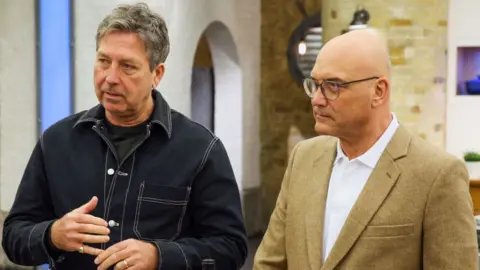
One of the topics discussed was the recent MasterChef crisis, after both of its presenters - Gregg Wallace and John Torode - were sacked following a report which upheld allegations against them.
Asked about poor workplace culture, Davie said he thought "we're at a moment in society where we're calling it out".
The 58-year-old added that the "vast majority" of chefs on MasterChef wanted its latest series to be broadcast, despite it being filmed when Wallace and Torode were still presenters.
It comes after two of the participants asked to be edited out following the allegations against Wallace and Torode.
"I think it was on judgment the right thing to do, but I understand that you could see both sides of the argument very clearly," Davie said.
"I think the consequences for the individuals who presented MasterChef have been very significant; they're no longer working with the BBC, so there are those consequences.
"The other thing in my mind is people can choose to watch it or not, so there's an element of trust in the audience."
MPs also asked the BBC chief about the corporation's coverage of Glastonbury.
The BBC has faced strong criticism for a live broadcast of Bob Vylan's performance at the festival, during which the band's singer led crowds in chants of "death, death to the IDF [Israel Defence Forces]" and made other derogatory comments.
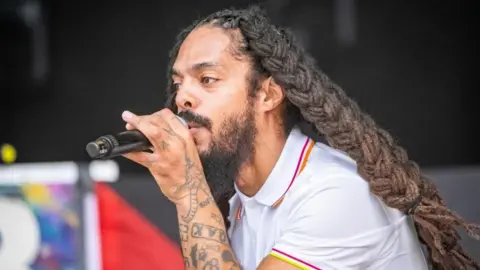
Davie said that what had happened was "deeply disturbing", adding: "The BBC made a very significant mistake broadcasting that."
He added that he had done the "right thing" at the time, by pulling it off the iPlayer.
"When heard what had been said, at about 5 o'clock that day, I was very clear: Get it off on-demand, we're not broadcasting this guy."
Davie said an internal disciplinary process was ongoing into what had happened. When asked why that process hadn't concluded yet, he said it "[takes] time, you need to do it properly".
He added: "These are well intentioned people who made a mistake, so I need to be proportionate."
Davie also said the measures which have since been put in place would "categorically prevent what happened", adding: "If something is a high-risk act, we'd now put it on delay."
Davie also said he thought the corporation made the "right decision" to not air Gaza: Doctors Under Attack, a controversial documentary which was later picked up by Channel 4.
The BBC shelved the programme due to impartiality concerns it has surrounding the production.
The director-general was asked by Labour MP Paul Waugh whether the BBC had been "over-cautious" in not screening it. Davie replied: "No, I think we made the right decision.
"There's a slight difference in terms of a doc... We were a little bit frustrated, because clearly the voice is the medics.
"We've given a lot of voice on our airways, by the way, and on our news coverage, to medics working in Gaza under extreme conditions and the terrible things they're having to face, which is horrendous, but in this film it's pretty straightforward."
He added: "I take your feedback if you think we're being too cautious, but my view and the view of the news leadership was that we clearly had someone with a position and we needed a narrator who was a BBC journalist making sure that we weren't open to that.
"Otherwise we could be in the same old problem, and bluntly, I know this is frustrating filmmakers."
Earlier in the year, a separate documentary, Gaza: How To Survive A Warzone, was pulled from iPlayer after it was found the narrator was the son of a Hamas official.
The film, made by independent production company HOYO Films, was later found by a review to have breached editorial guidelines on accuracy.
Shah told MPs: "It was a real mistake, what [the report] found was that we were not open and transparent about the relationship of the narrator to a Hamas official, really does go straight to heart of the BBC's reputational risk in terms of being impartial and trustworthy.
"It was a sin of omission, which is just as serious as a sin of commission."
Latest Stories
-
Okai Mintah seeks Sabah Zita Benson’s support for NDC National Youth Organiser bid
6 minutes -
Okai Mintah vows to strengthen NDC campaign machinery ahead of 2028
12 minutes -
Mother of four and Jasikan teacher among new Telecel M’ahitti Promo winners
13 minutes -
International Youth Shakers Conclave 2026 set to bring global young leaders to London
14 minutes -
Gov’t is committed to addressing teachers’ conditions of service, deprived-area allowance – Education Minister
18 minutes -
GoldBod’s structure encouraging galamsey – Afenyo-Markin
20 minutes -
Tullow starts selling Jubilee, TEN crude to Ghanaian refineries
22 minutes -
Local Government Service authorises rationalisation, redistribution of staff
25 minutes -
PURC assures consumers of working to ensure quality services in Northern Region
31 minutes -
Ghana develops US$4.28bn water financing framework
38 minutes -
Christian Council calls for protection of mission schools’ religious identity
45 minutes -
Mahama holds discussions with India’s External Affairs Minister
51 minutes -
Even when you cough, they come after you — Abanga accuses Mahama govt of criminalising free speech
57 minutes -
Mahama Ayariga proposes bank-adopted streets as part of stronger public-private partnership
1 hour -
NPP will impose $500m bail bond on NDC offenders if we return to power — Abanga
1 hour