

Audio By Carbonatix
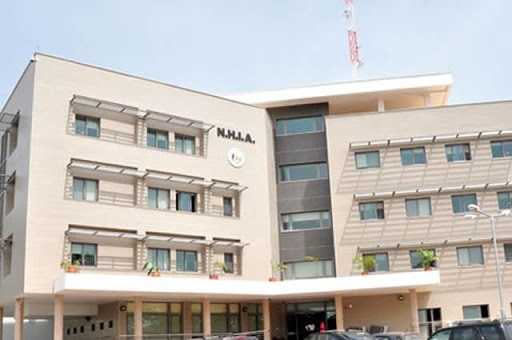
A report by SEND Ghana on citizens’ assessment of social protection delivery in the country has revealed that there are enormous liquidity challenges facing the National Health Insurance Scheme (NHIS).
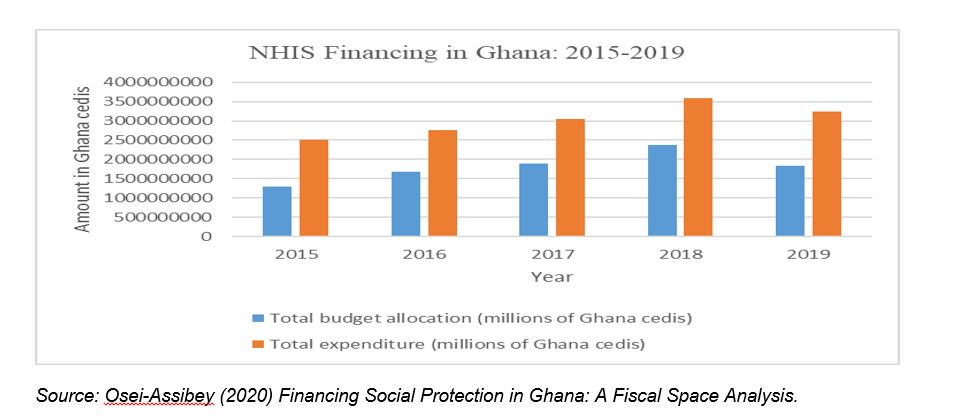
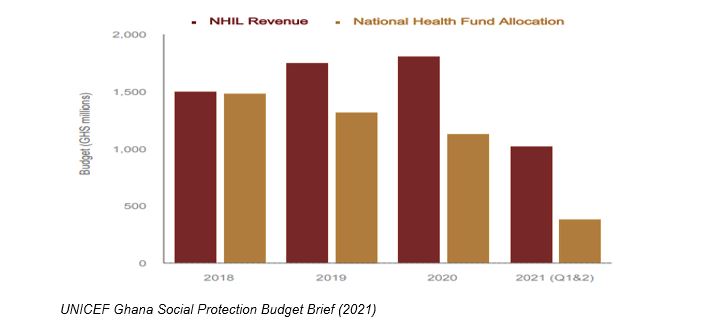
The organisation’s analysis of NHIS’ previous budgetary allocation and spending between 2015 and 2019 demonstrated that not all the revenues generated from the NHIS Levy are credited to the National Health Insurance Fund (NHIF).
NHIS largely depends on the Fund, which is 2.5% levy on goods and services collected under the Value Added Tax (VAT), to finance its operations.
It makes use of other funding sources like premiums paid by informal sector subscribers and 2.5% points of the Social Security and National Insurance Trust (SSNIT).
Government’s allocation also complements the funding of the Scheme.
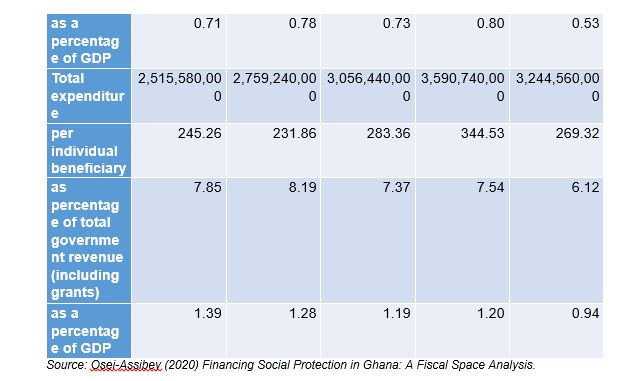
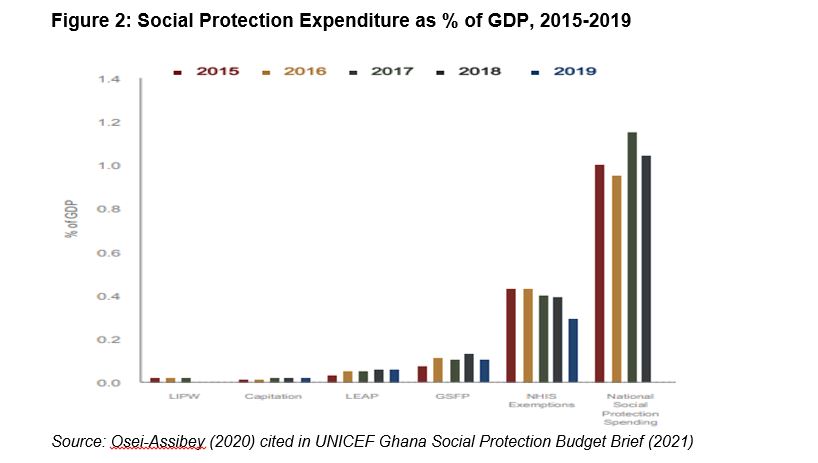
However, SEND Ghana’s investigations have uncovered that the total expenditure on the NHIS as a percentage of the Gross Domestic Product (GDP) has remained flat overtime at about 1% of GDP.
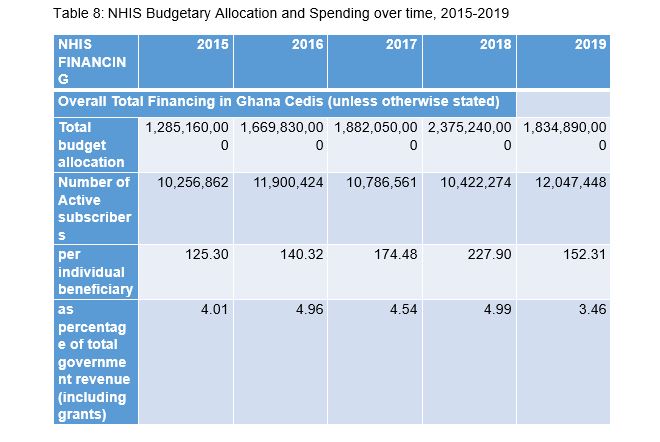
“Analysis of previous budgets has demonstrated that the enormous liquidity challenges that the NHIS faces is due to the fact not all the revenues generated from the NHIS Levy are credited to the NHIF,” the report said.
SEND Ghana says it is critical that efforts are made to transfer the funds to the Scheme fully and in a timely.
“With the introduction of the Covid-19 Health Levy and a 1% point increase in the VAT flat rate, it is essential that all revenues generated for the NHIS Levy must be credited to the NHIF and it must be timely as well.
“Expenditure on the NHIS over time has stayed in excess of two-thirds above budgetary allocations, partly reflecting arrears clearance,” the report added.
NHIS Input Tracking
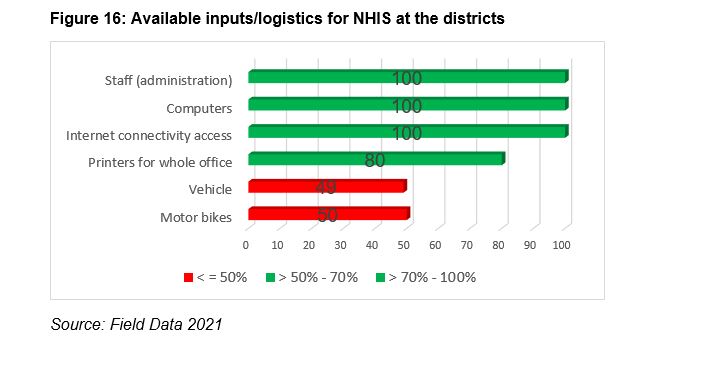
As part of their assessment of NHIS, SEND Ghana and partners selected four districts to look at the Scheme’s staffing, cars, motorbikes, computers, modems/Wi-Fi, printers and stationery.
The districts are Ga West (Greater Accra Region), Ho Municipality (Volta Region), Kumasi Metropolitan Assembly (Ashanti Region) and Sekondi-Takoradi (Western Region).
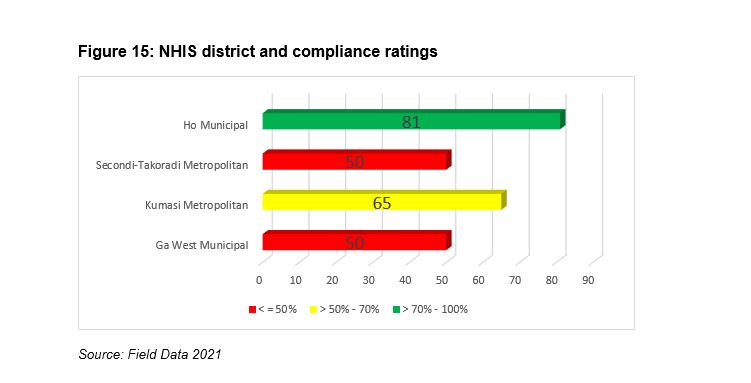
It found that Ga West and Sekondi-Takoradi municipalities lack adequate input and logistics, recording critical rating of 50% each.
However, data from the Ho and Kumasi Metropolitan assemblies suggested the availability of inputs and logistics as they recorded 81% and 65%, respectively.
“The inputs available at the districts’ offices at the time of data collection included staff (administration), computers, internet connectivity and printers. The remaining inputs (motorbikes and vehicles) obtained scores 50 and below, which is interpreted as very bad or non-existing,” the report added.
Government flagship programmes struggling
SEND Ghana and its partners have also reported that the country is not doing well in social protection programmes (SPPs) due to inadequate budgetary allocation, which is hampering the smooth implementation of the policies.
It follows the revelation that less than 1% of GDP is spent on SPPs, “which is far less than 2.2% of GDP regional average for sub-Saharan Africa.
In addition to this, disbursements of funds are often delayed as there is a growing rooted perception among beneficiaries of these social programmes of a seeming politicisation of the interventions.
Flagship programmes like the Livelihood Empowerment Against Poverty (LEAP), Ghana School Feeding Programme (GSFP), Capitation Grant, Labour Intensive Public Works (LIPW), among others are characterised with delays in payments to beneficiaries.
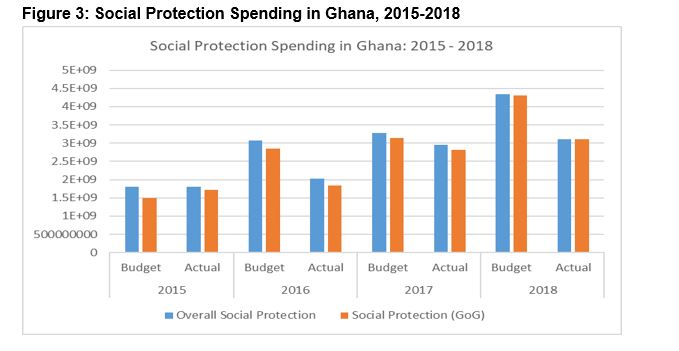
Due to these factors, the social intervention programmes risk being sacrificed.
“Inadequate budgetary allocation has been a major factor hampering smooth implementation of social protection programmes in Ghana. It is suggested that, in line with global benchmarks and commitments, the government should target a gradual increase of social protection spending up to 4.5% of Ghana’s GDP by 2025.
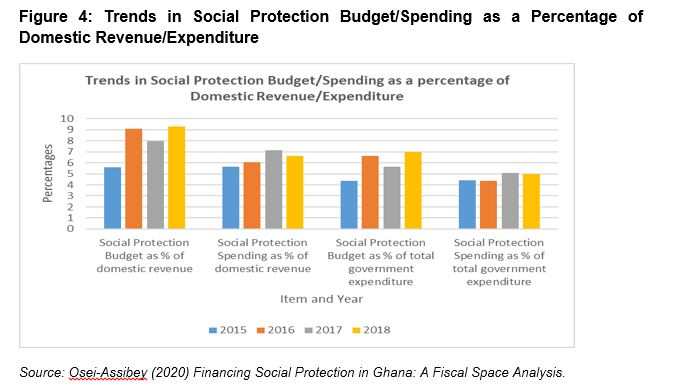
“The huge variations between approved programme budget allocations and disbursements are evidence that social protection budget planning and execution is a challenge. Almost all respondents (including government personnel, beneficiaries and non-beneficiaries) from the selected districts on the various programmes complained about the delays and irregular release of funds.
“The rampant delays in beneficiary grant payments are making the public lose confidence in the effectiveness of the LEAP programme and other social intervention programmes,” the report indicated.
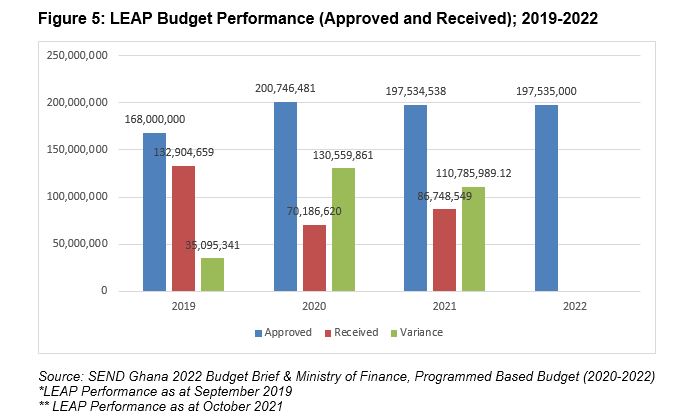
The delays have been attributed to the lack of a dedicated source of funding for social protection; hence, the recommendation that government should set up a Social Protection Fund (SP Fund) to augment efforts being made to enhance social protection programmes in the country.
SEND Ghana and its partners also want the government to prioritise the provision of inputs and logistics to the various district offices implementing social protection programmes to improve upon service delivery as well as expand social protection to cover all eligible individuals.
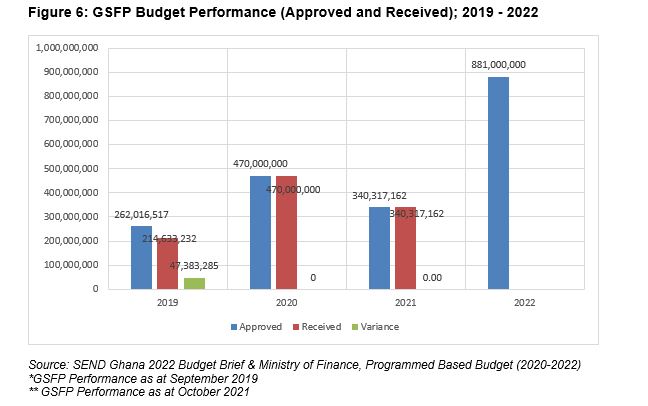
The ‘Mirror Report’ is a joint effort by the Ghana Social Accountability Platform, Civil Society Platform for Social Protection and SEND Ghana.
Using descriptive design and purposive sampling, a total of 1,496 respondents were selected and engaged during the assessment period in the 10 traditional regions.
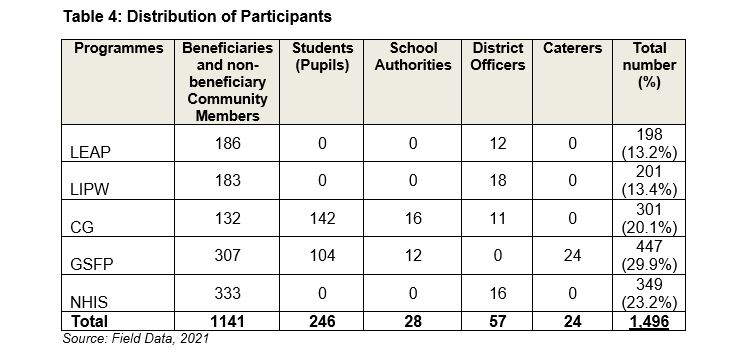
Among the participants were beneficiaries, community members, school pupils, school authorities, distric programme officers and GSFP caterers.
Below is the full report:
Latest Stories
-
Brandon Asante and Coventry all but promoted to Premier League despite Sheffield Wednesday draw
17 minutes -
GPL 2025/26: Late Kwartemaa strike downs Hearts in Tema
23 minutes -
Ghana Faces Sierra Leone Moment as Prosecutorial Powers come under strain
33 minutes -
Don’t consume fish or seafood from Tema Shipyard until further notice – FDA warns
37 minutes -
Why volunteering might be Africa’s most underrated career accelerator
44 minutes -
ActionAid Ghana raises concern over gender gaps in Feed Ghana Programme
46 minutes -
Windstorm wreaks havoc in Gushegu, displacing nearly 2,000 residents and damaging schools
48 minutes -
Friends of Bridget Bonnie Marks her 35th birthday with donation to Kasseh Model Health Centre
2 hours -
From Ekumfi Kokodo to the Pulpit Stage: Essi Donkor’s gospel journey takes shape
2 hours -
Landfilling waste management creates no value, it’s an economic waste
2 hours -
Photos: Speaker Bagbin Commissions MPs constituency office under parliamentary decentralisation programme
2 hours -
Black Stars technical advisor Winfried Schäfer sacked as GFA shakes up backroom staff
2 hours -
Wenchi water project almost complete, critical to gov’t agenda – GWL MD
3 hours -
Anti-LGBTQ+ bill not part of government’s legislative agenda – Inusah Fuseini
3 hours -
Anti-LGBTQ Bill: Forget the rumour mongers, I’m a man of action, and will pass the bill – Speaker
3 hours