

Audio By Carbonatix
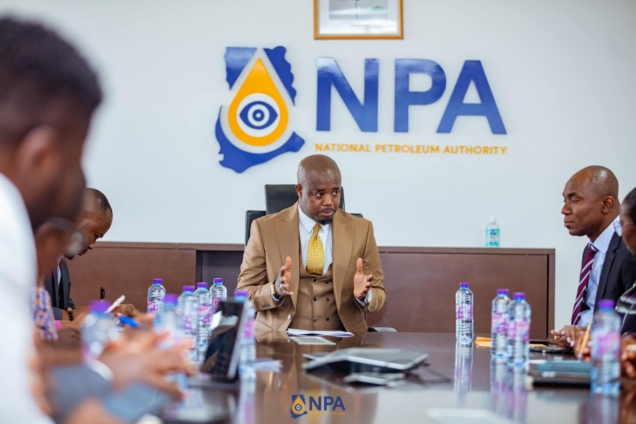
The National Petroleum Authority (NPA) has pushed back against calls to remove the Fuel Price Floor Programme, insisting the policy remains necessary due to persistent unfair pricing practices in the downstream petroleum sector.
According to the Authority, the market conditions that compelled the introduction of the price floor have not changed. It argues that pricing distortions continue to threaten industry stability.
Director of Economic Regulation and Planning at the NPA, Abass Tasunti, disclosed this in an interview on Business Live on JoyNews.
He said the regulator remains cautious about any decision that could destabilise the sector.
He noted that the NPA is mindful of the industry it regulates and does not intend to take steps that could plunge it into crisis.
Mr Tasunti also stressed that the petroleum industry is closely linked to the financial sector, making it critical for regulators to tread carefully when implementing or removing policies.
“Looking at the current developments on the market, the National Petroleum Authority has no plans to remove this policy,” he stated.
Industry Push
The NPA’s position follows renewed pressure from some industry players who are calling for the removal of the fuel price floor. Chief Executive Officer of Star Oil, Philip Tieku, has argued that scrapping the policy would allow prices to fall further, given current market conditions.
He maintains that consumers are being denied the opportunity to enjoy lower fuel prices at the pumps because of the policy.
The Executive Director of the Chamber of Petroleum Consumers (COPEC), Duncan Amoah, has also joined the call, insisting that removing the price floor is necessary to ensure consumers benefit from recent market developments.
He argues that the NPA’s actions stifle competition and constitute market interference.
Petroleum Price Floor Programme
The National Petroleum Authority rolled out the Petroleum Price Floor Programme in April 2024.
The directive requires Oil Marketing Companies (OMCs) and LPG Marketing Companies (LPGMCs) to strictly comply with the minimum price for fuel sales.
The measure aims to prevent price distortions and promote stability in the downstream petroleum sector. According to the NPA, the initiative aligns with the Petroleum Pricing Guidelines and is designed to promote transparency and sustainability in the fuel market.
The Authority has consistently argued that the policy will create a more predictable and balanced pricing structure, ultimately benefiting consumers while ensuring fair business practices across the industry.
Latest Stories
-
President Mahama ends Resetting Ghana tour of Ahafo Region
22 minutes -
African negotiators seek delivery of climate commitments at COP31
23 minutes -
BoG develops AI rules for financial sector
25 minutes -
‘Big Push’: Government assures contractors of prompt payments
29 minutes -
Court fines miner for breaking into gold buying shop
39 minutes -
Tarkwa court jails labourer for three years over GH¢123,000 theft
2 hours -
GAEC must retain nuclear scientists for Ghana’s nuclear ambitions – Minister
2 hours -
Man reportedly mistaken for game and shot by hunter dead in forest
2 hours -
19-year-old mason jailed 15 years for defiling seven-year-old pupil
2 hours -
Ghana’s banking sector assets rise 20.47% to GH¢500.2bn – BoG Governor
2 hours -
22 injured as Sprinter bus overturns at Sege after tyre burst
2 hours -
UN housing expert urges Ghana to strengthen Rent Control Department amid housing affordability concerns
2 hours -
Delta-BCI partnership reaches 166,000 people with breast cancer education
3 hours -
Power restoration fault suspected in Kumasi Central Market fire
8 hours -
The 7-foot giant of Ngleshie Amanfro: Seven-foot Ghanaian Ephraim Saawa dreams of joining the national basketball team
8 hours