

Audio By Carbonatix
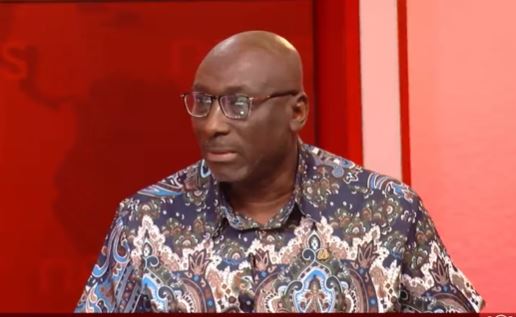
The Director-General of the National Road Safety Authority (NRSA), Abraham Amaliba, has warned that vehicles belonging to drivers who fail to subscribe to the mandatory towing service could be auctioned if the Authority removes them from the road and the owners fail to pay the resulting charges.
Speaking in an interview on Joy FM’s Super Morning Show on Wednesday, October 14, Mr Amaliba explained that the Authority would remove vehicles that break down in dangerous locations and pose a risk to other road users, regardless of whether their owners had subscribed to the towing service.
He said the owners would be surcharged for the removal and could lose their vehicles if they failed to settle the charges after being contacted through the Driver and Vehicle Licensing Authority (DVLA).
“If you don’t subscribe, and we find that your car is stationary and will cause an accident, we’ll come and remove it, and we’ll surcharge you,” he said.
Mr Amaliba added that the Authority would use vehicle registration records to trace owners who fail to pay.
“If you don’t pay the surcharge, we will find you through your registration processes at DVLA. We will contact you within 21 days. If you don’t come, we will gazette the sale of the car, and then auction it,” he stated.
His comments come as the government prepares to implement a new road safety policy expected to accompany the Road Traffic (Amendment) Bill, 2025, which seeks to address the dangers posed by broken-down vehicles on Ghana’s roads.
Mr Amaliba also announced plans to develop a mobile application that would connect motorists whose vehicles break down with the nearest available towing company.
When asked what a driver who had subscribed to a towing service in Accra should do if their vehicle broke down in Wenchi, Mr Amaliba said the proposed application would allow motorists to request assistance from a nearby towing operator rather than wait for their registered company to travel a long distance.
“We are going to develop an app. We know your towing company could be far away from where you are, and so calling the towing company to come may take time as well. And the law says that you must remove the car immediately,” he explained.
He said the application would work in a similar way to ride-hailing services, matching motorists with the nearest available towing company.
“We are going to develop an app where you can, just like Uber, have the nearest available towing company come and remove you,” he said.
Mr Amaliba added that towing companies would be responsible for resolving payment arrangements among themselves when a company other than the motorist’s subscribed provider responded to a call.
“The towing companies will now deal with how to exchange their money,” he said.
According to him, the application would also provide a practical way of demonstrating that the required notification had been made promptly.
During the Joy FM interview, concerns were raised about whether towing companies would be able to respond quickly enough, even when drivers notified them immediately.
The host pointed to the NRSA’s indication that stationary vehicles contribute to between 10 and 12 per cent of fatal accidents and asked how quickly towing companies were expected to arrive after being informed of a breakdown.
Mr Amaliba said the proposed application was intended to address that concern by identifying the nearest available operator.
“That’s why we are supporting with an app,” he said.
“When you go on your Uber app, you find the nearest Uber car. You don’t wait for the Uber car that is coming from Tema to you when there is one in Kokomlemle. So that’s how we are going to deal with it,” he said.
This comes after the National Road Safety Authority revealed that drivers whose vehicles break down in major city centres will be required to arrange towing within 30 minutes under a new road safety policy expected to accompany the implementation of the Road Traffic (Amendment) Bill, 2025.
The policy is aimed at preventing broken-down vehicles from causing traffic congestion and road hazards, particularly in busy urban areas.
Latest Stories
-
COCOBOD raises GH¢3.4bn as Cocoa Capital PLC lists inaugural commercial paper on GFIM
12 minutes -
No Party Card, just a Party Microphone! A Ghanaian story of Elections, Referees and Convenient Amnesia
14 minutes -
Minority welcomes suspension of teachers’ strike, demands timely payment of promotion arrears
24 minutes -
Customary ownership accounts for 80% of land; it complicates land administration – Lands Commission
25 minutes -
NRSA to auction vehicles of non-subscribers who fail to pay towing charges within 21 days
31 minutes -
WAFU B U17: Black Starlets target AFCON slot after booking semi-final place
36 minutes -
Ghana faces $6.1bn debt-service burden from 2027 to 2029 due to Akufo-Addo’s DDEP – Haruna Iddrisu
44 minutes -
GoldBod targets 150 hectares of forest reclamation in 2027
52 minutes -
Despite substantial accommodation capacity, room demand still weakens – GSS report
60 minutes -
No amount of foreign exchange is worth a lost forest – GoldBod
1 hour -
Chelsea’s defensive crisis: Alonso’s system, missing pieces, or individual errors?
1 hour -
Digital VAT collection to cover mobile payments, not just bank cards – GRA
1 hour -
John Darko denies role in SIC settlement after EOCO interrogation
2 hours -
GRA identifies about 100 additional foreign digital service providers for VAT collection
2 hours -
Digital VAT collection system will not add another 20% to existing charges – GRA clarifies
2 hours