

Audio By Carbonatix
The National Road Safety Authority (NRSA) says it will restrict commercial operations of minibuses to intra-city services or routes not exceeding 40kms.
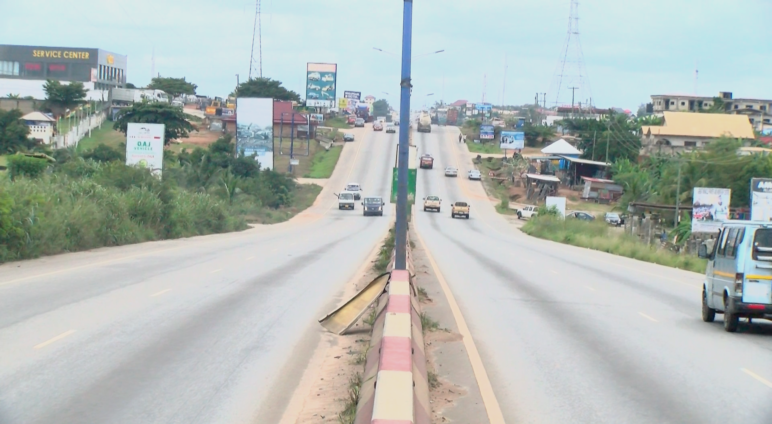
It follows complaints it has received from numerous road users including the National Security on the incessant high speed and reckless overtaking by drivers of mini busses on major corridors, particularly, the Kumasi-Accra Highway.
In the wake of the complaints, the Authority has held meetings with the GPRTU, OA Travel and Tours and others on the affected routes on the need to institute internal safety controls, including training and real-time tracking of their drivers to minimise the risk associated with the unsafe practices but to no avail.
The NRSA warned that without an immediate improvement in the quality of services complained of - that is, high speeds and reckless overtaking - the Authority will be compelled to initiate the necessary administrative protocols to impose restrictions on the movement of their commercial minibuses to intra-city services or routes not exceeding 40 kilometres.
“The Authority has a duty imposed by the NRSA Act 2019 (Act 993) to reduce road traffic crashes, injuries and deaths by such measures, including the issuance of cautions, notices and directives to improve the quality of transport service or correct irregularities in transport operations to prevent or minimise road traffic crashes, injuries and deaths.
“Subsequently, the Authority has this year held meetings with the under-listed operators of these transport services on the affected routes on the need to institute internal safety controls including training and real-time tracking of their drivers to minimise the risk associated with the unsafe practices but to no avail,” a statement issued by the acting Executive Director of NRSA, David Osafo Adonteng, revealed.
DVLA goes digital
In a related development, the Driver and Vehicle Licensing Authority (DVLA) has adopted digital means to securitise the registration of all number plates.
Among other things, the initiative will help to provide unique identifiers and real-time information about vehicles to ensure safety and security on the road.
This comes after investigations by the Authority revealed that most vehicles on the roads are either using cloned or unauthorised number plates, a situation that is exposing road users to security risks.
Deputy Director in charge of Vehicle Inspection at the DVLA, Nana Eric Kwesi, made this known in an interview with JoyNews at the launch of the Ghana Drivers and Road Safety Awards 2022.
“Over the period, some of the investigations that we’ve made actually turn out that some of the vehicles that ply our roads actually have unauthorised licences and cloned plates that the DVLA has not certified,” he said.
Latest Stories
-
Renewed flood intervention at Mallam Junction raises hopes among residents, businesses
6 minutes -
St Augustine’s College retain National Investment Quiz title after nail biting grand finale
15 minutes -
Education infrastructure investment will drive Banda’s development – Ahmed Ibrahim
23 minutes -
Teacher unions strike: Gov’t presents fresh proposals as talks end inconclusively
1 hour -
51,000 teachers’ promotion arrears to be validated for October payment – Education Minister
2 hours -
Kwabena Boamah appointed Board Chair for Impact Investing Ghana
2 hours -
Striking teacher unions to meet Fair Wages and Salaries Commission on October 6
2 hours -
EOCO working with AG to arraign Nana Baffour Awuah before weekend court
2 hours -
Duraplast reassures customers after fire, announces October 5 reopening
2 hours -
Call off strike, gov’t will not renege on promotion arrears pledge – Haruna Iddrisu appeals to teacher unions
2 hours -
Committee set up to validate teachers eligible for 20% deprived-area allowance – Education Minister
2 hours -
Five-member committee to search for new Black Stars coach after Sports Ministry-GFA meeting
3 hours -
Pinktober: Breast cancer survival exceeds 90% when detected early – Breast Society of Ghana
3 hours -
TCDA to adopt Upper West’s MATCO mango farm as northern prototype, issues warning against felling shea trees
3 hours -
‘Fear delegates’ tag: Afoko touts genuineness among delegates ahead of NPP delegates conference
3 hours