

Audio By Carbonatix
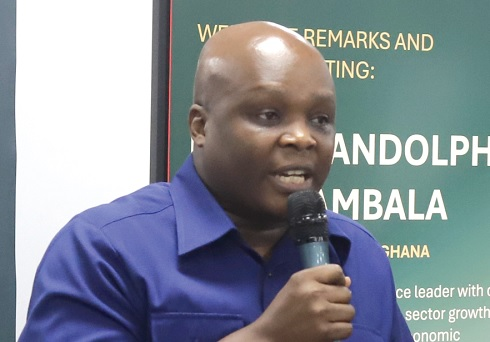
The Chief Executive Officer (CEO) of Development Bank Ghana (DBG), Professor Randolph Nsor-Ambala, says the proposed $500 million oil palm development finance facility will be used to develop the value chain within the oil palm sector.
He said the government sought to use the fund to transform the fragmented production units across the value chain into a coherent ecosystem that would enable the country to at least meet the supply chain objective and reduce dependence on imports.
Like all government priority projects, Prof. Nsor-Ambala said the initiative required extensive cooperation across sub-sectors in both the government and private sectors.
"The underlying philosophy is that for us to achieve sustainability in this approach, we need to necessarily be able to allow the private sector to lead this transformation agenda.”
“What this $500 million represents, therefore, is a statement by the government to encourage private sector capital maximisation because the size of investment needed to achieve the supply chain sovereignty that the government aspires to achieve is in excess of a billion dollars, but the government is willing to put its money where its mouth is,” he said.
Roundtable discussion
Prof. Nsor-Ambala was speaking at a roundtable on oil palm in Accra last week.
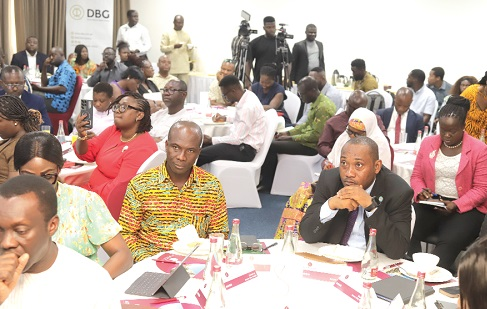
The roundtable was attended by representatives from the Development Bank Ghana, the World Bank, the Ministry of Finance, and industry players and was on the theme "Financing Ghana's palm oil transformation: structuring bankable and inclusive solutions across the value chain."
Prof. Nsor-Ambala said the roundtable represented an opportunity for stakeholders to engage in discussions about which solutions would allow the initiative to become a reality.
He, therefore, urged the participants to be honest, candid, and open in their submissions, observing that "ultimately, what we seek to do is to be able to set up a blueprint around how massive cross-sectoral collaborations could happen to achieve Ghana's next phase transformation agenda."
Carefully designed
The President of the Oil Palm Development Association of Ghana (OPDAG), Paul Amaning, said that the proposed $500 million oil palm development finance must be carefully designed to support organised groups, associations, and to strengthen outgrower systems.
He said the facility must also promote value addition at the community level, improve processing capacity, and work with clear timelines.
"Within the first six months, we should see structures in place and pilot funding. Within 12 to 18 months, we should see expansion in plantations, replanting efforts, and improved processing, and within three to five years, we should see real results such as reduced imports and increased local production," Mr. Amaning stressed.
He gave an assurance that the association was ready to play its role by coordinating industry players and supporting policy engagements.
That, he said, would promote standards and their sustainability, but indicated that OPDAG must be strengthened to be fully involved in the process to carry it out effectively.
Economic pillar
Describing Ghana's oil palm sector as a strategic economic pillar that supported over one million livelihoods and held strong potential for industrial growth, job creation, and import substitution, Mr. Amaning said that despite that potential, "We are not where we should be."
The president of OPDAG mentioned low productivity, aging plantations, limited access to long-term financing, inefficient processing, weak coordination across the value chain, land tenure issues, and increasing smuggling as some of the factors undermining local production.
"This is a defining moment. If we get this right, we can transform Ghana's oil palm sector.
We can create jobs, strengthen rural economies, and reduce our dependence on imports, but this will not happen by intention alone.
It will require clear action, discipline, and timelines. OPDAG is ready to lead, to collaborate, and to deliver results,” he stated.
National supply
For his part, a Research Scientist from the Centre for Scientific and Industrial Research (CSIR), Dr Frederick Sarpong, in a presentation, said artisans in the oil palm production sector produced 44 percent of the national supply of the produce.
He said only three regions, Eastern, Central, and Western, formed 90 percent of the distribution.
Dr. Sarpong further highlighted challenges that were derailing the sector's progress, such as low extraction rates, adulteration, the use of crude methods by artisans, severe occupational health and safety risks, and the need to address quality issues.
Latest Stories
-
Man City suffer as PSG masterclass sets up Champions League win
31 minutes -
Customer Service Africa CEO urges business leaders to observe staff and customer interactions
41 minutes -
On night of mayhem for Liverpool, Barcola arrives in style
42 minutes -
Muzic Mensah finds healing and renewed love in new single ‘WayƐ Late’
54 minutes -
FIFA to offer extra £2.6bn for football development
56 minutes -
Government backing is no EPA permit – Authority warns GoldBod, ministries
1 hour -
Real Madrid produce stunning late fightback to down Roma
1 hour -
EPA orders immediate halt to unpermitted reclamation and dredging nationwide
1 hour -
Afenyo-Markin’s lawsuit against Sammy Gyamfi takes focus away from development – Kpebu
2 hours -
FWSC urges media to guard against misinformation in proposed IPEC transition
2 hours -
MoMo Fest 2026: Shatta Wale to Rock Accra Stadium on October 17
2 hours -
GTEC’s letter directing public universities to reopen by October 16 is unprofessional – GAUA
2 hours -
Suspect in viral video assaulting wife jailed for 3 months
2 hours -
GAUA insists strike will end only after Fair Wages addresses market premium issue
2 hours -
Kpemka seeks compensation as he sues BOST over alleged unlawful termination
2 hours