

Audio By Carbonatix
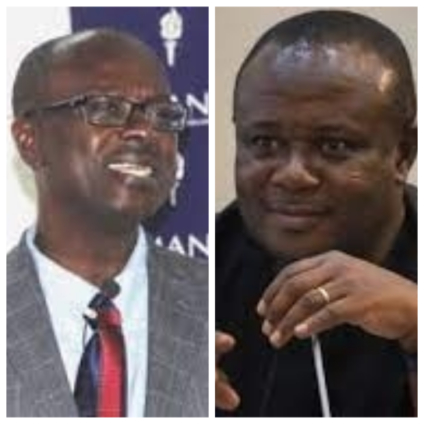
US-based Ghanaian Accounting Professor, Stephen Kwaku Asare, has condemned comments by First Deputy Speaker, Joseph Osei-Owusu that the Rastafarian religion is associated with weed smoking.
In the Professor's opinion, being Rastafarian doesn't necessarily mean one smokes weed.
"Weed is smoked by a whole bunch of people, one does not have to be a Rastafarian to smoke weed...It is a moot question because one does not go to school to smoke weed. If you're caught, you'll be dealt with," he said Friday, on the Super Morning Show.
This follows comments by first Deputy Speaker, Joe Osei-Owusu, that references made to the Rastafarian religion in the case of some students who have been denied enrolment into some Senior High Schools may complicate matters for the students.
This, he explained is because of the misconception held against some practices of the religion.
He argued that Rastafarianism is mostly associated with weed-smoking, and this he believes may not help in resolving the situation at hand.
“I get worried in the attempt to rope in Rastafarianism as religion. If we do that, then we complicate the matter. The reason is this: If you study Rastafarianism, it includes the smoking of weed and weed is an illegal substance. It is not a substance that is permitted to be smoked,”. the first Deputy Speaker said.
However, the Professor says such comments are not needed in the current discussion.
"I'm not sure what the relevance of the insertion of weed into an important debate about a very important discussion on the right of students to enjoy religious freedom and the equally import rights of school authorities to have rules that facilitate learning environment.
"And for the Deputy Speaker to insert weed in this conversation, I was frankly very shocked and appalled. There's no place for that type of insertion in this important debate," he added.
This comes in the midst of controversies surrounding the denial of admission by some Public Senior High schools to Rastafarian students, on grounds that it is against the rules of the schools to admit students with such hairstyle.
The move by the schools has generated a public debate as to whether school authorities have the right to do so or not.
A school of thought believes that the decision is discriminatory, however, others also believe school authorities are right since every student must conform to the rules of the schools.
At the height of the controversy, six schools are reported to have offered to admit the students unconditionally, with some offering to admit them on full scholarships plus providing free meals to them.
Latest Stories
-
Ghana’s BRICS move requires clear strategy to manage risks – Godfred Bokpin
26 minutes -
Pay teachers realistic income – Duncan Amoah to gov’t
42 minutes -
Bechem to become chicken capital of Ghana – Mahama projects
44 minutes -
Gov’t targets recruitment of 16,500 health professionals in 2026
1 hour -
Two-week strike will not derail academic calendar – GNAT President
1 hour -
Headmaster detained after BBC investigation into alleged sexual abuse of students
1 hour -
GNAT pushes for clear implementation procedures of teachers’ conditions of service
2 hours -
Recurrent strikes threaten quality of education and academic calendars – Prof Bokpin
2 hours -
‘Cockroach’ group leaders among hundreds detained in Delhi protest
2 hours -
Don’t let speed of information become your judgement – CJ tells new lawyers
3 hours -
World Cup visa scandal: People have leveraged public office to facilitate fraud – Senyo Hosi
3 hours -
Glut! Farmers count losses as prices crash, customers happy
3 hours -
GSA postpones auction of unserviceable vehicles
3 hours -
Man charged with attempted murder after stabbing
3 hours -
World Cup visa scandal: Senyo Hosi says issue goes beyond calls for Sports Minister’s resignation
3 hours