

Audio By Carbonatix
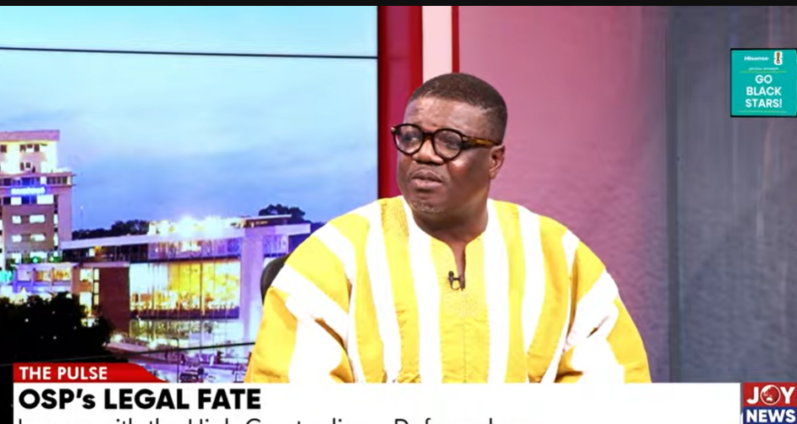
Majority Chief Whip and South Dayi MP Rockson-Nelson Dafeamekpor has called for a constitutional amendment to strengthen the Office of the Special Prosecutor (OSP), arguing that only entrenching the office in the 1992 Constitution can fully insulate it from political interference.
He said the current legal framework limits the OSP’s independence because prosecutorial powers are constitutionally vested in the Attorney General under Article 88, making it difficult for any statute to grant the anti-corruption body full autonomy.
Speaking in an interview with Joy News, Mr Dafeamekpor said a constitutional solution would be the most effective way forward.
“That would be the solution,” he stated. “So that it becomes a creature of the Constitution. Then it can be given similar rights as are given to the Attorney General in Article 88. So there’s no rivalry.”
His comments come amid ongoing national debate over the true independence and effectiveness of the OSP, an institution established under the Office of the Special Prosecutor Act, 2017 (Act 959) to investigate and prosecute corruption-related offences.
Mr Dafeamekpor explained that under the current constitutional arrangement, Parliament cannot enact laws that contradict Article 88, which grants prosecutorial authority to the Attorney General. Any such law, he warned, risks being struck down by the Supreme Court.
“Until we amend Article 88, there is nothing that any entity can do, including Parliament,” he said bluntly.
The Majority Chief Whip indicated that he personally supports elevating the OSP to a constitutionally protected body, a move he believes would eliminate institutional rivalry and clarify its mandate.
If implemented, the proposal would require a constitutional amendment process, including broad political consensus and potentially a national referendum — making it a significant and complex reform initiative.
His position marks a notable contribution to the evolving debate over Ghana’s anti-corruption architecture. The OSP has faced questions over its mandate and independence since its establishment, with critics and legal analysts frequently pointing to tensions between its powers and those of the Attorney General’s office.
The discussion has gained renewed attention in recent months following court challenges and public commentary on whether the OSP can effectively operate outside the Attorney General’s prosecutorial control.
Mr Dafeamekpor’s remarks suggest a shift toward structural reform rather than abolition or simple legislative adjustment, potentially setting the stage for a broader constitutional conversation on Ghana’s fight against corruption.
Latest Stories
-
Ghana warns medical travellers to South Africa to obtain visas for treatment beyond 90 days
2 minutes -
Canada suspends plans to expand assisted dying to people with mental illness
3 minutes -
Minority accuses Sports Ministry, NSA of creating fake portfolios for VISA applicants
4 minutes -
6th Inter Tourism Expo comes off in Cape Coast this October; register now
24 minutes -
Afenyo-Markin accuses government of diverting attention from cocaine seizures linked to Ghana
24 minutes -
GJA gives Armed Forces 14 days to account for alleged assaults on Sika Official, Bullet TV’s Philip Abutiate
26 minutes -
PAC gives CWSA 30 days to recover GH¢10m in unpaid water bills from police, army, hospitals, other public institutions
28 minutes -
Major Accra roads to get facelift ahead of Ghana’s 70th Independence anniversary – Agbodza
49 minutes -
Account for GH¢650bn allocated to existing programmes before new economy – Oppong Nkrumah to gov’t
1 hour -
‘You’re an action man’ – Abena Osei-Asare hails Rent Commissioner’s hostel fee crackdown
1 hour -
Mahama directs Finance Minister to allocate GH¢1bn for Housing Fund in 2027 Budget
1 hour -
NPP celebrates Bawumia on birthday, prays for 2028 election victory
1 hour -
Mahama recounts ‘exhausting and frustrating’ struggle to find a home as a young spouse
1 hour -
‘Take damaged banknotes to commercial banks for replacement’ – BoG warns against repairing cedi notes for resale
1 hour -
Lebanon’s Hezbollah gets $200 million from Iran to help displaced, sources say
1 hour