

Audio By Carbonatix
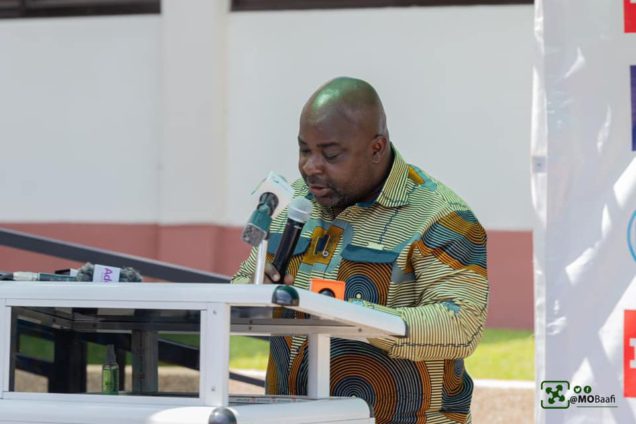
The Deputy Trade and Industry Minister, Micheal Okyere Baafi, has revealed that government’s flagship programme, One District, One Factory (1D1F), has so far created over 150,000 jobs across the country.
The initiative, a key component of the Industrial Transformation Agenda of the Akufo-Addo-led government was first introduced by the Ministry of Trade, Industry and Presidential Special Initiatives during the Kufuor administration, as part of an integrated programme for Accelerated Growth and Industrial Development.
Originally designated as the Rural Enterprises Development Programme and later rebranded as the District Industrialisation Programme (DIP), it was designed as a comprehensive programme for rural industrialisation and involved the setting up at least one medium to large scale factory in each of the 216 administrative districts of Ghana.
The programme seeks to address the challenge of severe poverty and underdevelopment among rural communities by establishing an institutional framework that will attract private sector investments in rural development activities.
The initiative aims to achieve this through a massive private sector-led nationwide industrialisation drive, which will equip and empower communities to utilise their local resources to manufacture products in high demand both locally and internationally.
This will allow the country to reap the rewards of industrialisation, increase agricultural and manufacturing output, reduce reliance on imports and increase food availability.
Providing updates on the operationalisation of the 1D1F policy, Mr Okyere Baafi said indirect and direct jobs over 150,000 have been created since the programme was initiated.
"There has been a lot of achievements in this area. In the area of job creation, one cannot look down on it because a lot of Ghanaians have been employed under this policy.
This is a private sector initiative that government only facilitates, so we don't initiate them but rather facilitate. Through the arrangement, 153,782 people have benefited from this 1D1F through employment," he said.
Giving a breakdown of the jobs, he noted that "the direct employment has so far created 23,505 jobs, with indirect jobs being 130,277."
Explaining further, he said the policy "is very phenomenal, and everybody can attest to the fact that the 1D1F has brought some change, some difference in the industrial sector of the economy because it is also creating a lot of improvements in the local economies of the urban and peri-urban areas where these initiatives have caused accelerated growth and transformation to lots of lives."
Latest Stories
-
I have supported highway authority financially to fix roads in my constituency – A Plus
54 minutes -
US, Iran fail to reach peace agreement after marathon talks in Pakistan
1 hour -
ECG kicks off Phase Two of transformer upgrades at Lashibi; brief outages expected
2 hours -
Port crises loom as 11,000 drivers threaten four-day strike
3 hours -
A source of excellence across generations – Vice President Opoku-Agyemang lauds Mfantsipim
4 hours -
(Photos) Mfantsipim School launches historic 150th anniversary
4 hours -
Knights and Ladies of Marshall group backs Catholic Bishops’ stance on anti-LGBTQ+
5 hours -
Bright Simons writes: All the Filla in the Ibrahim Mahama/E&P – Gold Fields Saga
5 hours -
Monetise Idiocy In Ghana
5 hours -
The Ghanaian prophet and the mysterious death of his scottish wife Charmain Speirs
6 hours -
Nearly 400 sentenced in Nigeria for links to militant Islamists
7 hours -
Ghana’s recovery supported by gold strength despite global oil price pressures – Standard Bank Research
7 hours -
Methodist Church hails Mfantsipim@150; calls for “fresh consecration” to excellence
7 hours -
‘Excellence is our inheritance’ – Nana Sam Brew-Butler hails Mfantsipim’s 150-year reign in leadership
7 hours -
Kwaku Azar writes: A-G vs OSP
7 hours