

Audio By Carbonatix
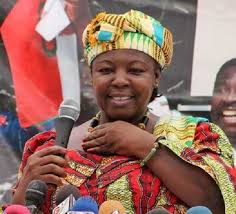
The Chairperson, Convention People’s Party (CPP), Nana Akosua Sarpong Kumakuma, says the overthrow of Dr Kwame Nkrumah and the CPP government on February 24, 1966 truncated Ghana’s national development.
She added that 55 years down the line, the Ghanaian economy was just moving in circles “not able to achieve much as compared to achievements chalked under the CPP government”.
Speaking to the Ghana News Agency, she said the CPP government had a clear plan to ensure development through the creation of jobs, factories, provision of good roads and the motivation and education of Ghanaians to solve their own problems, which were still evident to all.
According to her, the shameful act of 1966 was not a fight just against Nkrumah's political party but against national development and human progress which had led to challenges and untold suffering of Ghanaians.
Madam Sarpong intimated that to commemorate the day, party members and executives held a ceremony at Saltpond in the Central Region, where Dr Nkrumah planted a tree on the founding of the CPP as a symbolic representation of the Party, adding that, “the tree is here standing strong”.
The Chairperson, Convention People’s Party (CPP), urged politicians to rededicate themselves to national development and for the dignity of Ghanaians.
On February 24, 1966, while Dr Nkrumah was on a state visit to North Vietnam and China, his government was overthrown in a violent coup d'état led by members of the national military and the police, with backing from destabilizing and exploitative foreign interests.
The conspirators, led by General Joseph Arthur Ankrah, named themselves the National Liberation Council and ruled as a military junta for three years.
Dr Nkrumah did not learn of the coup until he arrived in China. He stayed in Beijing for four days and Premier Zhou Enlai treated him with courtesy.
He never returned to Ghana, but he continued to push for his vision of African unity and projection of the African personality, and lived in exile in Conakry, Guinea, as the guest of President Ahmed Sékou Touré, who made him honorary co-president of that country until his demise in 1972.
Latest Stories
-
NDC must study NPP congress closely for strategic lessons – Mustapha Ghande
5 minutes -
NDC has built strong structures to face any electoral challenge – Mustapha Gbande
15 minutes -
John Boadu can appeal across Ghana’s social groups – Prof Mike Oquaye
23 minutes -
‘Electing Kojo Bamba is backward politics’ – Mustapha Gbande
37 minutes -
Government must order payment of promoted teachers’ salaries – GNAT
46 minutes -
Meet Sethina Edem Sunu, the healthcare professional eyeing the NDC UK & Ireland deputy organiser role
50 minutes -
The myth of ‘sophisticated customer experience’ in the digital age
54 minutes -
What happened to lands reserved for sanitary sites? -WasteCare CEO calls for audit
55 minutes -
Manasseh Writes: The shift in the NPP
1 hour -
The price of a seat: Financial barriers and the structural quality of Ghana’s Parliament
1 hour -
Government targets October 16 for first tranche of teacher arrears – Haruna Iddrisu
1 hour -
Daily Insight for CEOs: The CEO’s role in driving innovation
1 hour -
Audit existing sanitary sites to address waste management land shortages – WasteCare CEO urges assemblies
1 hour -
Two-bin household waste system could support waste-to-energy in Ghana – Waste Care Associates CEO
2 hours -
Dealing with political and social media insults
2 hours