

Audio By Carbonatix
A former Clerk of Parliament, Samuel Ntim Darkwa, says Parliamentary immunity cannot be interpreted as a license for legislators to commit crimes.
He was commenting on the current impasse between the Police and Parliament regarding the attempted arrest of Madina MP Francis Xavier Sosu.
The MP has been slapped with charges, including destroying public property following what the police say is his refusal to honour their invitation.
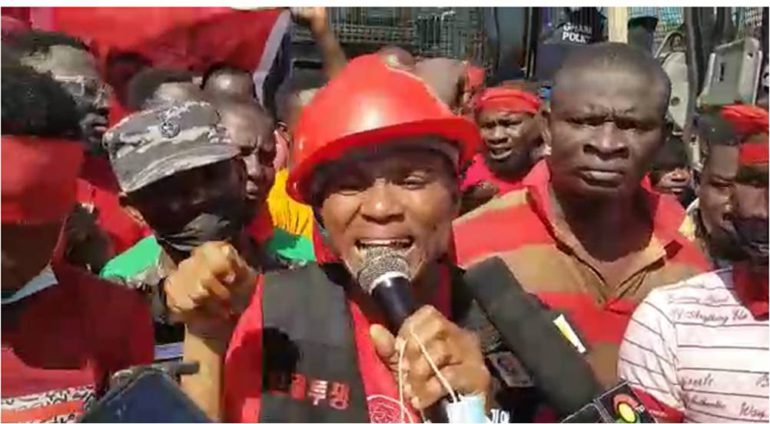
On October 25, the MP led a street protest in his constituency of Madina to press home a demand for bad roads to be fixed.
He has since been a subject of police investigations for some acts that the police say amounts to crimes during the protest.
Speaker of Parliament Alban Bagbin, in a letter to the police and a statement, condemned the attempted arrest of the MP by the police.
He also indicated he could not release the MP to assist with investigations since Parliament is in session.
The basis of the Speaker’s view is Article 117 and 118 of Ghana’s constitution.
“117. IMMUNITY FROM SERVICE OF PROCESS AND ARREST
Civil or criminal process coming from any court or place out of Parliament shall not be served on or executed concerning the Speaker or a member or the Clerk to Parliament while he is on his way to, attending at or returning from, any proceedings of Parliament.
- IMMUNITY FROM WITNESS SUMMONS
- Neither the Speaker, nor a member of, nor the Clerk to, Parliament shall be compelled, while attending Parliament to appear as a witness in any court or place out of Parliament.
- The certificate of the Speaker that a member or the Clerk is attending the proceedings of Parliament is conclusive evidence of attendance at Parliament.”
Commenting on the development, the former Clerk said this immunity is not meant to encourage the commission of crimes.
Mr Ntim Darkwa insisted MPs found to be committing crimes can be arrested and that the Speaker ought to be informed after such an arrest.
He explains the whole idea of immunity is to prevent the Executive from using arrests to reduce parliamentary numbers during crucial votes.
“Immunities and privileges for MPs are not licensed to commit crimes. On the contrary, they are supposed to prevent crimes to ensure peace. And, therefore, if a member of Parliament is caught committing a crime, I think that he can be restrained.”
Latest Stories
-
Mahama’s proposed airline looks to South America, Caribbean as Ghana confronts mounting drug trafficking cases
4 minutes -
5% progress on Suame Interchange Phase One inadequate – Roads Minister tasks contractor to speed up work
7 minutes -
Photos: Vice President joins GAAS Awards to celebrate outstanding women leaders
8 minutes -
OSP vs Ken Ofori-Atta, SML and others: Court gives OSP four more weeks to serve Ofori-Atta with summons
10 minutes -
High Commission sends caution to Ghanaians in South Africa ahead of planned protests
13 minutes -
Okai Mintah outlines vision for NDC Youth Wing as he engages MMDCEs
18 minutes -
Mahama Ayariga leads renewed push for stronger local governance through partnerships
22 minutes -
NDC youth organiser aspirant Okai Mintah consults MMDCEs ahead of elections
23 minutes -
PHOTOS: Ayikuma Methodist Basic School wins National Juniors Challenge
25 minutes -
Silence has entered our homes : Salomey Awiti Bafoh and the chilling effect of free expression in Ghana
26 minutes -
UG Pro-VC calls for stronger research funding to curb brain drain
28 minutes -
Woman in critical condition after shooting at funeral grounds in Yeji
30 minutes -
Breast Cancer awareness must lead to action – Deputy Health Minister
33 minutes -
UK identified as leading destination for Ghana’s illicit cannabis exports – Report
34 minutes -
Drug money allegedly finances Ghana’s political parties and real estate – Global Organised Crime Index
39 minutes