

Audio By Carbonatix
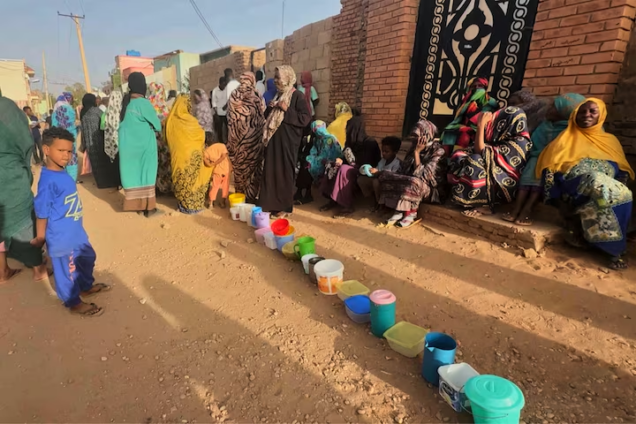
Parts of Sudan are in famine, a top U.S. diplomat said on Tuesday, adding that the extent of extreme hunger remained unclear nearly 14 months into a war between the army and the paramilitary Rapid Support Forces (RSF).
"I think we know we are in famine," Tom Perriello, the U.S. special envoy to Sudan, told Reuters in an interview. "I think the question is how much famine, how much of the country, and for how long."
No formal declaration of famine has been made in Sudan.
Famines are determined using a complex set of technical criteria, known as the Integrated Food Security Phase Classification (IPC), an initiative of U.N. agencies, regional bodies and aid groups. They include extreme levels of malnutrition and mortality.
U.N. agencies warned at the end of May that Sudan was at "imminent risk of famine", with about 18 million people acutely hungry, including 3.6 million children who were severely malnourished.
In an assessment in March, the IPC said nearly five million people in Sudan were one step away from famine.
Reuters has reported on how the war has driven some people to eat soil and leaves to survive. The IPC is expected to issue an update on Sudan in the coming weeks.
Perriello said the main obstacle to declaring famine was a lack of data due to the impact of the conflict, adding that Sudan was a case of "man-made" famine and that both warring parties were responsible.
"If you look back over the last year, it's the RSF for burning all the crops and looting all the warehouses," Perriello said. "But it is definitely SAF (the Sudanese Armed Forces) right now playing games with border access, cross-line access, and allowing their people to die."
Both the army and the RSF have denied impeding humanitarian aid.
The conflict broke out in the capital Khartoum in April 2023 and quickly spread, reigniting ethnic bloodshed in the western Darfur region and forcing millions to flee in the world's largest displacement crisis.
Diplomatic efforts to revive ceasefire talks have so far been unsuccessful, with the army rejecting negotiations.
There had been a "substantial elevation of urgency" internationally about the need to find a resolution to the conflict in Sudan, Perriello said.
"But we haven't yet reached the inflection point where it's enough to get what we need, which is an end to the war."
Latest Stories
-
80–90% of gold purchased and exported is now refined in Ghana– Sammy Gyamfi
9 minutes -
Dichemso M/A teachers go house-to-house to get absent pupils back to class after strike suspension
12 minutes -
Meet Dr Hazel and Nhyira: Mother and daughter called to the Ghana Bar
15 minutes -
Black Star Fashion Week: Can Ghana turn the runway into a tourism attraction?
16 minutes -
Ghana sends 61 health workers to Grenada under Labour Export Programme
28 minutes -
Central banks should avoid reacting too strongly to headline inflation – IMF
35 minutes -
Kumasi: One injured, shops destroyed in Atasemanso fire in Kumasi
48 minutes -
Global economy proving resilient, growth projected at 3.1% in 2026 – IMF
52 minutes -
NDC targets all 6 parliamentary seats in Ahafo Region for 2028
55 minutes -
Ghana targets thousands of overseas nursing jobs under Labour Export Programme
57 minutes -
Pius Hadzide explains why Sports Ministry always attracts scandals
58 minutes -
APL says GoldBod terminated US$1bn Goldstream deal over failure to meet obligations
1 hour -
Daily Insight for CEOs: Making better decisions under pressure
1 hour -
Weta rice farmers seek urgent support after floods destroy crops
1 hour -
Mahama commits GH¢200m in 2027 Budget to complete Police Hospital expansion
1 hour