

Audio By Carbonatix
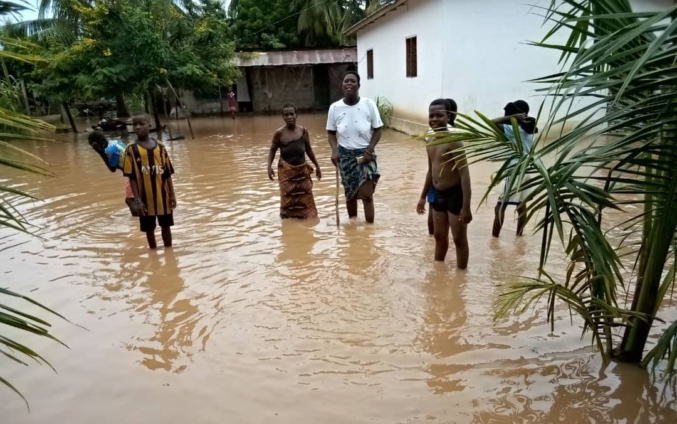
Perennial flooding continues to pose a grave risk to the socio-economic development of the city of Accra. With each rainy season, the city witnesses widespread inundation that disrupts livelihoods, damages infrastructure, and puts countless lives at risk. If decisive and sustainable interventions are not urgently implemented, the consequences will be dire. The recurrent floods threaten to cripple critical infrastructure such as roads, bridges, drainage systems, hospitals, and schools. The destruction of these essential public assets not only hampers daily life but also burdens the government with costly repairs and reconstruction efforts.
Businesses, particularly small and medium-sized enterprises (SMEs), are among the hardest hit. Floodwaters frequently damage inventory, disrupt operations, and deter investment, creating a climate of uncertainty and financial instability. This hinders job creation and slows down economic growth, with long-term repercussions for the city’s development. Moreover, the human cost is immeasurable. Lives are lost, families are displaced, and entire communities are exposed to health hazards and environmental degradation. Vulnerable populations, including children, the elderly, and the urban poor, suffer the most.
If the issue of perennial flooding is left unaddressed, the city of Accra risks a future of recurring disaster and diminished resilience. Proactive measures such as improved urban planning, investment in drainage infrastructure, enforcement of building regulations, and community-based climate adaptation strategies are not just necessary—they are urgent. The time to act is now, before irreversible damage is done.
A Strategic Call to Action: Addressing Perennial Flooding in Accra Before It’s Too Late
Perennial flooding in Accra is not merely a seasonal inconvenience—it is a crisis that threatens lives, livelihoods, and the future development of the capital city. At the heart of the problem lie three interlinked challenges: buildings constructed in waterways, poor drainage infrastructure, and ineffective waste management. Without bold, decisive, and strategic intervention, the damage to the city’s socio-economic fabric will be irreversible.
Strategic Approach to Solving Accra’s Flood Crisis
1. Comprehensive Urban Audit and Enforcement
• Immediate mapping of all illegal structures on waterways using geospatial tools and satellite imagery.
• Enforce demolition of encroaching structures with proper legal and humanitarian protocols, prioritising the most flood-prone zones.
• Establish a Flood Risk Management Task Force, made up of urban planners, engineers, environmental scientists, and legal experts to oversee enforcement and long-term planning.
2. Drainage Infrastructure Modernisation
• Reconstruct and expand existing drainage systems, particularly in low-lying urban areas, using flood-resilient designs.
• Develop green infrastructure, such as permeable pavements, vegetative swales, and urban retention ponds, to enhance natural water absorption.
• Adopt smart flood monitoring systems to issue early warnings and enable rapid response.
3. Integrated Waste Management Reform
• Deploy city-wide waste segregation systems and improve collection frequency, especially in densely populated suburbs.
• Ban indiscriminate dumping into drains, with strict enforcement and community policing support.
• Public education campaigns in schools, markets, and media to instil a culture of environmental responsibility.
4. Community Engagement and Resettlement Support
• Provide safe resettlement options for displaced households in partnership with housing authorities.
• Engage local chiefs, opinion leaders, and civil society to mobilise grassroots support and ensure sustained cooperation.
• Incentivise community-led drainage maintenance and reporting of illegal dumping.
5. Legislative and Policy Reform
• Review and strengthen urban planning laws to eliminate loopholes that allow unregulated development.
• Mandate Environmental Impact Assessments (EIAs) for all future construction projects within flood-prone areas.
• Integrate climate resilience planning into all municipal development strategies.
A Call to the NDC Government: Leadership Is Now or Never
The people of Accra are watching and waiting. This is not the time for political rhetoric—it is a moment for visionary leadership and decisive action. The NDC government must rise to the challenge and show that it stands with the people. Let the rebuilding of Accra begin with the reclaiming of its waterways. Let it be known that under the NDC, lives will no longer be lost to preventable floods. The clock is ticking. The future of Accra—and the safety of millions—depends on what is done now.
This is a direct call to the NDC government—a plea to act urgently and courageously to safeguard the city and its people.
********
Philip Kyeremanteng is a Chartered Scientist | Fellow of the Chartered Institution of Water and Environmental Management, UK.
Latest Stories
-
Tiptoe Lane’s tech takeover: The story behind Ghana’s booming informal phone market
45 minutes -
Abanga vows to use social media to counter NDC messaging ahead of 2028 elections
47 minutes -
Okai Mintah seeks Sabah Zita Benson’s support for NDC National Youth Organiser bid
1 hour -
Okai Mintah vows to strengthen NDC campaign machinery ahead of 2028
1 hour -
Mother of four and Jasikan teacher among new Telecel M’ahitti Promo winners
1 hour -
International Youth Shakers Conclave 2026 set to bring global young leaders to London
1 hour -
Gov’t is committed to addressing teachers’ conditions of service, deprived-area allowance – Education Minister
1 hour -
GoldBod’s structure encouraging galamsey – Afenyo-Markin
1 hour -
Tullow starts selling Jubilee, TEN crude to Ghanaian refineries
1 hour -
Local Government Service authorises rationalisation, redistribution of staff
1 hour -
PURC assures consumers of working to ensure quality services in Northern Region
1 hour -
Ghana develops US$4.28bn water financing framework
2 hours -
Christian Council calls for protection of mission schools’ religious identity
2 hours -
Mahama holds discussions with India’s External Affairs Minister
2 hours -
Even when you cough, they come after you — Abanga accuses Mahama govt of criminalising free speech
2 hours