

Audio By Carbonatix
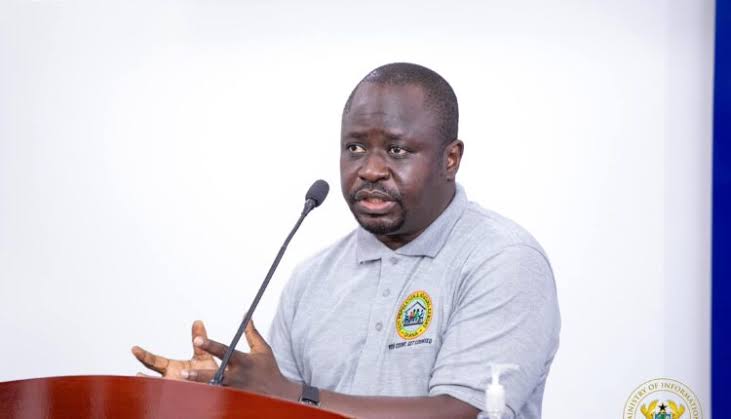
Government Statistician, Professor Samuel Kobina Annim, says there is a need for the auditing of existing policy documents to reflect national data statistics.
Speaking on JoyFM’s Super Morning Show, he stressed the need for government and its agencies to use data produced by the Statistical Service to address teething socio-economic issues in the country.
He said the focus on broad aggregates prevents state actors from addressing socio-economic problems right from the causal factors leading to poor allocation of funds and the slow progress of the country.
“Unfortunately as a country, we’re focused only on the aggregates. So everybody in Ghana talks about the inflation rate being 38.1%, but how many of us have clarity in our minds in terms of the 13 divisions in terms of the regional inflation rate, in terms of inflation for locally produced items and inflation for imported items?
“I go strongly on that and say anytime you focus on the national figures, you’re just reporting progress rather than how we can do well with a particular statistic. So it is about time we ask ourselves; what are the disaggregates? What are the trends? And how do they inform the policies that we make?” he said.
Professor Annim added that while it is expected of ministries to use data produced by the Statistical Service to audit their policy documents and measure their progress, they have failed to do so.
This he says is what has informed the Service’s decision to voluntarily do an audit of various ministerial policy documents to peg their progress.
“And again this is not happening as a country and this is what the Ghana Statistical Service has started doing.
"We pick a particular ministry’s medium-term or long-term plan and once we release any data set be it the demographic and health survey, be it the census, or any data that we collect, we go back to the policy document and say that this is where we are.
“Again this initiative should not come from Ghana Statistical Service this initiative should come from the ministries because they have developed medium-term or long-term ministry-level plans so they should work with us and say that given this data that you have collected can we benchmark where we are?
"What were the interventions that we put in? Why were we able to achieve it in this context and why were we not able to achieve it in another context?” he said.
Latest Stories
-
Power restoration fault suspected in Kumasi Central Market fire
4 hours -
The 7-foot giant of Ngleshie Amanfro: Seven-foot Ghanaian Ephraim Saawa dreams of joining the national basketball team
5 hours -
Government promises support for Kumasi Central Market fire victims
5 hours -
Vibes The Movie: Big Ghun’s Ghanaian film earns five nominations at 2026 REFFA
5 hours -
MamaCare CEO warns unresolved conflicts among health workers could undermine maternal and neonatal care
6 hours -
Health professionals urged to translate medical knowledge into practice to save mothers
6 hours -
Conflicts among care providers linked to maternal, neonatal deaths – Expert
7 hours -
GIS marks 10th TIME conference, champions improved teaching practices
7 hours -
BRICS Or Balance? What Ghana’s bid really means
8 hours -
GPRTU wants full TRAFFITECH-GH implementation to start in 2027
8 hours -
How 10-mile walks for basic education birthed a 50-year legal career for Justice Korbieh
8 hours -
Mahama announces plans to import electric wheelchairs for PWDs
8 hours -
KGL U17 Colts 2026: Western beat Prempeh Elite Academy to set up final final with Greater Accra Region
9 hours -
Late Solanke strike salvages 10-man Spurs draw at Man United
9 hours -
Gender Ministry to monitor welfare of Nana Akua Addo’s children amid domestic violence case
9 hours