

Audio By Carbonatix
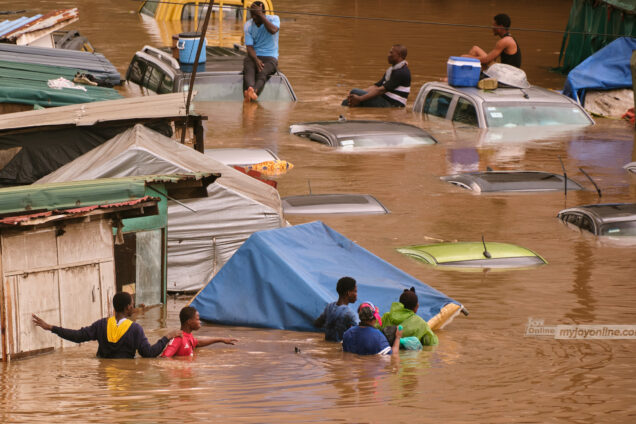
Former Member of Parliament for Adentan, Kojo Adu Asare, has blamed recurring flooding in Accra on poor leadership, weak planning and a lack of commitment to enforcing existing regulations.
According to him, Ghana already knows how to address the problem but has failed to act.
Speaking in an interview on Asempa FM’s Ekosii Sen show, Mr Adu Asare said Metropolitan, Municipal and District Assemblies (MMDAs) have focused mainly on issuing stop-work notices to developers instead of implementing comprehensive planning measures for communities.
“All the assemblies know is to issue stop-work notices on buildings, but they have no proper plan for the communities. We know what to do, but we won’t do it, so I have no solution to offer anymore,” he said.
According to the former MP, the country’s flood challenges are also driven by the collective actions of citizens and the failure of leadership at various levels to enforce planning and environmental regulations.
“Our contributions are also part of the problem and the lack of leadership at the various assembly levels. We are concentrating leadership at the apex, meanwhile leadership is even in our homes, churches and communities,” he stated.
Mr Adu Asare said people who insist on doing the right thing are often criticised, allowing indiscipline and impunity to persist.
“When you want the right thing to be done, you become the villain. We have allowed impunity to run for a very long time. We know what to do, but we won’t do it, so here we are,” he added.
He argued that although government can provide financial support after flood disasters, the problem will persist unless resources are backed by a long-term development plan.
“Money can be given out, but it won’t solve the problem if we don’t commit it to a plan that will make things work,” he noted.
Mr Adu Asare recalled proposing planning measures years ago, including requiring homeowners to leave portions of their compounds unpaved to allow rainwater to soak into the ground instead of flowing into already congested drains.
“Some years ago, I even suggested that everyone building should leave space for grass and not pave the entire house. All that water, when it rains, will try to find its way when the gutters are overflowing,” he said.
He lamented that discussions on flooding often fade once the rains subside, only to resurface after the next major downpour.
“Now the rains have stopped, we wait for next year and come and talk about the same problem,” he said.
Latest Stories
-
Absa Bank Ghana names Stephen Ato Frimpong as Board Chair
7 minutes -
Pickford ‘almost caused crash’ with careless driving
9 minutes -
Author and former politician Jeffrey Archer dies aged 86
20 minutes -
No education reform can succeed without teachers – Education Ministry
29 minutes -
Gauff condemns racist abuse after China Open win
45 minutes -
Medvedev disqualified for hitting spectator with ball
54 minutes -
Oliseh scores twice in late comeback win for France
1 hour -
Pentagon stops using Anthropic AI tools after blacklisting company, BBC told
1 hour -
From despair to dance: Family of nurse Salomey Baffoe rejoices after GH¢100k bail granted
2 hours -
Kejetia Phase III pricing talks loom as government moves to restart stalled works
2 hours -
Nchiraa Yam festival: Two killed, 14 injured as police restore calm
2 hours -
I draw inspiration for my songs from Reggae music – Lyrical Joe
2 hours -
AI must not replace human judgment in public spending – BoG Governor
3 hours -
Ghana should withdraw from 2027 AFCON – Kojo Addae Mensah
3 hours -
Team Ghana departs Accra for Angola ahead of Karting Africa Trophy
3 hours