

Audio By Carbonatix
Persons living with disabilities have raised concerns about accessibility barriers on websites and digital platforms, warning that poor design could exclude them from essential services and opportunities as Ghana accelerates its digital transformation.
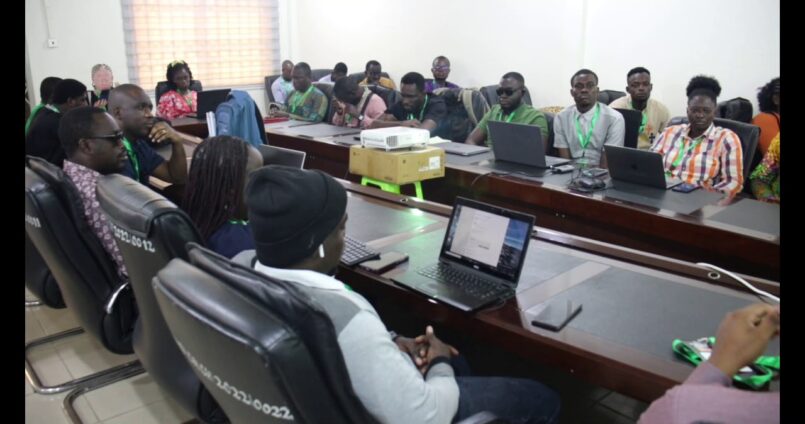
The concerns were raised at a digital accessibility workshop organised by Open Knowledge Ghana in partnership with the Internet Society Ghana Chapter.
The workshop brought together persons with disabilities, web developers, and technology experts to identify challenges faced by people with different impairments and explore ways to make digital platforms more inclusive.
A visually impaired participant, Sayena Susu, said some websites are difficult to navigate using assistive technologies because they are not properly configured to support users with visual impairments.
He said the problem can prevent users from accessing information or completing online transactions.
“You have a situation where you are not able to experience the website the way you are supposed to.”
Mr Susu cited online forms as an example, explaining that a visually impaired user may successfully enter all the required information but still be unable to submit the form because the submission button is not properly configured for assistive technology.
Web developer and disability inclusion specialist, Ephraim Tetteh, said developers must engage persons with disabilities directly during the design and development of digital platforms.
He said such interaction allows developers to understand the experiences of users and identify accessibility gaps that may otherwise be overlooked.
University of Ghana lecturer and disability inclusion specialist, David Koletey, said participants were also being introduced to web accessibility guidelines that developers are expected to follow.
“We have very good and competent technical people here who are going to take them through something we call the web accessibility guidelines.”
He said the guidelines are intended to ensure persons with disabilities can access websites and online content effectively.
President of the Internet Society Ghana Chapter, Dr Maud Ashon Elliot, reiterated the need to involve persons with disabilities from the beginning of the digital development process.
She said their participation would help developers identify barriers that may not be immediately apparent to people without disabilities.
According to her, accessibility should be built into digital platforms from the outset rather than added after development has been completed.
CHRAJ’s Digital Rights Focal Person, Elias Mane, also called on the government to ensure that public digital platforms are accessible to persons with disabilities.
He said this was particularly important as more government services move online.
Mr Mane stressed the need for direct engagement with the disability community to better understand the challenges users face when accessing digital services.
Stakeholders are consequently calling for stronger accessibility standards, greater involvement of persons with disabilities in digital product development, and improved digital skills training.
They say these measures are necessary to ensure Ghana’s digital transformation expands access to services and opportunities without leaving persons with disabilities behind.
Latest Stories
-
Contractors move to site for construction of 120-bed trauma hospital in Bole – Kwakye Ofosu
7 minutes -
Poor institutional leadership hindering Ghana’s creative industry – Oscar Provencal
19 minutes -
CSA demands faster sharing of cyber threat intelligence among financial institutions
35 minutes -
CSA warns Ghanaians to verify money requests as AI makes online fraud harder to detect
40 minutes -
NEIP CEO urges Africa to build systems that turn ideas into businesses
41 minutes -
Global Organised Crime Index says cybercrime is undermining Ghana’s digital sector
42 minutes -
Global Organised Crime Index says fraud and tax evasion are widespread across Ghana’s economy
45 minutes -
Threats to journalists limit coverage of cocaine trade in Ghana – Global Organised Crime Index
47 minutes -
Kumawu MP commissions 4-unit nurses’ quarters at Bodomase
48 minutes -
Two arrested after suspected narcotics intercepted at Kasoa
49 minutes -
Our pipes stock are all gone — Duraplast Marketing Manager counts losses after Avenor fire
53 minutes -
Ntim Fordjour calls for cancellation of Ghana-Colombia maritime deal over drug trafficking concerns
55 minutes -
Daily Insight for CEOs: The CEO’s Q4 leadership priorities
58 minutes -
Cybersecurity is a business risk, not just an IT issue – CSA Director-General
58 minutes -
NSA releases 70,072 postings for 2026/2027 national service year
59 minutes