

Audio By Carbonatix
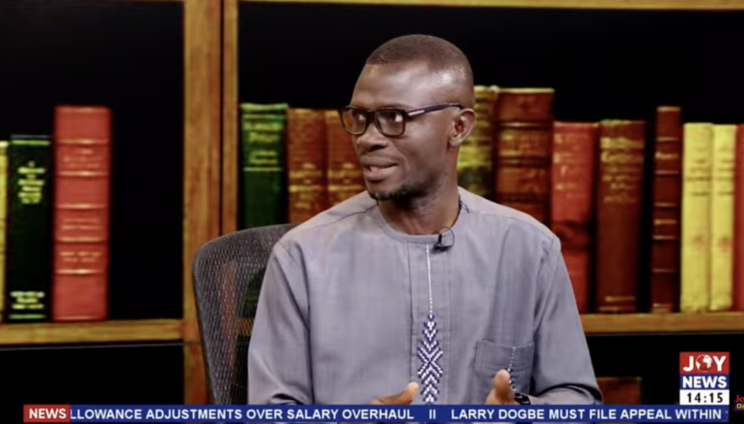
The General Secretary of the Ghana Journalists Association (GJA), Dominic Hlordze, has warned that powerful individuals and institutions are increasingly using defamation lawsuits as a tool to intimidate journalists, describing the growing trend as a serious threat to press freedom and investigative journalism in Ghana.
Speaking on JoyNews during a discussion on defamation suits against journalists, Mr Hlordze said many of the lawsuits are strategically filed against journalists who are perceived to lack the financial resources to defend themselves in court.
"The person realises that the journalist hasn't got what it takes to meet me in court. And so he runs to court to put you down," he said.
According to him, the practice amounts to a calculated abuse of the legal process, with some aggrieved parties deliberately bypassing available remedies such as the right of rejoinder and opting instead for litigation because of the financial and psychological burden it places on journalists.
"A lot of journalists don't have what it takes to even go to court. So if every day they are to go to the field to get stories, they now have to go to the courts to defend themselves," he stated.
Mr Hlordze disclosed that more than 15 defamation and related cases are currently pending against journalists and media organisations across the country.
He revealed that he is personally representing journalists in 15 of those cases, while acknowledging that numerous other cases remain outside the public spotlight.
The GJA General Secretary said the increasing wave of litigation is already affecting the quality of journalism, particularly investigative reporting.
"Investigative journalism is the lifeblood of journalism. And if that is going down, you can imagine what is happening with our journalism in the country," he said.
He noted that many journalists who previously specialised in accountability and investigative reporting have been forced away from active fieldwork because of the demands and pressures associated with ongoing court cases.
Mr Hlordze urged both journalists and aggrieved parties to make greater use of the right of rejoinder, describing it as an important mechanism for resolving disputes without resorting to litigation.
Under the principle, he explained, individuals or institutions who believe they have been misrepresented are entitled to submit a response, which media organisations have an obligation to publish.
"If you don't publish it, what you mean is that I'm calling your bluff. Take me to court," he said, describing how disputes often escalate when media houses fail to honour the obligation.
He, however, acknowledged why some complainants choose to proceed directly to court.
"Why should I give you an easy way by sending you a rejoinder to publish? Because if you had done your work well, you would have gotten my side of the story," he said, paraphrasing the perspective of those who feel unfairly treated by media reports.
Mr Hlordze cited a previous case involving a former Attorney General who opted to submit a rejoinder to the Graphic newspaper after disagreeing with a published story. According to him, the newspaper published the response and the matter was resolved without litigation.
He also urged journalists to strictly adhere to the GJA Code of Ethics, arguing that compliance would significantly reduce their legal exposure.
According to him, research conducted by the Association found that nearly 40 per cent of the provisions contained in the Code of Ethics overlap with existing laws, meaning that breaches of professional ethics often amount to legal violations.
"All they need to do is adhere to the GJA Code of Ethics and I'm telling you they would never ever get into that problem," he said.
Mr Hlordze stressed, however, that there is an important distinction between legitimate legal action arising from genuine journalistic errors and strategic lawsuits intended to suppress public-interest reporting.
"When you do that, you are in a way silencing journalism. You are trying to gag us," he said.
He added that the GJA remains deeply concerned not only about journalists currently defending defamation suits but also about the chilling effect the trend is having on younger journalists who may become reluctant to pursue investigative and accountability reporting.
Latest Stories
-
UG Vice-Chancellor urges swift operationalisation of National Research Fund
10 minutes -
Pope Leo to have surgery after lump found in lung
16 minutes -
Joseph Cudjoe writes: Ghana must break free from the dangerous mindset that natural resources are the foundation for wealth
40 minutes -
Children among 109 dead after boat capsizes off Djibouti, UN says
44 minutes -
OmniBSIC Bank’s 11th health walk promotes fitness and business growth
53 minutes -
2026 World Maritime Day: Danish Embassy organises “The Gulf of Guinea Speaks”
1 hour -
New Economy will tackle unemployment and restore hope – Ato Forson
1 hour -
IMMILAC president recounts personal losses as security women lead breast cancer awareness campaign in Wa
1 hour -
University of Ghana postpones October 12 reopening as GAUA strike persists
2 hours -
Bahass Foundation launches vocational skills training to support mental health recovery in Wa
2 hours -
NPP orders parliamentary aspirants and their supporters to suspend campaign activities
3 hours -
Techiman unites against child marriage: Joy Impact Makers Awardee leads charge on International Day of the Girl Child
3 hours -
Ghana Psychological Association calls for greater involvement of people with lived experience in mental health care
4 hours -
Ablakwa says Ghana could evacuate more citizens from South Africa if the situation worsens
5 hours -
Violence against girls must be tackled through individual responsibility – Gender advocate
5 hours