

Audio By Carbonatix
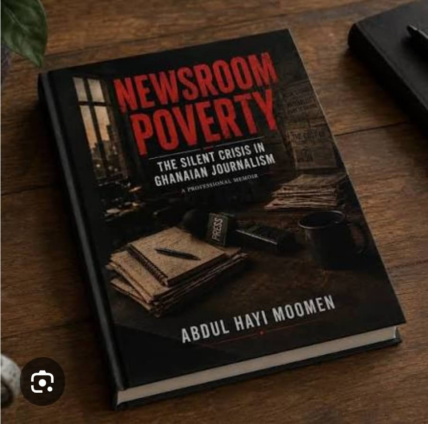
The conversation that many journalists have whispered in newsrooms for decades finally found a public stage on Saturday, August 1, 2026, when communications scholar and former broadcast journalist Abdul Hayi Moomen officially launched his new book, Newsroom Poverty: The Silent Crisis in Ghanaian Journalism, before a packed audience at the University for Development Studies (UDS).
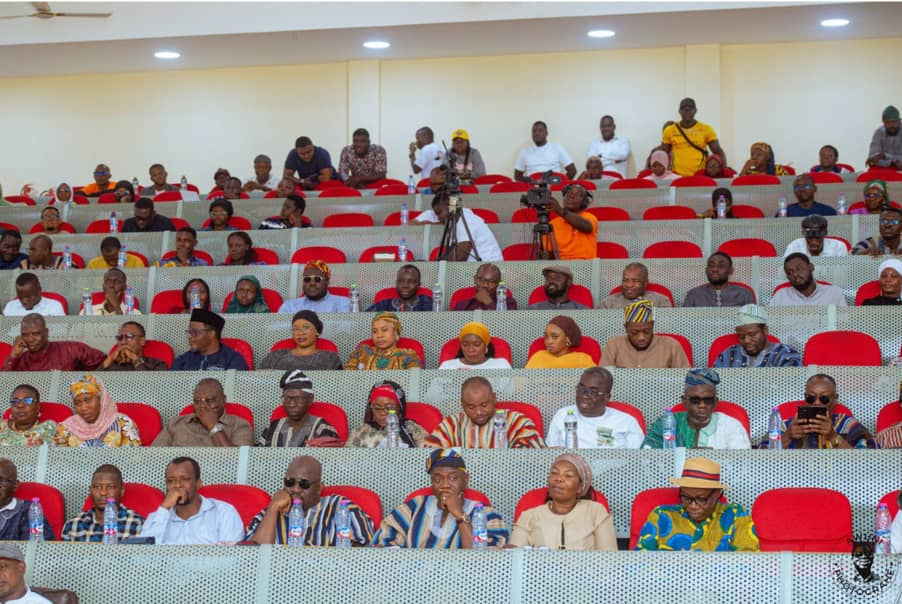
The over 300-seat Twin Oval Auditorium on the Tamale Campus of UDS was filled to capacity long before the programme commenced. Politicians, academics, civil society actors, media practitioners, traditional leaders, students, development partners and members of the public converged to witness what many described as more than a book launch.
It was the beginning of a long-overdue national conversation about the welfare and dignity of journalists in Ghana.
For many in attendance, the overwhelming turnout reflected not only the respect the author commands across professional circles but also the relevance of the subject he has chosen to confront.
Abdul Hayi Moomen currently serves as the Director of Public Affairs at the University for Development Studies. Before joining academia, he spent many years with the Ghana Broadcasting Corporation (GBC), where he worked as a journalist, news anchor and editor, experiences that form the foundation of the compelling narrative contained in the book.
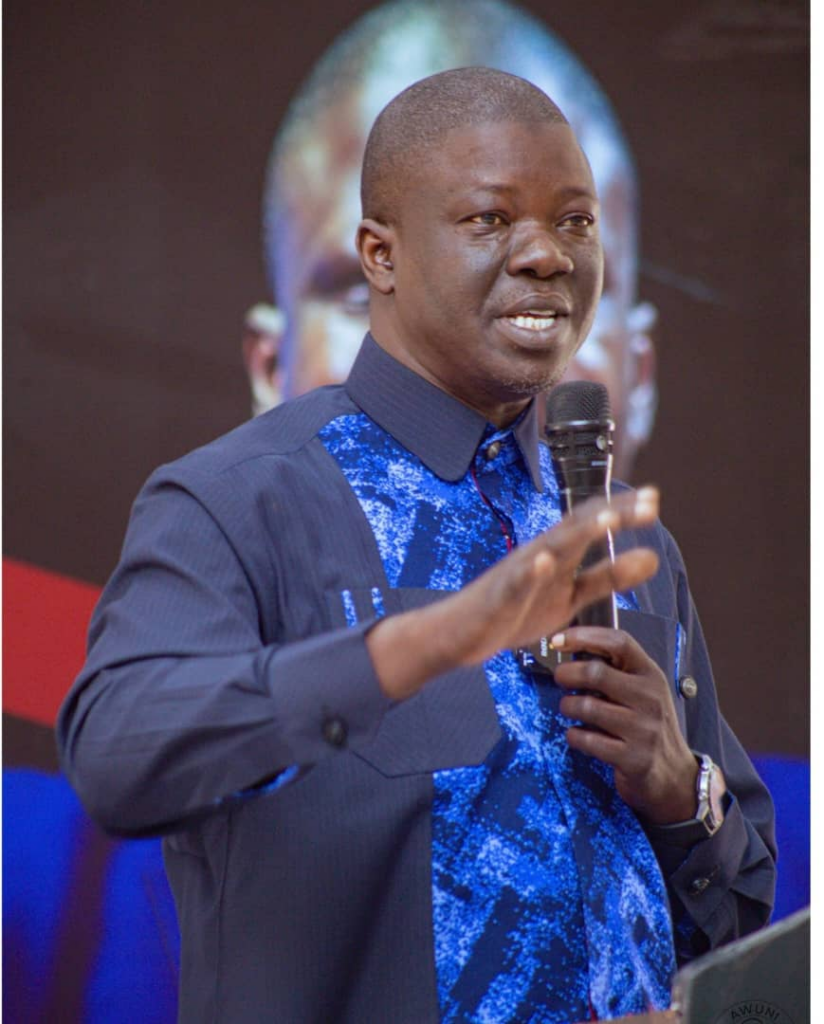
Although the subject matter was sobering, the atmosphere throughout the launch was remarkably lively.
The event, chaired by the Deputy Minister for Roads and Highways and Member of Parliament for Tamale North, Alhassan Suhuyini, featured celebrated investigative journalist Manasseh Azure Awuni as the Lead Master of Ceremonies.
From the moment he took the microphone, Manasseh transformed the auditorium into a theatre of laughter. With his trademark wit, he repeatedly turned the spotlight on the author, teasing Abdul Hayi Moomen about his experiences as a journalist, his writing journey, and even some of the stories contained in the book.
Each playful jab drew roaring laughter from the audience, with the author cheerfully accepting the jokes, creating a relaxed atmosphere that perfectly balanced the gravity of the day's discussions.
Guests described the chemistry between the two seasoned journalists as one of the unforgettable highlights of the launch.
The intellectual centrepiece of the programme was the review of the book by Dr. Wunpini F. Mohammed, Assistant Professor at Cornell University in the United States.
Delivering a thoughtful and emotionally engaging review, Dr. Mohammed described Newsroom Poverty as a courageous, timely and deeply human account of the structural hardships confronting journalists in Ghana.
She observed that the book moves beyond statistics and anecdotal complaints to present compelling personal experiences, institutional realities and broader systemic issues that continue to undermine the dignity of journalism.
According to her, the book challenges readers to rethink the contradiction of journalists being expected to hold society accountable while many struggle to secure decent livelihoods themselves.
She noted that the author skillfully exposes how poor remuneration, inadequate working conditions and the culture of "soli" have become symptoms of a deeper institutional crisis that threatens editorial independence, professional integrity and the future of quality journalism.
Dr. Mohammed further praised the book for amplifying voices that are rarely heard, arguing that journalists often spend their careers speaking for others while remaining unable to tell their own stories.
She urged media owners, policymakers, journalism educators, students and the wider public to engage seriously with the issues raised in the publication, describing it as an important contribution to ongoing conversations about media reform in Ghana.
In his address, Chairman of the occasion, Alhassan Suhuyini, reflected on his own journey through journalism before entering active politics.
Drawing from personal experience, the Tamale North legislator recalled the enormous fulfilment that comes with serving the public through journalism but admitted that he increasingly encountered situations where people expected him to solve problems that extended far beyond the influence of a journalist.
He explained that many vulnerable people looked to him not merely to report their struggles but to intervene directly by providing solutions, opportunities and resources.
According to him, those growing societal expectations partly influenced his decision to venture into politics, where he believed he could participate more directly in addressing some of the challenges confronting ordinary citizens.
Mr Suhuyini praised Abdul Hayi Moomen for documenting an issue that many journalists understand intimately but seldom discuss publicly.
He described the publication as an important national intervention that should stimulate policy discussions on improving the welfare, independence and professional standing of journalists.
Perhaps the most emotional moment of the ceremony came when Abdul Hayi Moomen delivered his address.
Speaking with conviction, the author stressed that the book was never intended to embarrass journalists or discredit media institutions.
Instead, he said, it seeks to expose an uncomfortable reality that has remained hidden behind television cameras, radio microphones and newspaper headlines. "This book is not an attack on journalism. It is a defence of journalists."
He reminded the audience that while journalists dedicate their careers to telling the stories of others, very few people ever pause to ask about the stories of those holding the microphones.
Reflecting on his own career, he delivered one of the lines that drew both applause and reflection from the audience: "There were times when my take-home pay could not take me home."
He described the widespread dependence on "soli" as a painful reality that diminishes the dignity of journalists and compromises public perceptions of the profession.
"No professional should have to depend on tokens simply to survive after a day's work. Journalism deserves dignity, not charity."
He added that journalists have become experts at amplifying the voices of everyone else while lacking the platforms to speak about their own struggles.
"Journalists speak for everybody, but almost nobody speaks for journalists. I hope this book becomes one of those few voices."
Calling for collective action, Abdul Hayi Moomen appealed to media owners, policymakers, journalism schools, civil society organisations and development partners to rethink how the country values journalism.
He maintained that improving the welfare of journalists is not merely a labour issue but an investment in democracy.
Several guests who attended the launch described the book as a significant contribution to media scholarship and national discourse. Senior journalists in Tamale commended the author for courageously articulating experiences that generations of media practitioners have endured in silence.
Academics praised the publication for combining personal narrative with thoughtful analysis, making it relevant both as a scholarly resource and as a practical reflection on the realities of Ghanaian journalism.
Representatives of civil society organisations noted that the issues raised extend beyond the media industry, arguing that the quality of democratic governance is closely linked to the welfare and independence of journalists.
Students, particularly aspiring journalists, said the book offers valuable insight into both the noble ideals and harsh realities of the profession, helping young practitioners prepare for the challenges ahead while inspiring conversations on reform.
Many attendees also paid glowing tribute to Abdul Hayi Moomen himself, describing him as a passionate communicator, accomplished journalist, dedicated academic and courageous advocate whose willingness to tackle difficult issues continues to inspire younger professionals.
As guests queued to purchase signed copies, one sentiment echoed throughout the auditorium: Newsroom Poverty is not merely a book about journalists; it is a call for Ghana to reconsider how it values those entrusted with informing the nation.
With a message that resonated across professions, the launch ended not as the conclusion of a publishing event but as the beginning of a wider national conversation on restoring dignity to one of democracy's most indispensable professions.
Latest Stories
-
Ghana’s Rabiu Alhassan joins board of International Fact-Checking Network, IFCN
7 minutes -
Argentina hit 7 as Burkina Faso land five hours before kick-off
11 minutes -
NPP’s choice of Kojo Bamba, is a rejection of ‘suit and big English’ – Mustapha Gbande
15 minutes -
Innovators urged to build low-cost, locally maintainable health solutions
18 minutes -
Frank Appiah Kusi, PhD: Governance Gaps, Transparency, and the Business of Football in Ghana
18 minutes -
Manhyia South MP charged with conspiracy, financial loss and money laundering
26 minutes -
Attorney-General charges Manhyia South MP over alleged GH¢9.85m financial loss
29 minutes -
Food Security: Buffer Stock CEO calls for more investment in Agri-Tech
29 minutes -
Three missing children found dead in parked vehicle in Tamale
39 minutes -
Nana Akomea denies reports linking his absence from NPP executives’ introduction to Kojo Bamba
39 minutes -
2026 U-17 WWC: Black Maidens arrive in Morocco for tournament
42 minutes -
GSA suspends pre-shipment inspection of imported used vehicles
49 minutes -
Elevate Africa confirms presidents, vice presidents and ministers for 2026 Annual Convening in Accra
1 hour -
Keta MP commissions 60-seater kindergarten facility to replace unsafe structure
1 hour -
Salomey Awiti-Baffoe’s lawyers welcome GH¢100,000 bail after earlier rejection
1 hour