

Audio By Carbonatix
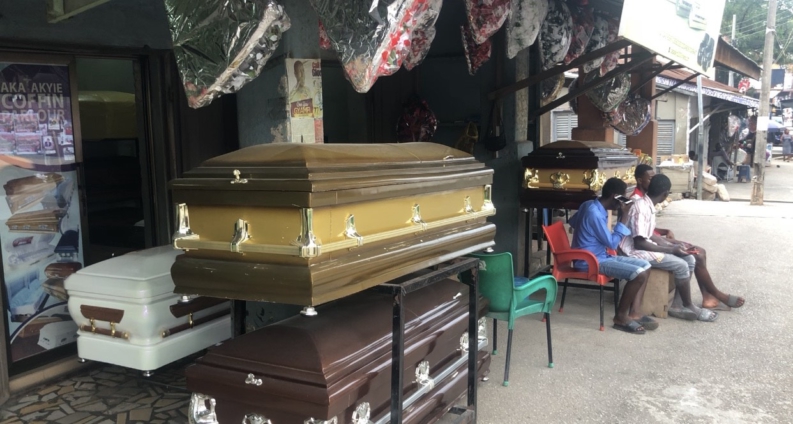
Coffin and casket manufacturers at Asafo in Kumasi are lamenting the high cost of raw materials.
The producers say they are frustrated over the high prices of significant materials like fillers, nails, pine, saw and fabrics to line coffins.
The extra expenditure on production is pushing the manufacturers to increase the prices of caskets in order to stay in business.
With inflation rising high, coupled with fuel and utility tariff increases, local businesses are on the brink of collapse.
Agya Appiah, who has about 30 years of experience in the production of caskets and coffins, says he is compelled to increase the prices of his products.
“I was an apprentice in 1992, but now I run my own business. The fabric we use to decorate the casket I bought for ¢200 on Friday, I was told today to pay ¢240. I couldn't buy it, so I had to come home to solicit the remaining amount.
"Things are expensive, I would also not sell them [caskets] at a reduced price. All manufacturers here have come to a consensus to increase and stick to one price, latest by next week,” he said.
“This casket is called ‘Abenwaha’, with a price range of ¢1,500 to ¢2,000. But now, If I don't sell it at ¢2,800, I may not be able to accrue my profit,” he added.
Kwame Malvin, who has been in the business for 3 years, says patrons are complaining about the new prices.
“Our work has been affected. I used to buy this filler at ¢80, currently, I buy it at ¢230. I used to finish two coffins a day. Buyers keep complaining because we scare them with the pricing.
"Starting next week, the prices of coffins will increase. The ¢1,000-priced coffins will be sold at ¢1,500. The ¢800-priced coffins would be sold at ¢1000,” he said.
Other producers like Akwasi Amoako Yeboah, who has been in the casket manufacturing business for 25 years, say he is recording low patronage due to the new prices.
He has called for the government’s support and intervention, especially in respect of access to wood.
“People come from Burkina Faso to purchase our wood because we are unable to buy them ourselves. With the high increase in materials, we have also increased our goods and it is affecting patronage.
"People hardly come around to purchase coffins. We need government to do something about it. This is very sad,” he said.
Latest Stories
-
FABAG commends Ato Forson’s over removal of 20% excise duty on locally manufactured fruit juices
7 minutes -
HIV stigma discourages testing, prevention and treatment in Ghana – Ghana AIDS Commission
9 minutes -
Blocking cocaine probe lends weight to claims of political protection for traffickers – Assin South MP
13 minutes -
NPP Vice Chair race: I may be the youngest, but most experienced – Nana B
15 minutes -
Last UK and US troops leave Iraq as anti-Islamic State mission ends
15 minutes -
Don’t stay home idle, embrace entrepreneurship while awaiting posting – Unemployed nurses urged
27 minutes -
Aayalolo buses not speeding on contra-flow lanes – GAPTE assures commuters
30 minutes -
Effia MP calls for Kurt Okraku’s removal, overhaul of Ghana football structure
30 minutes -
CAS hearing on AFCON final appeal by Senegalese Football Federation set for October 8
31 minutes -
STC fares to go up by up to 8% this week – Deputy MD
32 minutes -
Photos: Accra-Kumasi bypasses get new lease of life as contractors return to site
32 minutes -
Man allegedly swallows five SIM cards to conceal evidence after arrest
33 minutes -
After three finals, Ayikuma Methodist Basic School finally lifts National Juniors Challenge trophy
33 minutes -
Black Stars management ignored players’ health conditions ahead of Gambia game – Ernest Thompson alleges
34 minutes -
Ghana is 5th largest crypto market in sub-Saharan Africa; annual transactions around $21bn
35 minutes