

Audio By Carbonatix
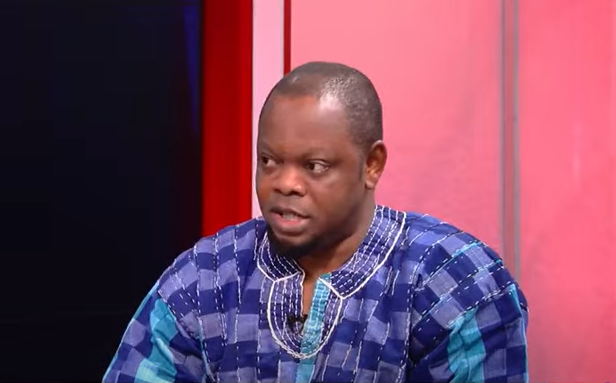
The Deputy Attorney-General and Deputy Minister for Justice, Justice Srem-Sai, has defended the recent High Court ruling on the Office of the Special Prosecutor (OSP), insisting that constitutional procedure must take precedence over policy intentions in the fight against corruption.
His comments come amid growing debate over the implications of the ruling, which questioned the OSP’s authority to prosecute without prior authorisation from the Attorney-General.
Speaking on JoyNews’ The Law with Samson Lardy Anyenini, Mr Srem-Sai argued that while the objective of strengthening anti-corruption enforcement is widely supported, it must be pursued within the confines of the Constitution.
“You cannot bypass the Constitution”
Mr Srem-Sai stressed that the desire to create an independent prosecutorial body cannot override established constitutional processes.
“If the Constitution provides a procedure for doing something, you must follow that procedure,” he said.
He warned that attempts to achieve policy goals through shortcuts—such as relying on ordinary legislation to alter constitutional arrangements—undermine the rule of law.
According to him, creating a fully independent prosecutorial authority would require a formal amendment of the Constitution, particularly provisions governing the powers of the Attorney-General.
The Deputy Attorney-General rejected arguments that the potential benefits of an independent OSP justify a flexible interpretation of the law.
“In public law, the procedure matters as much as the outcome,” he said.
“You cannot say that because you want a good result, you will ignore the process.”
He cautioned that prioritising outcomes over procedure could open the door to abuse of power in the future, explaining that we may get a good result today, but the same approach could be used tomorrow to achieve a bad outcome.
Mr Srem-Sai described efforts to interpret the OSP Act as granting independent prosecutorial powers as a “backdoor” attempt to amend the Constitution.
He argued that Parliament cannot, through ordinary legislation, reassign powers that the Constitution has explicitly vested in another office.
“There is a clear process for amending the Constitution, and that process was not followed,” he said.
The Deputy Attorney-General warned that disregarding constitutional limits in one instance could set a precedent for further encroachments on the separation of powers.
He cited the risk that Parliament could, in future, attempt to reassign judicial or executive powers without proper constitutional amendments.
That is why exists—to
Srem-Sai argued that the very essence of the rule of law is to prevent arbitrary exercise of power.
While acknowledging public support for a strong and independent anti-corruption body as the OSP, Mr Srem-Sai maintained that reforms must be pursued lawfully, emphasising that questioning the legal basis of the OSP’s powers does not amount to opposition to the institution itself.
He said it is not about weakening the fight against corruption but rather about ensuring that the fight is conducted within the law.
Latest Stories
-
I do not see myself as better than anyone – NPP’s 1st Vice Chair Kojo Bamba
26 minutes -
Police blur the line between invitations and arrests – Reindorf Twumasi Ankrah
1 hour -
Turning invitations into arrests is making citizens reluctant to assist police – Twumasi Ankrah
2 hours -
The Traffitech-GH SMS spot-fine system: The good, the sad, and the funny – Bright Simons writes
2 hours -
Hawa Koomson pledges experienced and mature leadership of NPP women’s wing
3 hours -
Young woman found dead at Kasoa Peace Town
3 hours -
Playback: The Law examined lawful arrest in Ghana
4 hours -
Mahama urges African governments to treat healthcare as an investment, not budget cost
4 hours -
Bawumia congratulates John Boadu and new NPP executives, pledges support ahead of 2028
4 hours -
Aksa Energy delegation pays courtesy call on GRA Commissioner-General
4 hours -
‘No talent should be left out’ – Bawumia pledges inclusive NPP campaign for 2028
5 hours -
Prof. Mike Oquaye recounts how he blocked the Special Prosecutor’s attempt to arrest Bawku Central MP
5 hours -
Make health sovereignty a priority for Africa – Mahama
5 hours -
Dorimon Naa, Wa West DCE lead massive clean-up exercise; threaten sanctions against recalcitrant residents
5 hours -
Photos from Adom FM Y2K Jam
5 hours