

Audio By Carbonatix
A study conducted by African Education Watch, an educational civil society organisation, has revealed that prospectus and other expenses by parents outweigh the cost incurred by the government under the free Senior High School programme.
The report observed that the government's average spending per student for boarding schools was GHS 1,147 and 1,107 for day students.
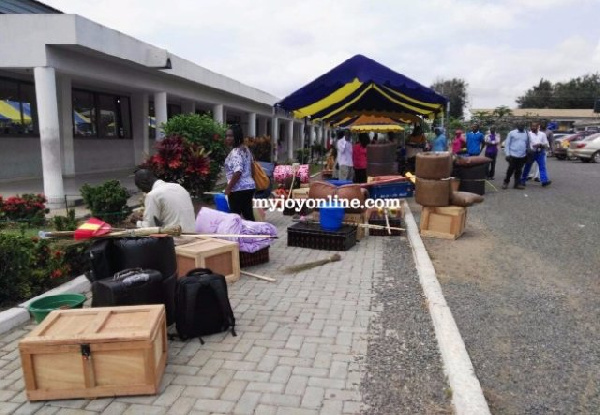
The report said parents spent GHS 2, 477 on prospectus for their wards in the boarding schools and spend an extra amount of GHS 4, 000 to buy other personal items, including perfume, detergents, and sanitary pads, in the 2021–2022 academic year.
Mr. Divine Kpe, Senior Programmes Officer, African Education Watch, made the presentation during a conference on education financing in Accra.
The report was on the topic “The Financial Burden of the Free SHS Policy and Implications for Equitable Access to Education.”.
The cost borne by the government was analysed using free SHS budgetary allocations and expenditures obtained from the Ministry of Education, Ministry of Finance, and Parliament for the period 2017–18 to 2022–23 academic years.
The cost to parents was analysed using historical prices of prospectus items from the Ghana Statistical Service.
According to the report, the prices of the prospectus increased by 38 percent from a percentage of 36 during the initial implementation stage of the policy.
Mr Kpe stated that parents of continuing day students reported spending an average of GH¢4,400 annually on their children’s education, with transportation constituting 40 percent, breakfast of 50 percent, and 10 percent on books.
The report also revealed that parents of day students spent GHC5,507 inclusive of prospectus costs, which outweighed the government’s spending of GHS1,107.
The report revealed that financial constraints contributed to a 15 percent failure of candidates to honour their admission in the 2022–2023 academic year.
It attributed the failure to honour admission to the high cost of the prospectus and other education materials.
To minimise the cost burden of the prospectus, the report recommended that, in the medium to long term, the Ministry of Education must develop and implement a strategy to focus on children from the poorest households using data from the LEAP programme.
That, the report revealed, would enable the government to spend more to cover the full cost of secondary education for students from lower-income households.
The report recommended that the Ministry of Finance improves the disbursement of funds under the policy in line with the objectives, implementation arrangements, and cash flow projections.
Latest Stories
-
Theovision provides free healthcare to 2,500 rural residents and Ejura prison inmates
5 minutes -
UG warns public against fake resumption and hall fees notice
43 minutes -
‘Follow Ghana’s steps’ – IMF Africa Director hails economic gains
1 hour -
Kwame Nkrumah’s son Gamal dies; burial scheduled for Saturday in Egypt
1 hour -
Ghana will beat IMF’s upgraded 5.7% growth forecast – Ato Forson
1 hour -
Middle East tensions, global risks to shape November policy rate decision – BoG Governor
1 hour -
MTN Ghana to invest $1.1bn over three years, deploy 500 new sites in 2026
2 hours -
15 arrested over alleged sand-winning activities along new Accra-Kumasi Expressway project
2 hours -
Agriculture slows to 3.9% as Ghana’s economy grows by 6%
2 hours -
Government launches rCOMSDEP to promote responsible mining in Western Region
2 hours -
Foreign Affairs Ministry procures 20 pickups to improve passport services
3 hours -
Oil prices retreat as investors weigh supply outlook, Middle East tensions
3 hours -
Mahama Ayariga highlights Jimi reclamation project as effort to tackle flooding
3 hours -
Ayine pushes duty-lawyer scheme to protect suspects at police stations
3 hours -
Stephen Amoah criticises 20% digital services tax as excessive
3 hours