

Audio By Carbonatix
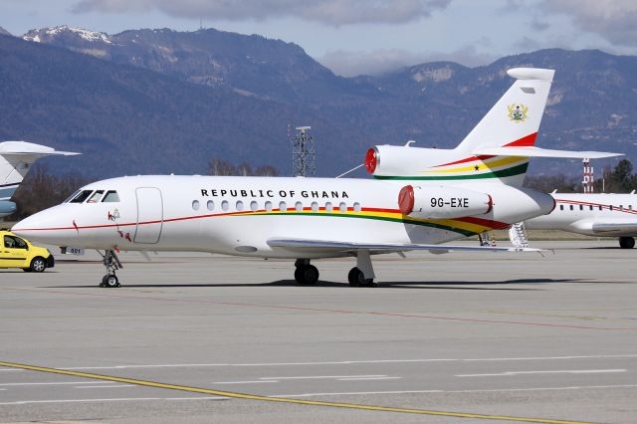
Policy analyst and Vice President of IMANI Africa, Bright Simons, has urged Ghanaians to focus on data-driven analysis and stronger public oversight in national security decision-making, as discussions continue over the return of Ghana’s Presidential Jet from mandatory servicing.
In a detailed post on X, Mr. Simons said public debate over the safety and suitability of the jet has been clouded by sentiment rather than facts, despite assurances from the aircraft manufacturer and a “world-class maintenance facility” that handled the servicing.
1. I mentioned that Ghana's Presidential Jet is back in Accra from mandatory, periodic, servicing and has undergone extensive checks.
— Bright Simons (@BBSimons) November 15, 2025
2. A surprisingly large number of Ghanaians don't seem assured even though the manufacturer of the plane and a world-class maintenance facility… pic.twitter.com/OuDYUoHNvA
“Feelings aren’t very useful in engaging with this kind of subject. One must be prepared to be driven by data and analysis,” he wrote.
The Presidential Jet recently returned to Accra after undergoing extensive checks, but concerns have been raised on social media about its airworthiness. Some critics suggested that the President use an alternative private aircraft — nicknamed the “Dzata Jet.” But Mr. Simons dismissed such suggestions, noting that the private jet is 25 years old, compared to the 15-year-old presidential aircraft, which also boasts three engines, Honeywell avionics, and a nearly 20% greater flight range.
He argued that the real issue is not which plane the President uses, but whether Ghana’s security institutions have the professional independence and capability to advise on such matters. “What should be of interest is the level of capability of the Ghana Air Force to provide thoroughly professional advice in such situations. Is the environment in Ghana cordial to such professional independence?” he questioned.
Mr. Simons warned that without a credible public culture of policy scrutiny, citizens cannot be confident that decisions made behind closed doors meet the highest standards. He pointed to other defence procurement controversies—including Ghana’s stalled acquisition of 19 armoured vehicles from Israel—as examples of opaque processes that undermine public trust. “After ~$40m of the $86m paid, not a single one has shown up since 2021,” he noted, adding that Ghanaians have no clarity on what went wrong or how the renegotiation announced by the new government improves the situation.
To raise the standard of security policy discussions, he called for a stronger think-tank ecosystem — similar to those in countries like Singapore, China, Korea, the UK and the US — and a more engaged citizenry that demands accountability. Without such a “critical policy audience,” he argued, politics and policy will continue to operate in disconnected silos.
He described this disconnect as “katanomics,” a framework he says explains many of Ghana’s long-standing collective action failures.
Mr. Simons’ comments add to growing public conversations about transparency, accountability, and the strength of Ghana’s security institutions at a time when the country faces sensitive defence and procurement decisions.
Latest Stories
-
From Campaign Propaganda to Gov’t Accountability: When the message-makers demand a seat at the table
15 minutes -
Ashanti Region Security Coordinator warns sand winners to stay off Accra–Kumasi Expressway site
19 minutes -
PZ Cussons Ghana promotes hand washing among schoolchildren through Camel campaign
42 minutes -
30 NDC aspirants file nominations in Upper West as regional election approaches
57 minutes -
UPSA launches laptop assembly plant, requiring new students to assemble their own devices
1 hour -
UCC sociologist calls for action on gender inequality to end child marriage
1 hour -
LSN questions Ghana’s proposed five-year presidential term and DCE election reforms
1 hour -
AFCON 2027Q: Black Queens Coach to lead Black Stars for Somalia doubleheader with Tanko, Attram as assistants
1 hour -
AMA completes road repairs on Kwame Nkrumah Avenue
1 hour -
Law Students’ Network warns executive dominance could undermine constitutional review
1 hour -
Mahama to meet relevant stakeholders over concerns about the new Customs Act
1 hour -
CHASS demands a 20% increase in SHS funding and payment of outstanding debts
1 hour -
Investigation launched after male body found in County Cork
1 hour -
We have been scammed by NDC, government is only doing PR – Abanga Fuseini
1 hour -
Tamale Teaching Hospital records 44 new breast cancer cases in six months
1 hour