

Audio By Carbonatix
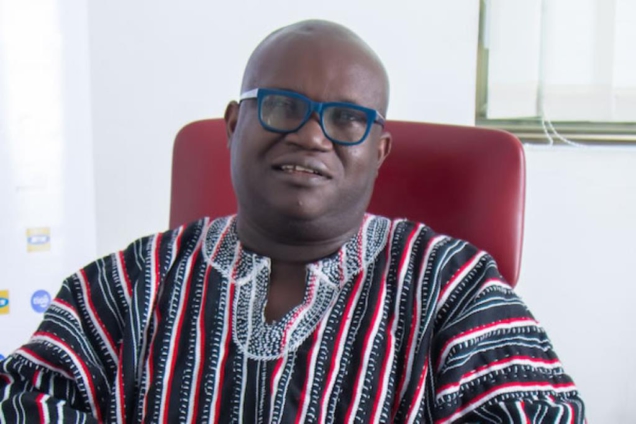
The Chief Executive Officer of the Ghana Telecommunications Chamber has called for the reduction of the electronic transactions levy (E-levy) from 1.5% to 0.1%.
According to Dr Ken Ashigbey, the introduction of the e-levy at 1.5% has proven counterproductive to both the government and the development of Ghana’s digital economy.
He explained that while calling for a total scrap of the tax measure would be insensitive considering the government’s dire need for money amidst economic turmoil, reducing it to 0.1% would revamp the digital economy thus generating more revenue for government.
Speaking on JoyNews’ PM Express Business Edition, he said, “Our proposition is the fact that, you know, they should scrap it. But we need to be real, government needs money at this particular stage.
"The deficit position is not good for the industry, it affects the industry, it’s one of the things that would account for the depreciation of the cedi. The macros would be destabilised.
So we think that the best thing to do is to reduce the level. Some in the industry have talked about 0.5, but I have said that the best thing to do is to do 0.1%.”
He added that while the government reduces the rate, it should also place a cap on it.
Dr Ken Ashigbey suggested that transactions that are 5,000 cedis and above should only attract a fixed e-levy rate to attract more large transactions on mobile money platforms.
According to him, the current cap-less system makes it most undesirable to transact business with large sums of money via digital platforms.
“You know, push the level down to 0.1 and then put a cap on it. Say ¢5,000. At ¢5,000 the levy is fixed so that if anybody wants to send ¢10,000, you know, that will happen,” he said.
“Take out the discrimination between the ¢20,000 that you give to the banks and then you give to mobile money so that the discrimination is not based on that,” he added
On the other hand, Dr Ashigbey is calling on the government to place a cap on the amount of cash that can be used in a transaction.
According to him, when physical transactions are capped at ¢2,000, for instance, people will be forced to transact business via mobile money platforms for large transactions.
“Another innovative thing that we would say is that put a cap on any transaction that can be done by cash, so let’s say ¢2,000. If you want to do any transaction above ¢2,000 use a digital means for mobile money, for the banks and all of that.
“What will happen is that a lot of the things that happen underground... a lot of that you’ll be able to take them off and then you’ll be able to see a lot of movement in terms of cash and that also will help,” he said.
“And then in terms of government payments, make sure that all government payments mandatorily are made simple and let people be able to pay so that tolls that people pay in the market and all that will use these digital means. And if you’re going to do that make sure that it is seamless, it’s not difficult to do,” he added.
Latest Stories
-
Stakeholders demand action against foreign-led illegal mining in Ahafo Region
19 minutes -
Ghana handed tricky draw at 2026 Amputee World Cup
27 minutes -
2024 Nyankpala election violence: Youth group petitions authorities over slow probe
31 minutes -
Ghana, UNICEF strengthen partnership to advance child protection
55 minutes -
Day Two of 3rd Republic Bank-JoyNews Habitat Fair ends with great homeownership offers and financing solutions
58 minutes -
Guinness Ghana DJ Awards 2026 Pub Fest celebrates Ghana’s DJ culture as Accra turns up the energy
1 hour -
10th woman found dead in South Africa’s string of killings
1 hour -
French Embassy trains Ghana Police CTU in counter-terrorism operations
2 hours -
UPSA uncovers mass results manipulation involving 178 students, over 500 results compromised
2 hours -
ECG announces planned power outages in parts of Tema from Sept. 29 to October 1
3 hours -
Sylvester Mensah urges Latenu FM to promote trade, export opportunities in Ga
3 hours -
Ga language under threat of decline as children shy away from speaking it – Sylvester Mensah
3 hours -
‘Let every Ga child you raise know the Ga language and story’ – Sylvester Mensah
3 hours -
‘We are not deterred’ – Ablakwa responds to backlash over South Africa evacuation
3 hours -
Day Two: Republic Bank-JoyNews Habitat Fair gains momentum at Junction Mall
4 hours