


Audio By Carbonatix
Policy Advisor at the John A. Kufuor Foundation, Nana Ama Oppong Duah, says Ghana needs greater youth and women participation in the rice value chain to further strengthen the sector.
She notes that while significant successes have been achieved in efforts to enhance productivity and reduce rice imports, increased involvement of these groups would improve and sustain those gains, as the farming population is ageing.
She says a development assistance initiative called the Ghana Rice Project, which was rolled out from 2018 to 2021, helped strengthen the rice sector, and efforts will be made to improve upon the gains.
As part of the initiative, farmers received certified, locally developed rice seed varieties and benefited from improved extension services delivered through village-based advisors (VBAs). Input distribution systems were also strengthened through linkages with agro-dealers.
The project further supported rice millers with targeted training programs, while a national campaign was launched to promote the consumption of Ghanaian-produced rice and advocate for policy improvements in the sector.
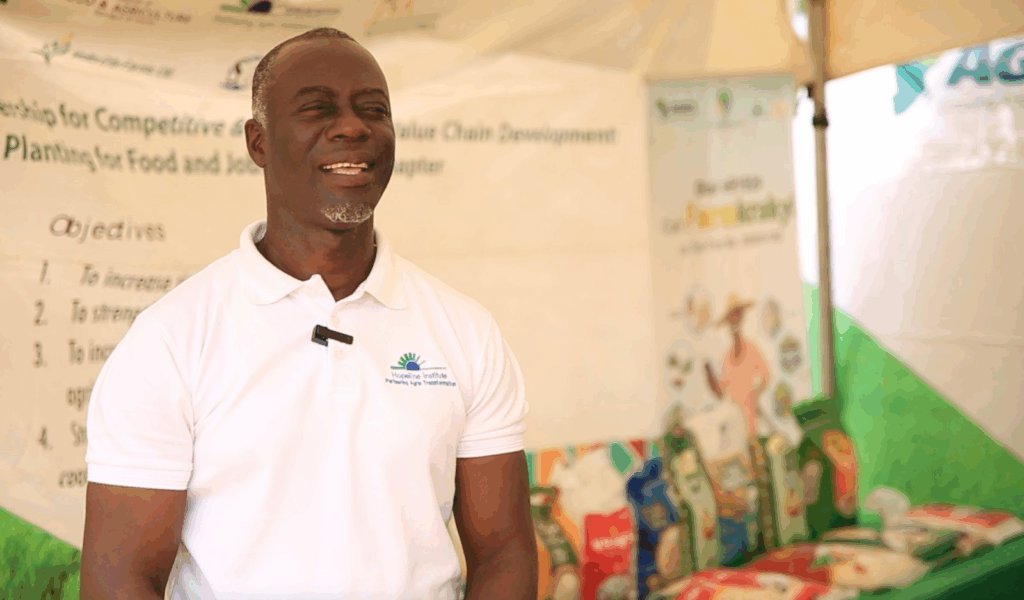
Chris Adjanyo of Hopeline Institute, one of the project implementers, noted that the initiative supported over 128,000 farmers by improving their access to quality inputs, extension services, and market opportunities, enabling many of them to double their yields and increase their incomes.
“At the time that we started this project, the yield per hectare on average was about 1.8 tonnes per hectare.
But at the end of the project, we pushed this yield all the way to 2.8. Some places have gone as far as 3.0,” he said.
Mr. Adjanyo explained that more Ghana rice brands have hit the market since 2018.
“There is an increase in visibility for Ghana Rice. The time that we started this project, we had, just about ten major brands of Ghana Rice. As we speak today, we have more than 140 major brands registered with the Food and Drugs Authority,” he said.
He explained that through advocacy efforts by the project, there was “a government directive that every public event which will be paid for by the state, has to source Ghana Rice if they are going to use rice.”
“In addition to that, as an importer, you were required to source about 60% of your rice, which you put into your channels locally. What it means for the local production is that there is always a market for them. So, they are encouraged to produce and produce more,” he added.
Mr. Adjanyo explained that through the project, rice producers were also trained to improve the quality and packaging of rice produced in Ghana.
“Quality of rice has improved… Most of the companies have moved from the old type of packaging to this new form of packaging… And all this is as a result of the work we did with the AGRA Ghana Rice project,” he said.
Madam Oppong Duah of the John A. Kufuor Foundation, another project implementer, emphasised that the initiative helped organise farmers into cooperatives under the Ghana Rice Interprofessional Body (GRIB), enhancing their access to support services.
She also noted that the project played a significant role in strengthening government policies aimed at developing the rice sector.
“The other policy action that we were able to achieve was that the government set up a Rice Fund. At the time, it was GH¢20 million. It was for rice millers to cover operational costs or to buy paddy, and also to improve some of their infrastructure,” she explained.
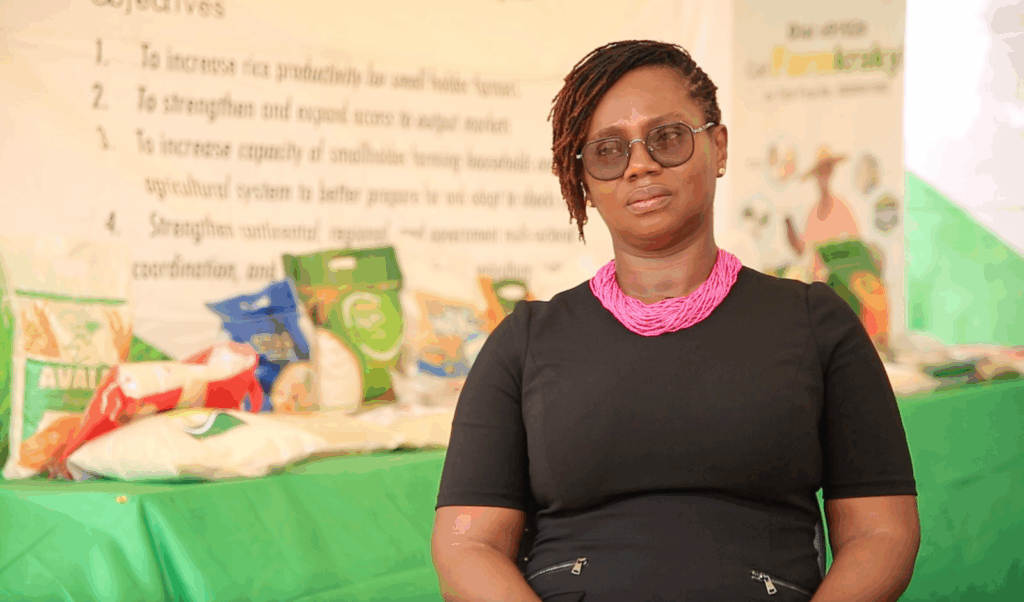
Madam Oppong Duah says a new upcoming phase of the project will focus on increasing the participation of youth and women in the rice value chain.
“What we are trying to do with this new grant is to get a lot of young people involved, and women as well. Not only rice production, but also processing and aggregation.
"As we know, the farming population is ageing, and so if we do not bring in more young people, we will lose out a lot,” she said.
She says the new project will also work with the Ministry of Food and Agriculture to strengthen the Ghana National Rice Development Strategy (GNRDS).
The GNRDS, launched in 2009, aimed to improve rice production, reduce imports, and increase farmers' incomes. It focused on improving irrigation, fertiliser use, and other technologies to boost yields.
“We will also be working with the government on the GNRDS. In the past, we did the review. But now, we need to start implementing it. So we will be working with the ministry to look at concept notes for implementation,” she explained.
Madam Oppong Duah says the project will also prioritise harmonising regional policies on the rice sector.
“We will be working not just in Ghana but also at the ECOWAS level. Working with the ECOWAS Rice Observatory, so that at the regional level, we also have the protocols that are in favour of the rice value chain in the country,” she said.
Godfred Mensah, who is one of the project beneficiaries, said it helped him improve his yield.
“The inputs helped us increase productivity. I got 65 bags of rice from my 4-acre field.”
Ordinarily, that size of farm should have given him 20 bags. Another farmer said: “We have been able to increase our production to even five tonnes per hectare.”
Baba Alhassan, a farmer in the Ejura District, explained, “People did not like Ghana Rice because of stones. But through the other training and support equipment, now our rice doesn't have stones. So, our customers love Ghana rice.”
Latest Stories
-
Tarkwa court jails labourer for three years over GH¢123,000 theft
26 minutes -
GAEC must retain nuclear scientists for Ghana’s nuclear ambitions – Minister
58 minutes -
Man reportedly mistaken for game and shot by hunter dead in forest
1 hour -
19-year-old mason jailed 15 years for defiling seven-year-old pupil
1 hour -
Ghana’s banking sector assets rise 20.47% to GH¢500.2bn – BoG Governor
1 hour -
22 injured as Sprinter bus overturns at Sege after tyre burst
1 hour -
UN housing expert urges Ghana to strengthen Rent Control Department amid housing affordability concerns
1 hour -
Delta-BCI partnership reaches 166,000 people with breast cancer education
1 hour -
Power restoration fault suspected in Kumasi Central Market fire
7 hours -
The 7-foot giant of Ngleshie Amanfro: Seven-foot Ghanaian Ephraim Saawa dreams of joining the national basketball team
7 hours -
Government promises support for Kumasi Central Market fire victims
7 hours -
Vibes The Movie: Big Ghun’s Ghanaian film earns five nominations at 2026 REFFA
8 hours -
‘I’m a fulfilled man’—Justice Korbieh on missing out on Supreme Court despite two nominations
8 hours -
MamaCare CEO warns unresolved conflicts among health workers could undermine maternal and neonatal care
8 hours -
Health professionals urged to translate medical knowledge into practice to save mothers
8 hours