

Audio By Carbonatix
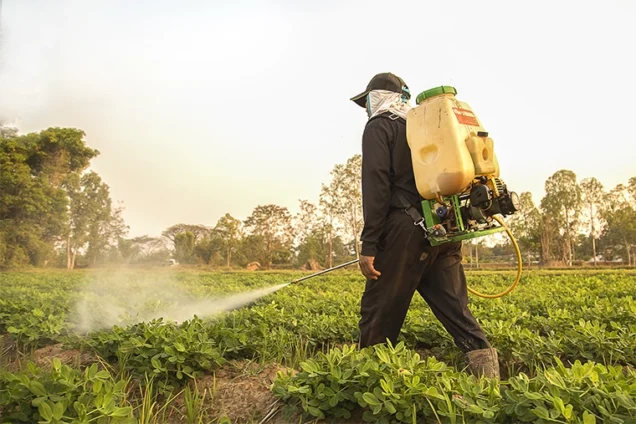
In a recent advisory to the Ministry of Food and Agriculture, renowned rural development expert Maxwell Abilla has raised concerns over the rampant use of pesticides and chemicals in Ghana’s agricultural sector. His open letter to Dr Bryan Acheampong, the Minister of Food and Agriculture, has sparked positive discussion in mainstream media, shedding light on the pressing need for sustainable agricultural practices.
Abilla’s communication highlighted the significant threats that excessive pesticide and chemical usage poses to both public health and the environment. "The continued reliance on chemical inputs in farming is leading to widespread environmental contamination and a decline in soil fertility, which, in turn, is contributing to serious health issues such as neurological and reproductive problems," Abilla noted. He underscored that while Ghana’s Pesticides Control and Management Act of 1996 provides a comprehensive framework, the lack of enforcement and monitoring exacerbates the risks.
The rural development expert has called for immediate policy revisions to mitigate these challenges. His advisory advocates for a two-pronged approach: strengthening the enforcement of current regulations and promoting Integrated Pest Management (IPM) techniques. IPM, which encourages biological and ecological control measures, offers a sustainable alternative to the heavy dependence on chemicals, ensuring a balanced approach to farming that aligns with environmental conservation efforts.
Maxwell Abilla’s call for action also includes increased education and capacity-building initiatives for farmers. He emphasized the need for a multi-stakeholder approach, involving government agencies, agricultural organizations, and academic institutions, to collaborate on implementing safer farming practices. "Farmers need to be educated on the dangers of excessive chemical use and be trained in alternative methods such as crop rotation and the use of biopesticides," Abilla urged.
Dr Bryan Acheampong has acknowledged the advisory, stating that the ministry is considering the recommendations and will work towards fostering a more sustainable agricultural environment. "We are committed to addressing these concerns and ensuring that Ghana’s agriculture remains both productive and safe for future generations," he said.
The advisory further calls for greater investment in research and development to explore new pest management strategies that reduce dependence on harmful chemicals. This, Abilla believes, would not only protect the environment and human health but also position Ghana as a leader in sustainable agricultural practices.
As discussions on this vital issue continue, stakeholders are optimistic that the Ministry of Food and Agriculture will take the necessary steps to safeguard the country’s agricultural sector while promoting the well-being of its citizens and the environment.
Latest Stories
-
ECG announces planned power outages in parts of Tema from Sept. 29 to October 1
13 minutes -
Sylvester Mensah urges Latenu FM to promote trade, export opportunities in Ga
27 minutes -
Ga language under threat of decline as children shy away from speaking it – Sylvester Mensah
32 minutes -
‘Let every Ga child you raise know the Ga language and story’ – Sylvester Mensah
38 minutes -
‘We are not deterred’ – Ablakwa responds to backlash over South Africa evacuation
40 minutes -
NCA announces major voice and data disruption across Northern Ghana due to fibre cuts
1 hour -
Photos: Housing solutions take centre stage at Day 2 of the 3rd Republic Bank-JoyNews Habitat Fair
2 hours -
Ghana Air Force passes out 293 recruits after six months of intensive training
3 hours -
EOCO vrs Baffour Awuah: EOCO should have secured warrant before arrest attempt at court – Inusah Fuseini
3 hours -
Triple fibre cuts disrupt telecom services across Northern, Oti regions – Sam George
3 hours -
Politicisation could undermine parliamentary probe into cocaine seizures – Dr Osae-Kwapong
3 hours -
EOCO chases MP: Can Section 41 cure lacuna in EOCO Act? – Inusah Fuseini asks
3 hours -
GNFS, GWL inspect fire hydrants in Ministries enclave; 23 found faulty
3 hours -
Gov’t directs release of 50,000 bags of grain to ECOWAS
3 hours -
Ghana, Germany deepen cooperation on railways, labour mobility
3 hours