

Audio By Carbonatix
Pollutants from wastewater treatment plants in Ghana are released into water bodies and the environment due to poor knowledge about recycling treatment technologies.
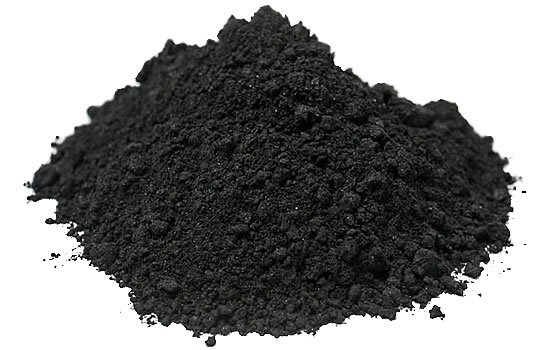
In a bid to curb this, the Regional Water and Environmental Sanitation Centre, Kumasi (RWESCK) at the Kwame Nkrumah University of Science and Technology and Sewerage Systems Ghana Limited are using activated charcoal from faeces to purify waste water.
The results of their research is contained in the journal, Advances in Materials Science and Engineering.
The study sought to evaluate the performance of a novel material; faecal sludge-derived activated charcoal for wastewater pollutant removal.
For the study, the dewatered faecal sludge was dried on a sand drying bed for three months.
The dried faecal sludge was used to produce activated charcoal, which was then used to purify the waste water.
The results showed high removal efficiency of pollutants and a decrease in the muddiness, the smell, colour among others of the wastewater.
The filtered water was even clearer than the lab tap water used as a comparison.
“Dry faecal sludge-derived activated carbon (DFSAC) produces effluent that is substantially pure due to the high toxicity removal efficiency, making the effluent water free from impurities, dissolved solids, and turbidity.
“The obtained result is an affirmation of the potential of the dry faecal sludge-derived activated carbon from effectiveness in the removal of waste water pollutants on a large-scale level,” lead researcher, Issahaku Ahmed explained.
The water obtained from the system can be used for purposes such as cleaning, irrigation, chemical dissolution in wastewater treatment, washing of cars, and flushing of the water closet when disinfected.
“This method of treatment using DFS-activated charcoal may require replacement after several treatments are done, but dry faecal sludge is always readily available from the wastewater treatment plant (WWTP); hence, DFS-activated charcoal can easily be available, it's cheap, and has a high degree of purification potential, The study recommends that WWTP operators should consider closing the resource loop by ensuring effluent water from treatment facilities undergoes a cheap but more effective means of purification for reuse,” Mr. Issahaku said.
Latest Stories
-
Nana Kwaku Bonsam appeals to Mahama, Ablakwa for help to facilitate his US travel for skin graft
8 minutes -
Baffour Awuah arrested after surrendering to EOCO
10 minutes -
Baffour Awuah cooperating with investigators after surrender and arrest – EOCO
29 minutes -
Destruction of aspirants’ posters breaches democracy—Ashanti NPP Communications Director
38 minutes -
BNI investigates Ampofo Ankrah over alleged $623,000 World Cup visa scheme
50 minutes -
NPP National Delegates Conference: Police announce road closures, diversions around Baba Yara Stadium
58 minutes -
Agric Committee demands financing plan for Pwalugu Irrigation Project before 2027 Budget
1 hour -
Minority calls for the immediate suspension of Ghana-Colombia maritime agreement
1 hour -
Ghanaian professional Sydney Hushie appointed UNFPA Chief of Digital Centre of Excellence
1 hour -
GHS urges health managers to use community scorecards to improve healthcare delivery
1 hour -
Ekyeamamfrom-Pivot irrigation project 90% complete but stalled over unpaid certificates
1 hour -
When the Gavel speaks, where is the choir that once sang for Wontumi?
1 hour -
NPP does not need a new chairman: It needs a brand architect
2 hours -
GNFS contains fire at Avenor North Industrial Area in Accra
2 hours -
NITA appoints Anthony Owusu-Ansah as Acting Deputy Director-General
2 hours