

Audio By Carbonatix
Introduction
Ghana's coastal areas, a showcase of biodiversity and economic promise, are threatened, along with the turquoise waters and rich tapestry they support. In addition to endangering marine life, pollution, overfishing, and climate change threaten the livelihoods and cultural traditions of numerous Ghanaians. As a result, the Republic of Ghana's National Integrated Maritime Strategy emerges as a critical framework for striking a middle ground between development and preservation.
Background on Ghana's Maritime Environment
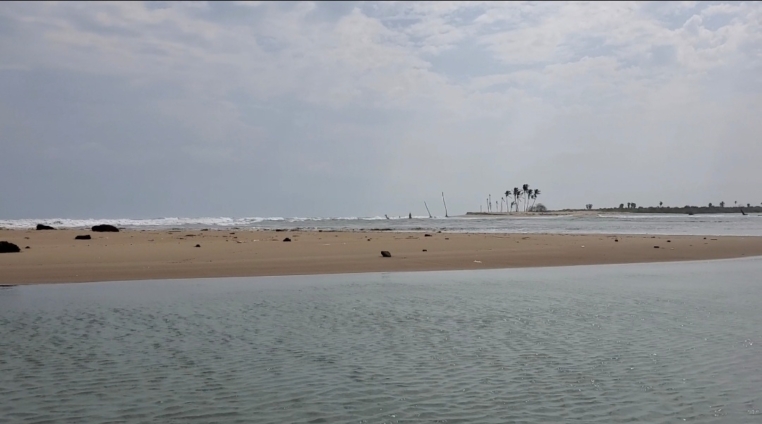
The oceanic space that Ghana claims is a weaving of ecological resources that is inhabited by unique species and provides vital infrastructure for numerous businesses. More than just a boundary, the 550 kilometers of coastline serve as a living, breathing interface between land and sea, bolstering industries such as fishing, tourism, and transportation. Yet, these vital resources are nearing a tipping point, and need prompt action.
Challenges Facing Ghana's Marine and Coastal Areas
Ghana's marine and coastal areas are faced with a range of complex challenges. Land-based pollution sources are a significant concern, transforming previously pristine waters into zones of environmental distress. This pollution not only affects the health of the marine ecosystem but also has broader implications for the well-being of the communities that depend on these waters. Additionally, overfishing is a critical issue, with both local and international vessels contributing to the depletion of fish stocks. This not only threatens marine biodiversity but also poses a risk to food security and the economic stability of the regions reliant on fishing.
Compounding these problems is the impact of climate change, which is accelerating coastal erosion and disrupting marine ecosystems. These changes in the environment heighten the vulnerabilities of coastal areas, affecting both the natural habitats and the human communities that depend on them. The interplay of these factors – pollution, overfishing, and the effects of climate change – presents a formidable challenge to the conservation and sustainable management of Ghana's marine and coastal resources. Addressing these issues requires a coordinated and multifaceted approach, balancing immediate needs with long-term sustainability goals.
Innovative Strategies and Best Practices
The strategy for Ghana's maritime conservation integrates traditional knowledge with modern scientific methods. Central to this approach are initiatives like establishing Marine Protected Areas (MPAs), encouraging sustainable fishing practices, and strengthening maritime surveillance to curb illegal activities. It also emphasizes the critical role of community involvement and educational efforts in cultivating a conservation-minded culture. This holistic strategy underscores the importance of balancing local wisdom with scientific advancements to achieve sustainable marine conservation.
Case Studies or Success Stories
Globally, several success stories offer valuable insights into Ghana's maritime conservation efforts. A notable example is the Philippines' Tubbataha Reefs Natural Park, recognized as a UNESCO World Heritage Site. This park stands as a testament to the effectiveness of well-managed Marine Protected Areas (MPAs). Through dedicated management, Tubbataha Reefs have experienced a significant rebound in fish populations and overall biodiversity, establishing themselves as a benchmark in sustainable marine conservation practices. Such examples provide Ghana with proven models to replicate and adapt in its pursuit of preserving marine and coastal environments.
The Role of Stakeholders
The success of Ghana's maritime strategy hinges on collaborative efforts. This includes partnerships between government agencies, local communities, NGOs, and international organizations. Such synergy is crucial for policy implementation, resource allocation, and knowledge sharing.
Challenges in Implementing the Strategy
Despite its comprehensive design, Ghana's National Integrated Maritime Strategy faces significant implementation challenges, including financial constraints, enforcement issues, and the necessity for capacity building. Securing adequate funding is essential for executing key initiatives such as establishing Marine Protected Areas and enhancing maritime surveillance. Strengthening enforcement mechanisms is equally crucial, requiring robust regulatory frameworks and effective compliance systems. Capacity building is also fundamental, involving training across various sectors, from law enforcement to local community education, to ensure widespread understanding and application of sustainable practices.
To overcome these challenges, a collaborative effort from all stakeholders is imperative. This includes government agencies, NGOs, local communities, the private sector, and international partners. Innovative approaches like public-private partnerships and community-based conservation projects are vital. Sustained commitment and adaptability are also essential, ensuring that stakeholders remain dedicated to the strategy's long-term goals, continuously evaluating and adjusting their approach to guarantee effective implementation and the realization of Ghana's maritime environmental protection and sustainable management objectives.
Conclusion
As we stand at the crossroads of environmental sustainability and economic development, the National Integrated Maritime Strategy of Ghana presents not just a policy framework, but a beacon of hope and a call to action. The challenges are as vast as the ocean itself - pollution, overfishing, and climate change - but so are the opportunities for innovation, collaboration, and transformation. As we delve into the heart of these challenges, the strategy opens up a path that is as dynamic as the very waters it seeks to protect. Integrating traditional wisdom with scientific innovation, empowering communities, and fostering global partnerships, this strategy is more than a plan – it's a journey that invites each one of us to play a part.
Imagine a future where Ghana's waters thrive with life, where communities flourish alongside their natural heritage, and where economic growth is anchored in sustainability. This is not just a dream but a tangible possibility that lies within our collective grasp. The road ahead is not without its obstacles, but the stories of success, like the revival of the Tubbataha Reefs, offer a glimpse of what can be achieved. The question now is not just about the feasibility of this strategy, but about our collective will and commitment to see it through.
-
About The Authors

Albert Derrick Fiatui is the Executive Director at the Centre for International Maritime Affairs, Ghana (CIMAG), an Advocacy, Research and Operational Policy Think- Tank, with focus on the Maritime Industry (Blue Economy) and general Ocean Governance. He is a Maritime Policy and Ocean Governance Expert. E-mail: albert@cimaghana.org.
David King Boison (Ph.D.) is a Senior Research Fellow and a Consultant at the Centre for International Maritime Affairs, Ghana (CIMAG). He is also a Senior lecturer, and Head of the Department for Procurement, Logistics, and Supply Chain Management at Ghana Communication and Technology University. E-mail: dboison@cimaghana.org.
Latest Stories
-
GAEC must retain nuclear scientists for Ghana’s nuclear ambitions – Minister
23 minutes -
Man reportedly mistaken for game and shot by hunter dead in forest
26 minutes -
19-year-old mason jailed 15 years for defiling seven-year-old pupil
30 minutes -
Ghana’s banking sector assets rise 20.47% to GH¢500.2bn – BoG Governor
34 minutes -
22 injured as Sprinter bus overturns at Sege after tyre burst
36 minutes -
UN housing expert urges Ghana to strengthen Rent Control Department amid housing affordability concerns
44 minutes -
Delta-BCI partnership reaches 166,000 people with breast cancer education
53 minutes -
Power restoration fault suspected in Kumasi Central Market fire
6 hours -
The 7-foot giant of Ngleshie Amanfro: Seven-foot Ghanaian Ephraim Saawa dreams of joining the national basketball team
7 hours -
Government promises support for Kumasi Central Market fire victims
7 hours -
Vibes The Movie: Big Ghun’s Ghanaian film earns five nominations at 2026 REFFA
7 hours -
‘I’m a fulfilled man’—Justice Korbieh on missing out on Supreme Court despite two nominations
7 hours -
MamaCare CEO warns unresolved conflicts among health workers could undermine maternal and neonatal care
8 hours -
Health professionals urged to translate medical knowledge into practice to save mothers
8 hours -
Retired judge Justice Francis Korbieh charges 1,568 new lawyers to uphold integrity
9 hours