

Audio By Carbonatix
A sanctuary is, at its core, a place of protection.
In today’s fast-evolving world of education, where uncertainties continue to shape the experiences of both teachers and learners, schools must intentionally position themselves as spaces of safety, care, and belonging. The idea of schools as sanctuaries cannot be overemphasised. They are not merely centres for academic instruction, but environments where individuals feel secure, valued, and supported.
A sanctuary is understood as a safe and protective place, especially for those who may feel threatened, excluded, or overwhelmed. In this sense, schools must rise beyond their traditional roles and become spaces where every learner finds refuge—not only from academic challenges but also from emotional, social, and psychological burdens.

To become true schools of sanctuary, educational institutions must be deliberate in implementing practices that foster inclusion and belonging. This means recognising and responding to the needs of vulnerable learners—those from disadvantaged backgrounds, those carrying emotional distress, and those who have experienced abuse or social injustice. It also involves creating engaging and stimulating learning environments that make education both meaningful and enjoyable.
The relevance of this approach is reflected in Maslow’s (1943) hierarchy of needs, which highlights five essential areas: physiological needs, safety, love and belonging, esteem, and ultimately, self-actualisation. Learning cannot thrive where these foundational needs are unmet. A child who feels unsafe or unloved cannot fully engage in the learning process. Therefore, schools must prioritise these needs as part of their core mission.
In an era where global citizenship has become the new norm, it is increasingly recognised that individuals belong to multiple, diverse, and interconnected communities rather than isolated societies (United Nations, 2022). Schools, therefore, have a responsibility to remain responsive to global trends while fostering inclusive environments that embrace diversity in all its forms.
Irrespective of who learners are or where they come from, schools must stand as spaces of fairness and dignity. As Young (1990) rightly asserts, schools must provide recognition, representation, and respect for marginalised cultures and groups. This is not simply an ideal—it is a necessity for building equitable and humane learning environments.
Schools as Places of Care and Support
In many parts of Ghana, public school learners come from marginalised backgrounds, often with limited access to essential learning resources. Despite the commendable efforts of benevolent individuals and organisations, significant gaps remain. Basic necessities such as books, stationery, uniforms, sanitary pads, and well-equipped learning spaces are still lacking in many schools.

While the Government of Ghana, through its school feeding programme, provides meals for learners from kindergarten to primary six, a critical gap exists at the junior high school level. Adolescents, who are at a stage of rapid physical and emotional development, are often left without structured feeding support—even though they may experience hunger more intensely.
This reality calls for a more inclusive and sustainable approach to school support systems. Schools must not only be centres of learning but also places where the basic needs of learners are met. Establishing reliable food systems within schools is essential to ensure that learners can access nourishment whenever they need it. A hungry learner cannot concentrate, and without concentration, meaningful learning becomes difficult.
A Trauma-Informed Approach to Education
Creating schools as sanctuaries also requires a deep understanding of the impact of trauma on learners. Drawing on the work of McInerney and McClinden (2015), trauma-informed practice offers practical guidance for supporting learners in compassionate and effective ways.
First, educators must always seek to empower rather than disempower. Power struggles often escalate behaviour, especially for learners who have experienced trauma. Discipline, while necessary, should remain respectful, consistent, and non-violent.
Second, providing unconditional positive regard is essential. When learners feel consistently cared for, they begin to build trust and develop meaningful relationships with adults in the school environment.
Third, maintaining high expectations is equally important. Experiencing trauma should not lead to lowered standards; rather, learners should be supported to meet the same expectations as their peers, with the necessary guidance and understanding.
Educators must also be mindful of their assumptions. Trauma can present itself in different ways, and it is important to observe, listen, and engage learners with openness rather than judgement.
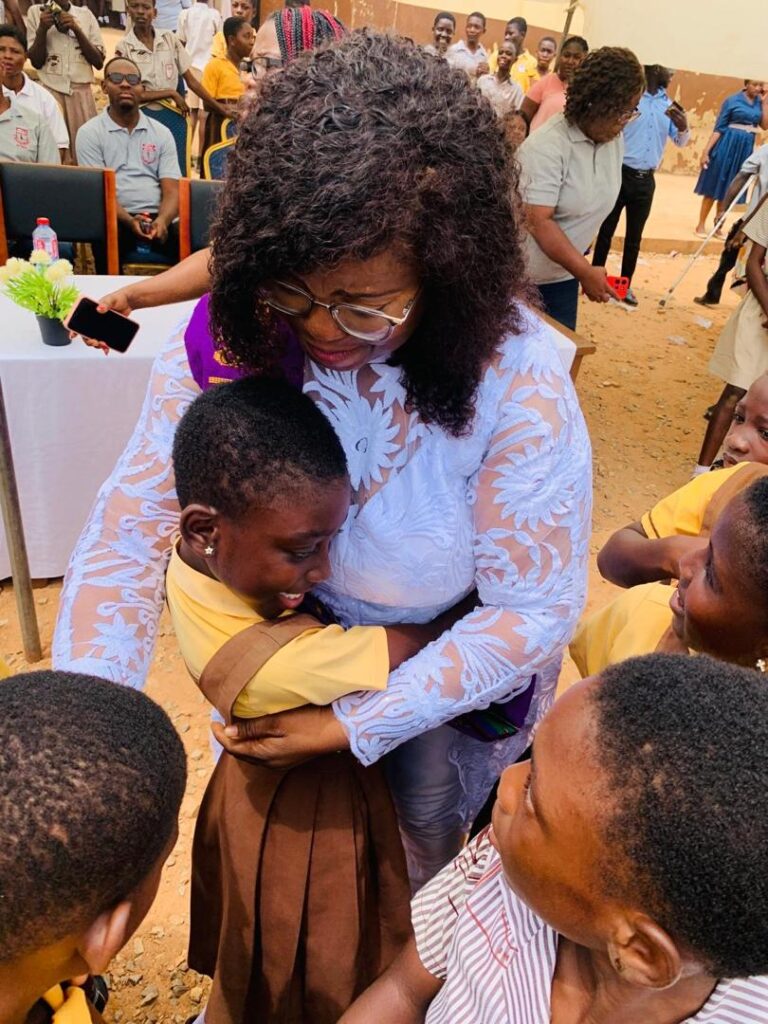
Additionally, teachers play a vital role as relationship coaches, helping learners to develop social skills and build positive connections with others. Schools should also create opportunities for learners to support one another through peer interactions such as tutoring and collaborative activities.
Conclusion
The vision of schools as sanctuaries calls for intentionality, compassion, and action. It challenges educators, policymakers, and communities to rethink the role of schools—not just as places of instruction, but as environments of care, inclusion, and transformation.
When schools become spaces where learners feel safe, valued, and supported, education moves beyond the transfer of knowledge. It becomes a powerful tool for healing, growth, and hope.
*******
Authored by: Faith Aku Dzakpasu
Ghana’s Most Outstanding Teacher 2023
Top 50 finalist Global Teacher Prize
Team Lead of The Rebranded Teacher Initiative
Latest Stories
-
Enterprise Life celebrates 25 years of protecting families and building trust
3 minutes -
ICC London rules in favor of Ghana against Tullow over $400m tax charge
13 minutes -
We are disappointed in ICC’s ruling over our corporate income tax assessment in Ghana – Tullow Oil
24 minutes -
Cost of building inflation for August 2026 increases to 4.6% – GSS
25 minutes -
Today’s front pages: Wednesday, September 30, 2026
56 minutes -
Bawumia highlights agricultural, compulsory insurance reforms in IBAG engagement
57 minutes -
Ghana will secure Tullow tax revenues while protecting Jubilee, TEN investments – Ato Forson
1 hour -
Ghana wins $393m Tullow tax arbitration as tribunal upholds GRA assessment
1 hour -
Gender Minister assures women’s group of action on Affirmative Action, Development Bank
2 hours -
Over 2,000 teachers in Dormaa comply with strike – GNAT Secretary
2 hours -
Food Buffer Stock seeks stronger liquidity buffer despite record profit
2 hours -
LPG investments key to achieving 50% access target by 2030 – Energy Minister
2 hours -
Jinapor: New LPG terminal strengthens Ghana’s energy security
2 hours -
Agbodza directs road agencies to fast-track design approvals to prevent project delays
2 hours -
Housing Minister urges stakeholders to prioritise quality education in Banda District
2 hours