

Audio By Carbonatix
While the world is still grappling with the complexities arising from power struggles in Sudan, with two warlords vying for control, the situation in Senegal has added to the mounting problems on the African continent. Since February 2021, Ousmane Sonko, the leader of the Senegalese opposition, has faced charges of rape and of sending death threats. However, what started as a legal matter seems to have turned into a politically charged trial. Unfolding events have revealed a deeply troubling pattern of repression and injustice in Senegal.
The trial verdict handed down on June 1[1] has only served to deepen the sense of injustice felt by citizens. Instead of being sentenced for the alleged rape and death threats, Sonko was convicted of youth corruption, a charge that many deem absurd. According to Bamba Cisse, one of Sonko's lawyers, the two-year prison sentence imposed on Sonko has stripped him of his civil rights. Moreover, Sonko cannot exercise his right to appeal, as he was tried in absentia, Cisse said. The announcement of the sentence triggered spontaneous and violent demonstrations in several towns, leading to the deaths of 15 people, according to the government.
The excessive use of force by the authorities, a heavy-handed response to dissenting voices, not only exacerbates tensions but also undermines the principles of democracy and human rights.
The situation becomes even more alarming when we consider the plight of civil society leaders, such as Aliou Sane from Yen A Marre ("Enough") and the vice coordinator of F24, a coalition of political parties and civil society organisations, who have been imprisoned and charged with taking part in an undeclared demonstration or public gathering and disturbance of the peace. These individuals, along with numerous other detainees, including minors, have become victims of a regime intent on silencing any opposition and maintaining its grip on power. Civic space is now in danger in Senegal, and it is very worrying.
Furthermore, the government's recent decision to suspend applications like Twitter, Facebook, WhatsApp, and Instagram only serves to stifle freedom of expression and suppress dissent. Such actions are nothing short of an attempt to control the narrative and limit the dissemination of information that contradicts the official party line. These restrictions are a cause for concern and have prompted widespread condemnations from rights organisations. In a statement, Samira Daoud, Amnesty International's regional director for West and Central Africa, denounced the restrictions. "These restrictions on the right to freedom of expression and information constitute arbitrary measures contrary to international law and cannot be justified by security imperatives[2]," Daoud said.
Senegal finds itself at a critical crossroads. In this alarming situation, it is crucial to highlight the sentiments of the Senegalese people themselves. According to Afrobarometer survey data (2022), it is evident that the citizens of Senegal have a strong yearning for democracy, with overwhelming numbers rejecting one-man rule and one-party rule. An astounding 89% and 87% of Senegalese, respectively, reject these autocratic forms of governance.
The data further reveal that the preference for democracy over any other alternative is remarkably high, with 84% of Senegalese expressing their desire for a democratic system. These statistics demonstrate that the people of Senegal firmly believe in the values and principles of democracy as the best way forward for their nation.
Interestingly, while the incumbent president hints that he will seek a third term, the Afrobarometer survey data clearly indicate that a large majority (79%) of Senegalese support the notion of limiting the presidency to a maximum of two terms. This resounding rejection of "third termism" highlights the widespread desire for democratic norms and adherence to constitutional term limits. Their views also reaffirm the position of the African Charter on Democracy, Elections and Governance (ACDEG), which opposes third terms.
The disheartening reality is reflected in sentiments captured in the Afrobarometer survey. A majority of 53% of Senegalese believe that the country is "a democracy with major problems" or not a democracy at all, while 51% express dissatisfaction with the way democracy is functioning in the country. The ongoing wave of protests witnessed in Senegal serves to underline and reinforce the figures presented by Afrobarometer. These numbers vividly depict a nation at odds with the state of its democracy and the erosion of fundamental rights and freedoms.
Senegal stands at a critical juncture, where the aspirations of its people for a vibrant democracy are being trampled upon. The Afrobarometer data reflect the sentiments of the Senegalese citizens, who yearn for a democratic future and reject the authoritarian tendencies exhibited by those in power. Senegal's future hangs in the balance. #GardonsLesYeuxSurLeSenegal!
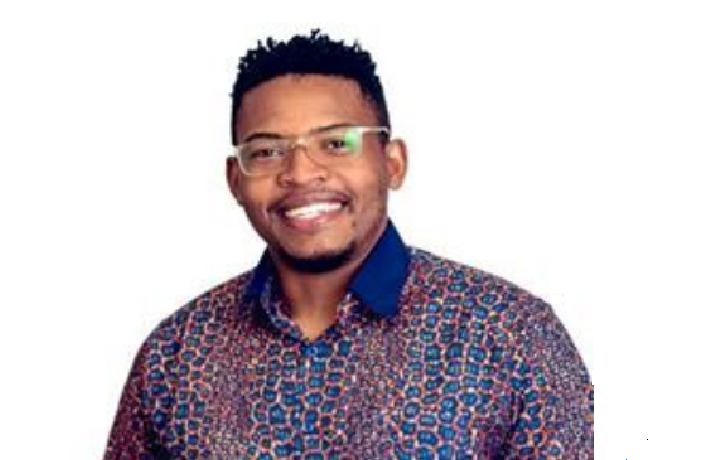
Nyasha Mcbride Mpani is the Southern African project leader for the Data for Governance Alliance (based at the Institute for Justice and Reconciliation). Views expressed are his own!
Latest Stories
-
ECG announces power outage in parts of Tema, Central Region due to network fault, maintenance
2 minutes -
When the Gospel Becomes a Weapon: The church, blackmail and the abuse of faith
27 minutes -
JoyNews’ Jacqueline Ansomah Yeboah selected for UK Media Excellence for Emerging Technology Fellowship
44 minutes -
Mental Health Alliance urges government to operationalise Mental Health Fund
59 minutes -
Ghana–Holy See agreement heads to Parliament after Cabinet approval
1 hour -
Luv FM Corporate Games 2026: Kumasi Central Prisons, Amanfiman Bank win big amid fun
1 hour -
WAFU B U17: Ghana top Group A after win over Togo
2 hours -
Ho Central Mosque reopens amid unresolved leadership dispute that led to closure
3 hours -
Minority caucus questions GH¢16.4m in Ablakwa’s SA evacuation spending, demands independent audit
3 hours -
Gender Ministry meets Nana Akua Addo’s husband over domestic violence after hospital discharge
4 hours -
UG Vice-Chancellor urges swift operationalisation of National Research Fund
4 hours -
Pope Leo to have surgery after lump found in lung
4 hours -
Joseph Cudjoe writes: Ghana must break free from the dangerous mindset that natural resources are the foundation for wealth
5 hours -
Children among 109 dead after boat capsizes off Djibouti, UN says
5 hours -
OmniBSIC Bank’s 11th health walk promotes fitness and business growth
5 hours