

Audio By Carbonatix
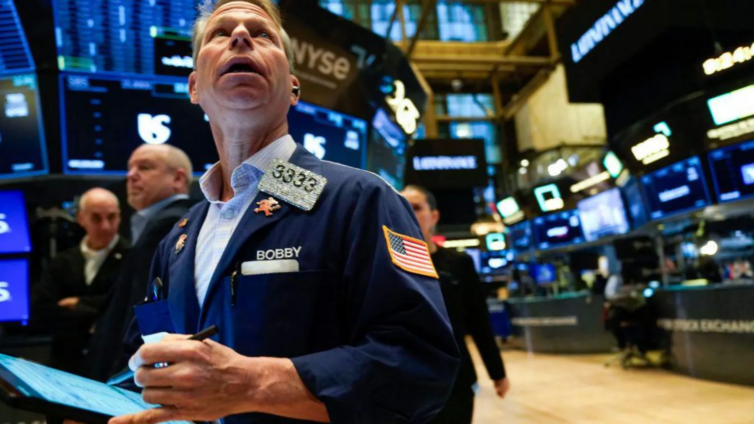
US President Donald Trump's plans for tariffs sparked a global sell-off on financial markets on Monday, though a last-minute halt to levies on goods from Mexico brought some relief.
After steep losses earlier in the day, news of the reprieve prompted shares to stage a partial recovery, with the Dow Jones Industrial Average ending the day down just 0.3%.
The rebound followed a sharp slide after Trump issued orders over the weekend to put tariffs on goods from Canada, Mexico and China, and pledged that tariffs on the EU would "definitely happen".
Investors are concerned that tariffs will hit the earnings of major companies and dent global growth but many are still hoping Trump is not serious.
As the S&P 500 fell about 0.75% and the Nasdaq off 1.2%, Canadian Prime Minister Justin Trudeau and Trump were due to talk ahead of the tariffs on his country going into effect at midnight.
"The financial market's essentially pricing that a deal can be struck," said Simon French, an economist at Panmure Liberum. He said investors were betting that the threats were "simply a negotiating position from the Trump administration".
Earlier, the US dollar strengthened on the currency markets amid the uncertainty, rising to a record high against China's yuan, while the Canadian dollar plunged to its lowest level since 2003.
Concerns about the tariffs had also hit shares in Asia and Europe.
The German stock market fell 1.4%, with shares in carmakers among the worst hit and France's CAC 40 index dropped 1.2%. In London, the FTSE 100 ended the day down about 1%.
"Investors are rattled at the prospects of a full-blown trade war breaking out," said Susannah Streeter, head of money and markets at Hargreaves Lansdown.
Over the weekend, Trump ordered tariffs of 25% on exports from Canada and Mexico to the US, which are due to come into effect at midnight on Tuesday,
Chinese-made goods will face a 10% levy, in addition to existing tariffs.
The moves, which Trump tied to concerns about the flow of illegal drugs and migrants into the US, target the United States' three largest trading partners and threaten major disruption in some of the world's biggest economies.
Canada and Mexico said they would hit back with retaliatory tariffs while China promised "corresponding countermeasures" and vowed to challenge Trump's move at the World Trade Organization.
But in a sign of how swiftly the circumstances might change, Trump and Mexican President Claudia Sheinbaum said on Monday that she had agreed to send 10,000 troops to the border and the tariffs would be on hold for one month, as the two sides continue to negotiate.
Many are still bracing for wider tensions, after Trump said on Sunday that he would "definitely" impose tariffs on the EU, although he said while the UK was "out of line", a deal could be worked out.
On the Dow, which tracks 30 high-profile companies meant to be representative of the economy, Nike and Apple, which both rely on China for manufacturing, were among the hardest hit, with Apple down more than 3%.
Elsewhere, carmakers such as Tesla and General Motors also saw share prices drop.
In Japan, Toyota shares fell 5% and Honda sank 7.2%, while in Europe shares in VW and Stellantis – whose brands include Chrysler, Citroen, Fiat, Jeep and Peugeot – were down roughly 4%.
Shares in drinks maker Diageo - which exports tequila from Mexico to the US - ended the day down 1.9%, trimming earlier losses.
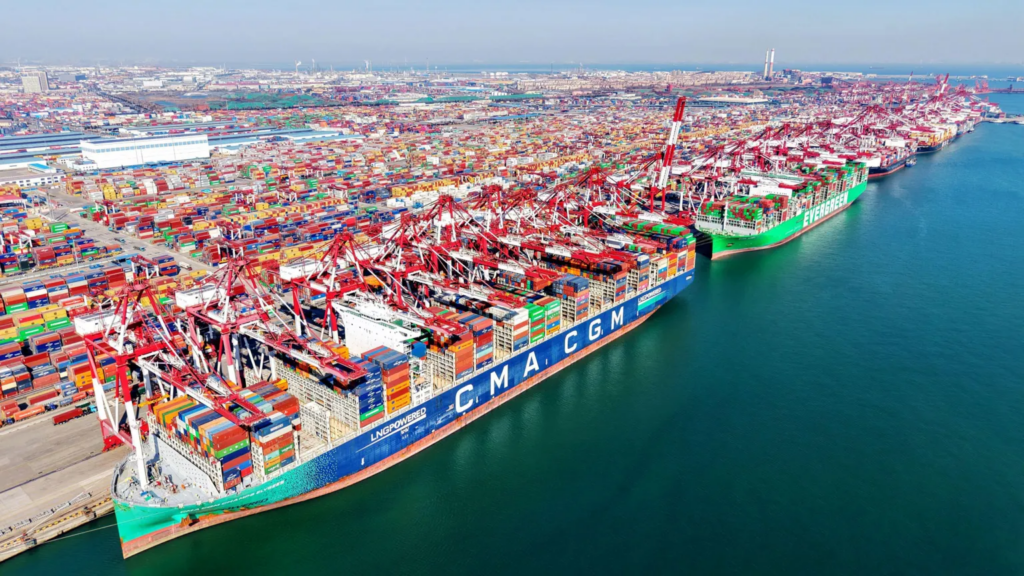
Russ Mould, investment director at AJ Bell, said there was a "sea of red flashing on the markets".
Tariffs could lead to "higher inflation and put a stop to further interest rate cuts for the time being – exactly the opposite of what equity investors want to happen", he added.
"Higher prices could hurt demand, and there might be a trickle-down effect that knocks business and consumer confidence and feeds into weaker economic activity."
The prospect of interest rates staying higher for longer helped to strengthen the dollar.
As well as the dollar rising against China's yuan and the Canadian dollar, the euro fell to more than a two-year low against the US currency.
Oil prices also rose following news of the tariffs, as traders tried to analyse how tariffs on Canada and Mexico - the two biggest sources of oil imports to the US - would affect the market.
Chief investment strategist at investment bank Saxo, Charu Chanana, warned that while tariffs could be beneficial for the US economy in the short term, in the long run they pose significant risks.
"Repeated use of tariffs would incentivise other countries to reduce reliance on the US, weakening the dollar's global role," she added.
Latest Stories
-
Pentecost University to host international sustainability conference
5 minutes -
Ampofo Ankrah did not collect World Cup visa money – Lawyer
15 minutes -
Baffour Awuah to spend night in EOCO custody – Atta Akyea
17 minutes -
Torgbiga Wenya III opposes proposed elevation of 36 Anlo chiefs to Paramount status
25 minutes -
The strengthening El Niño and what it could mean for Ghana
28 minutes -
Baffour Awuah formally charged with money laundering, loss of public funds – Lawyer
29 minutes -
Drone flight over EOCO building could attract 30-year jail term – Security consultant
37 minutes -
Flying drone over EOCO premises is strictly prohibited – Security consultant
37 minutes -
SIC file was surrendered to client, EOCO has no reason to search Manhyia South MP’s firm – Atta Akyea
38 minutes -
EOCO search of Baffour Awuah’s law firm raises confidentiality concerns – Atta Akyea
39 minutes -
“I will never ignore an invitation from EOCO if I had received one” — Manhyia MP
41 minutes -
Baffour Awuah ready to cooperate fully with EOCO investigation – Bosome Freho MP
1 hour -
How a Ghanaian technology is helping fish farmers detect hidden threats before fish die
1 hour -
AI tool helps Ghanaian farmers identify crop threats from field observations
1 hour -
NEIP: Designing a Ghana Startup Agency that builds enterprises, not programmes
1 hour