

Audio By Carbonatix
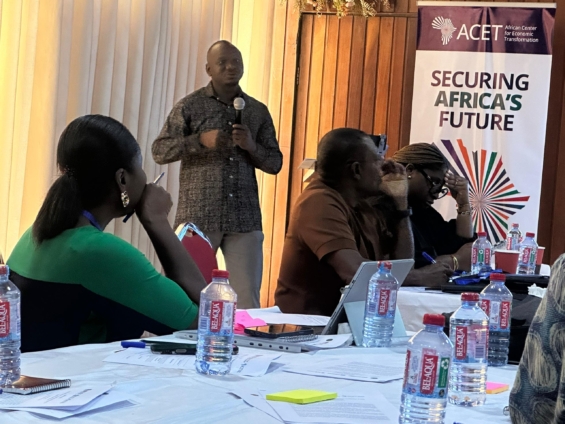
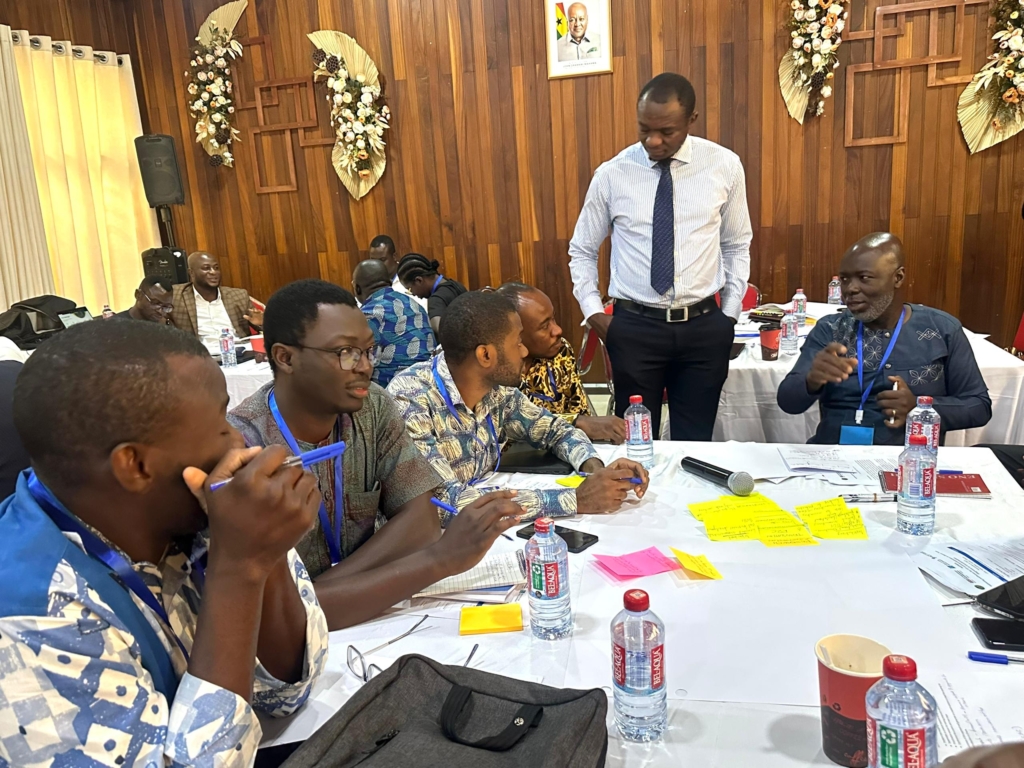
In a decisive move to bridge the gap between groundbreaking research and commercial success, some key stakeholders from government, industry, and academia convened to validate a transformative roadmap for Science, Technology and Innovation (STI) commercialisation in Ghana.
The workshop, themed “Validating Pathways to STI Commercialisation in Ghana: From Diagnosis to Transformation,” highlighted the critical challenges inhibiting the commercialisation of the nation’s STI, offering solutions and drafting a roadmap for effective implementation.
Its objective is to engage all key stakeholders, agree on key challenges to commercialisation, diagnose the root causes, and build consensus on key reform areas to include in the roadmap for implementation.
The roadmap will outline a medium-term ‘how-to’ plan to move research from lab to market in Ghana; sequenced actions, clear owners, milestones and KPIs; align with the draft STI Policy 2024-2030 and the national push to prioritise commercialisation; as well as ensure evidence-led, time-bound, institution-anchored principles, resilient to political cycles.
The Director of the Science and Technology Directorate, Ministry of Environment, Science, and Technology (MEST), in his opening address, read by Judith Awo Semabia, highlighted that despite a strong research and innovation base of the nation, too few innovations in priority areas like health, energy, agro-processing, and sanitation, a situation she described as unacceptable and must be a thing of the past.
“The goal of every Science and Technology or Research and Development (R&D) endeavour is to find solutions to societal problems and create new industries for economic transformation. To achieve this, commercialisation is a proven method,” she said.
She pointed to Ghana’s position as a regional innovation leader, outperforming the African average in human capital and infrastructure, as a solid foundation for growth. She cited the homegrown commercial success stories of some pioneers, including Kasapreko Company Limited, which now exports its innovations across West Africa, and tech pioneers like mPedigree, which secures supply chains against counterfeiting, and Farmerline, which provides vital intelligence to agribusinesses across the continent.
Senior Director, Research and Policy Engagements at the Africa Centre for Economic Transformation (ACET), Dr Edward K. Brown, emphasised that STI is what has been driving progress across the world from the first to the current fourth industrial revolution, hence it is non-negotiable to invest in technological upgrading to ensure economic transformation.
“STI is one of the most critical dimensions of human progress, and the current world dominance is led by countries with superior technology. Therefore, with constant technological upgrades, we can’t advance human well-being and compete on the global stage,” he said.
Ghana’s current system, he described as rich in talent and ideas but hindered by fragmentation, underfunding, and weak links to the real economy.
“In Ghana, we have the technical capabilities in academia and research institutions, but what is woefully lacking is how to take the proof of concept to industrial commercialisation. And there is a tendency to believe that commercialisation is just the private sector taking the research and working with it, but the private sector cannot do that when there is no existing market; hence, the state must step in to provide patient capital that enables experimentation on market adaptation,” he emphasised.
The workshop, supported by the United Kingdom Foreign, Commonwealth and Development Office (UK FCDO) Sankore Programme and developed in partnership with the African Centre for Economic Transformation (ACET) and Results for Development (R4D), aims to convert this diagnosis into a practical, time-bound action plan.
Latest Stories
-
APL says GoldBod terminated US$1bn Goldstream deal over failure to meet obligations
2 minutes -
Daily Insight for CEOs: Making better decisions under pressure
3 minutes -
Weta rice farmers seek urgent support after floods destroy crops
4 minutes -
Mahama commits GH¢200m in 2027 Budget to complete Police Hospital expansion
8 minutes -
Standard Chartered Bank delivers strong returns and sustainable shareholder value
19 minutes -
Akufo-Addo’s role in the artificial cedi stability is indisputable — Facts do not bend to political convenience
21 minutes -
Breaking Bad actor RJ Mitte dies aged 34
28 minutes -
Wontumi pleads not guilty in GH¢30m Exim Bank loan case
33 minutes -
Beyond the Flyer: Awareness without screening is not enough
39 minutes -
Bekwai MP donates GH¢100,000 to hospital for specialist equipment
47 minutes -
Van Vicker sues Lil Win for defamation, demands GH¢10m
53 minutes -
FIFA/ FIBA agency Pep Sports moves to admit Ghana’s 7-Foot Basketball talent to its Ultra-Modern Sports campus after MyJoyOnline report
55 minutes -
GAUA strike disrupts academic plans at University of Ghana as students, parents express frustration
59 minutes -
Dad’s Army/African Polistas crowned champions of 2026 Accra Polo Club Trustees’ Cup
1 hour -
Mahama approves Integrated Basic Education Model, with funding expected in 2027 under GETFund formula
1 hour