

Audio By Carbonatix
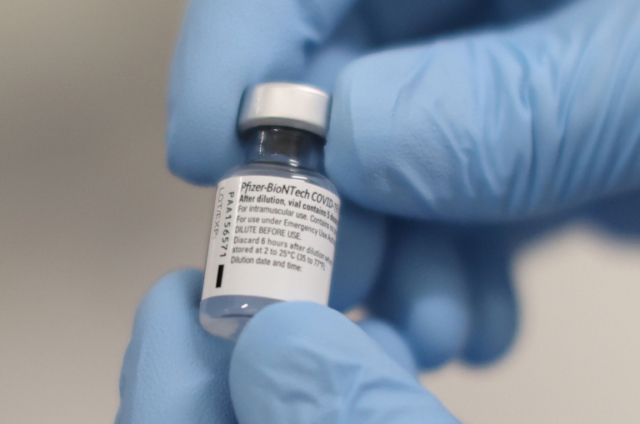
Ghana has become the first country in the world to receive vaccines acquired through the United Nations-sponsored COVAX initiative.
Ever since news on the arrival of the vaccines broke in Ghana, there has been different viewpoints altogether with a cross – section of the public indicating that we are gradually going to be used as “guinea pigs”. Others think the vaccine will help us in combating the pandemic. Is it really the case or otherwise?
Some Ghanaians are difficult to convince. If they believe an “A”, it will take grace for them to accept a “B,” even when a “B” is the real deal. It is not any fault of theirs but the belief system.
The novel Covid-19 pandemic which first broke out in Wuhan, China has wreaked havoc to the global community.
Most economies have crumbled and had impacted negatively on their financial status. Apart from this, precious lives had been lost and many businesses, industries continue to struggle to manage through the virus.
Ghana has also borne the brunt of the pandemic resulting in a partial lockdown early last year which compelled many businesses to stop operating.
Other businesses significantly cut back on operations, while those that were operating were faced with the challenges of securing inputs customers’ attrition and reduction in demand for their products and services, resulting in a drop in production volumes and profits.
The government of Ghana put in place proactive measures to contain the spread and won international plaudits and commendation.
I humbly think the onus should not rest on the government alone but supported by other stakeholders like philanthropic organisations, public-spirited organisations, Non-governmental Organisations as well as external donor agencies.
Interestingly, the World Health Organisation (WHO) and United Nations Children’s Fund (UNICEF) have applauded government for securing 600, 000 vaccines through the COVAX Facility to fight the pandemic.
How many Ghanaians will be willing to take the vaccines? This is because, the public hold an entirely different view on the vaccines. Can we make a meaningful headway in coming to terms with the vaccines? Time will tell.
It is of paramount importance for the Media to effectively ensure active involvement of the public in order to succeed in the fight against the Covid-19 pandemic which has taken a toll on the global Health System.
The media as the fourth estate of the Realm has an essential role to play in ensuring that the citizens accept the vaccines in good faith.
For instance, through information dissemination on the need for every citizen to be vaccinated and the creation of the necessary awareness about the inherent dangers associated with the virus, by way of giving much publicity to it in both the print and electronic media.
This will go a long way for people to ensure full compliance of the need for the vaccination.
The media can also organise fora, symposia, film shows and other outreach programmes on the disease and the vaccines.
This can be done by spreading their tentacles to rural communities. Films on the debilitating effects of the disease coupled with its attendant heavy death tolls in some countries will send the right signals to people about the reality of the pandemic.
By so doing, fear needs to be instilled in the minds and hearts of those bent on refusing the vaccines.
The media should be at the forefront and nerve centre in sensitisation and communication on the vaccines. The communication must seek to inform, educate, encourage and restore hope in the people.
This will not leave room for people to raise unnecessary alarms on the vaccines. There are quite a number of people who are of the view that the vaccines are contaminated.
However, the media must make the effort in indicating to all and sundry on the need for everyone to be vaccinated.
In the wake of the ravaging consequences of Covid-19 on all facets of human endeavour, the media should stem the tide. Communication in times of crises is crucial.
Creating more panic and fear or heighten anxiety on the vaccines would not help matters. The media should allay the fears of people and give messages of hope to the public to go for the vaccines rather than throwing alarming messages for social media to pounce on.
This way the public will be more than willing to accept the vaccines in good faith. Covid-19 has thrown our world into crises.
But it behoves media personalities in such crisis situations not to communicate gloom and doom. Besides, those who will be recalcitrant with accepting the vaccines owing to superstition, need some admonition, stern words or visuals to awaken consciousness in them.
By so doing, the media can change perceptions and aid in a smooth vaccination devoid of fear and skepticism.
Latest Stories
-
Government identifies payment discrepancy holding up teachers’ strike resolution
10 minutes -
BoG signals no FX intermediation for October as GoldBod plans $1bn support for banks
14 minutes -
When share ownership becomes personal: The African mindset of the Dangote IPO
24 minutes -
Why MFWA Legal Fund matters to Ghana’s democracy
24 minutes -
Fuel prices to rise from October 1; diesel could hit GH¢19.60 – COMAC
25 minutes -
Parliament must investigate how 3.9 tonnes of cocaine left Ghana undetected – Samuel Jinapor
25 minutes -
Government pledges to pay striking teachers as payment dispute is resolved
39 minutes -
Government cannot investigate drug exports under its own watch – Abu Jinapor
42 minutes -
Government extends GH¢2 diesel subsidy for two more months
49 minutes -
GTEC flags over 100 tertiary institutions as unrecognised
51 minutes -
Agric Committee chair commends NAFCO for turnaround from GH¢20m debt to GH¢96m profit
56 minutes -
NPP: Judicial office requires judges to surrender some personal freedoms
1 hour -
Senyo Hosi: Ghana missed its chance to end galamsey under Akufo-Addo
1 hour -
Okaikwei Central MP alleges Ghana was close to settling Tullow tax dispute for $150m
1 hour -
Patrick Boamah credits Godfred Dame for Ghana’s victory in $400m Tullow tax arbitration
1 hour