

Audio By Carbonatix
Amid devastating floods sweeping away homes and a war grinding down its people, a new government is carving out a path from the heart of Darfur.
It carries promises to end seven decades of marginalization and conflict, declaring its intent to dismantle the state of “ethnic supremacy” and build a new republic founded on equal citizenship and decentralization.
While supporters hail it as a “lifeline” and the “culmination of the struggle of the marginalized,” the ultimate test lies in whether it can achieve unity, justice, and an end to war, challenges that will determine its credibility.
A new step in Sudan’s history
The city of Nyala in South Darfur witnessed an unprecedented scene as the government of the “Tasis” Coalition, led by Mohamed Hamdan Dagalo “Hemedti” with his deputy Abdel Aziz Adam Al-Hilu, assumed power after taking the constitutional oath.
The choice of Nyala - far from the capital, Khartoum - was no mere symbolic gesture. Rather, it was, as activist Mohamed Al-Rabie described, “the crowning of decades of struggle and resistance by all the peoples of the peripheries whose experiences in struggle have accumulated since independence.”
This moment carried a clear message: the birth of a new system of governance arising from historically marginalized regions to upend the traditional centralization of power.
The “Tasis” vision: Dismantling the old state and forging a new social contract
The “Tasis” Government does not present itself as merely an administrative alternative, but as a founding project aimed at dismantling the pillars of the old Sudanese state that failed to manage diversity. Its program rests on clear principles:
- Secularism: adopted “as a guarantor of equality among Sudan’s peoples,” according to Al-Rabie, to prevent the use of religion as a tool of polarization and domination.
- Full Decentralization: granting regions the inherent right to “manage their resources and develop their areas,” a historic demand of marginalized regions such as Darfur.
- Dismantling the “Inherited” Army: and building a new national force representing all Sudanese, after decades in which the military served as “an instrument of regional hegemony and extremist Islamism.”
- Historical Justice: holding accountable those responsible for violations committed over the past seventy years, with Hemedti himself calling for “a transparent international investigation” to determine who ignited the war.
Former minister Nasr al-Din Abdel Bari described this shift as “the most significant event since the founding of the Sudan People’s Liberation Movement in 1983,” arguing that “sovereignty, long abused by ruling elites, has now returned to its rightful owners.”
Massive challenges: A raging war and a crushing humanitarian crisis
The new government confronts a formidable wall of challenges that threaten to reduce its ambitious rhetoric to empty promises if not addressed urgently.
The humanitarian catastrophe is unprecedented: nearly 30 million people - more than half the population - are in desperate need of aid, including 11 million internally displaced persons and 4 million refugees in neighboring countries. Unofficial estimates put the death toll at 150,000.
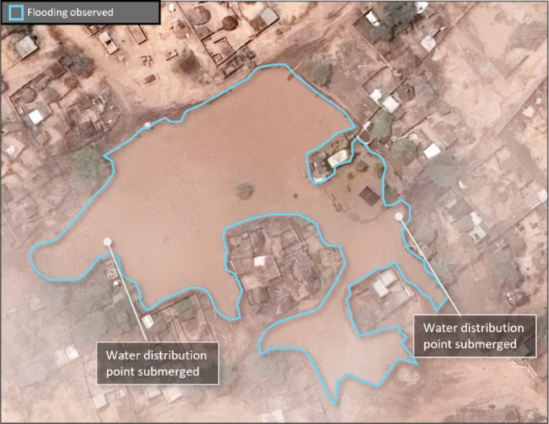
Recent floods have destroyed thousands of homes, cut off entire villages, and deepened the crisis, pushing the nation’s food security to the brink of collapse.
The road ahead: Can “Tasis” deliver?
The future of this project hinges on its ability to prove its seriousness by halting the war immediately or bringing it to a decisive end, to facilitate the urgent delivery of humanitarian aid to millions on the brink of famine, to build broader national alliances that encompass all Sudanese, and to win the trust of the international community through tangible progress based on human rights and good governance.
Sudan now stands at a historic crossroads. The “Tasis” project marks a qualitative shift in addressing the roots of Sudan’s crisis: centralization, marginalization, the dominance of political Islam, and militarization. It carries a genuine seed of hope to end the state of disarray engulfing the nation.
But the road from Nyala to the building of a unified, safe, democratic civilian state is long and fraught with obstacles.
Success will require broad Sudanese unity and determined international support, with the first priority being to end the daily suffering of the people and to stop the bloodshed. Success is not impossible, but it will demand a willpower greater than all the challenges ahead.
Latest Stories
-
GHIMA sounds alarm over unlicensed practitioners handling health data, warns of threat to patient safety
8 minutes -
Old Edubiase pupils turn to trading, farming as teachers’ strike disrupts schooling
10 minutes -
Energy Minister commends NPA CEO for maintaining petroleum market stability amid global shocks
16 minutes -
Armah-Kofi Buah, Sam George, other MPs among newly qualified lawyers
23 minutes -
Ghana exporting eggs to Burkina Faso amid local surplus – Agric Minister
24 minutes -
Governance failure in Ghanaian football and a presidential reform agenda
30 minutes -
IJM Ghana welcomes country’s upgrade to Tier 1 in 2026 Trafficking in Persons report
32 minutes -
REAC urges stakeholders to comply with Real Estate Act or face sanctions
32 minutes -
‘Nkoko Nketenkete’ boosts local poultry production from 4.6% to 22% in one year – Agric Minister
56 minutes -
ARK Foundation boss warns against stigmatisation of abuse victims
1 hour -
Health investment beginning to improve access to care – Akandoh
1 hour -
“It is meaningless” – Parent laments as teachers’ strike leaves boarding school students idle
1 hour -
Austin Gamey predicts possible end to teachers’ strike, urges better negotiation
1 hour -
Mahama and Trade Minister champion local manufacturing during Ghato Foods visit
1 hour -
Labour Minister, ILO Country Director strengthen partnership on decent work and jobs
1 hour