

Audio By Carbonatix
Information Minister Kojo Oppong Nkrumah has called on the European Union (EU) to work with African, Caribbean and Pacific (ACP) countries to prevent its proposed ethical and sustainable supply chain rules from becoming a burden on the local cocoa and coffee industry.
According to him, though the new legislation is a way to drive better practices within the cocoa and coffee subsector, more importantly, the EU must work with ACP countries in achieving these sustainability standards else it risks putting players within the value chain out of business.
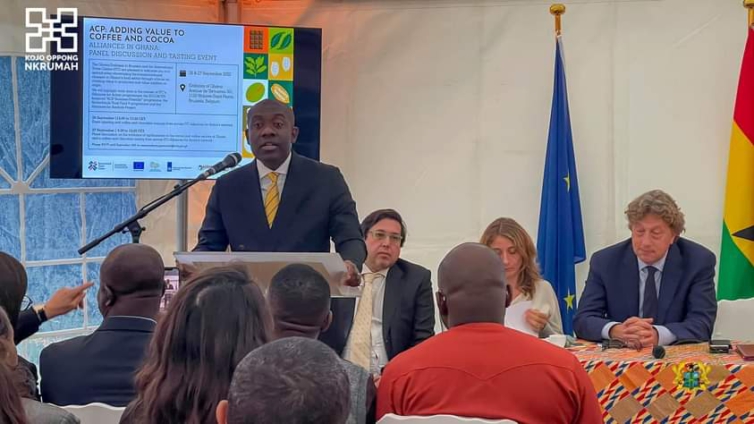
He made the call when he chaired a two-day forum on the future of Ghanaian cocoa and coffee value chains in the face of this new EU legislation at the “Alliances in Ghana: Coffee and Chocolate at the Table” in Brussels, Belgium.
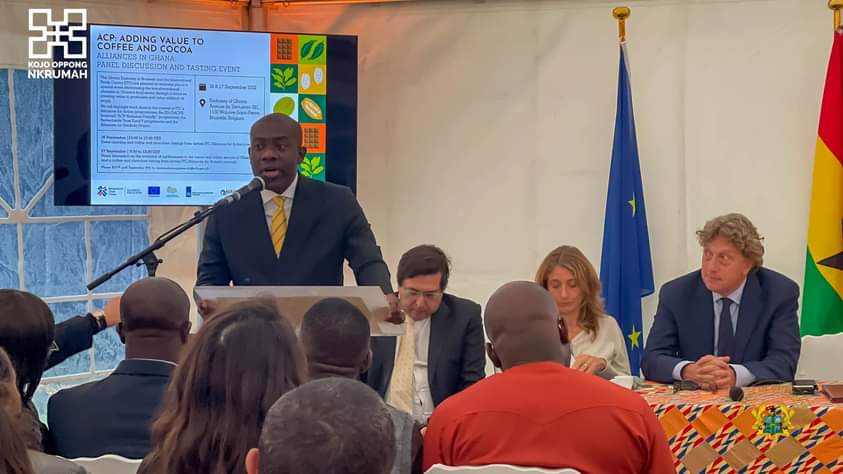
The forum was organised by the International Trade Centre (ITC) and the Ghanaian Mission in Brussels last week.
“At a time where farmlands are coming under threats for competing and more rewarding economic activities, sustainability is a matter that requires some more attention.
“By no means, however, should sustainability be used as a pretext to limit market accessibility. The exchange of best practices and technical assistance is necessary so that we can have a win-win situation in all of this.
“Farmers deserve recompense for their hard work and should not be left out in any business or policy negotiation.
"Their social reality and cultural context must be considered when designing legislation so they may meet their demands and not bear a disproportionate burden for complying with the regulation,” he said.
EU lawmakers have backed a proposal for a law that will ban the sale of agriculture products linked to the destruction of forests and human rights violations.
The bill was supported by 453 votes, to 57 with 123 abstentions. The EU Parliament will now start negotiations on the final text with EU member states.
Once approved, the law would force companies and producers to give assurances that products are deforestation-free and meet the EU’s sustainability standards.
Businesses will be forced to verify that agricultural goods sold in the EU have not been made on deforested or degraded land anywhere in the world.
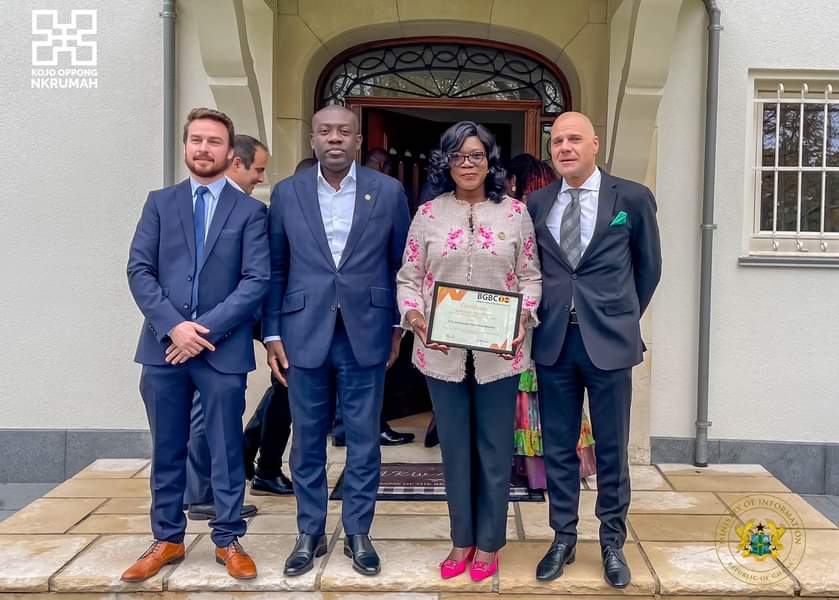
This, Mr Oppong Nkrumah said, could soon make Ghanaian cocoa and coffee unexportable to many international markets within the 27-nation bloc.
He said Ghana must act quickly to ensure the two industries meet the interests of European markets else millions of households and the economy, in general, could be significantly affected by this proposed legislation.
Latest Stories
-
I want my brand to be bigger than just music – Yaw Wazinga
2 minutes -
Houthi missile attack on Yemeni presidential palace kills two, minister says
2 minutes -
I hoped to win an award; I worked hard – 2026 Best Graduating Law Student
12 minutes -
Fraudsters increasingly target bank customers instead of banking systems – Fraud detection expert
13 minutes -
JoyNews tracks 44 cases of teachers accused of sexually abusing students since 2015; heads of schools behind 4 in 10 since 2025
16 minutes -
Unchecked imports and the Middle East crisis threaten Ghana’s fragile food inflation anchor
34 minutes -
Ecobank Junior Saver Big Pitch to reward 10 winners with GH¢2,000 each
39 minutes -
AMA demolishes unauthorised pigsty obstructing Agbogbloshie waste evacuation exercise
39 minutes -
I was filled with disbelief – Akosua Achia Sarpong Esq. shares her first reaction
40 minutes -
Snake Village: A look at Volta Region’s hidden snake village and its tourism potential (Video)
47 minutes -
Election Watch Ghana calls for constitutional reforms to strengthen Electoral Commission independence
49 minutes -
NACOC, Postal and Courier Services Regulatory Commission intensify efforts to curb drug trafficking
51 minutes -
Ga Mantse chairs committee to drive Accra Green and Clean City Initiative
52 minutes -
Drivers threaten to remove traders from lorry stations over TrafficTech concerns
55 minutes -
AI could create 10 to 20 times more jobs despite current recruitment slowdown – Hubtel CEO
58 minutes