

Audio By Carbonatix
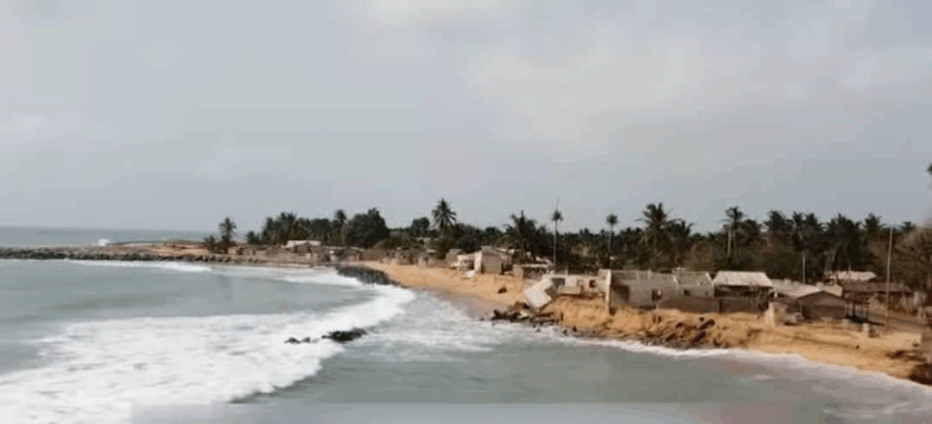
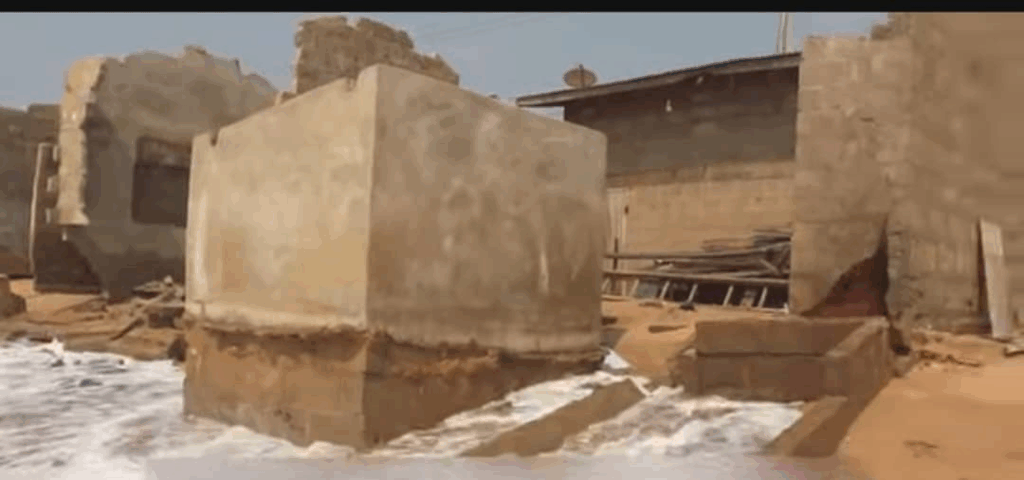
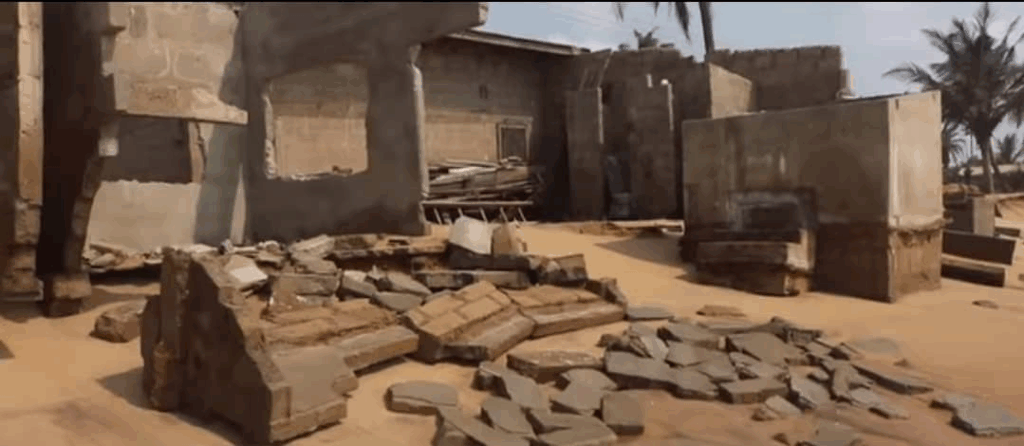
The waves arrive without mercy. They slam into what used to be bedrooms, break through kitchens that once smelled of smoked fish, and swallow the land where children once ran barefoot to school.
In Kporkporgbor and what remains of Fuveme, the ocean is not a distant horizon, it is now the neighbour that knocks down walls in the dead of night.
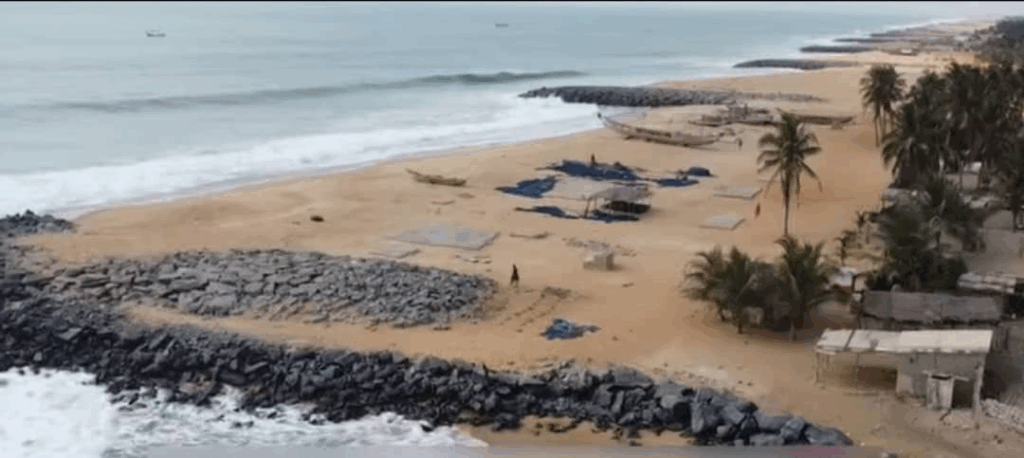
Once-thriving fishing villages along Ghana’s coast are becoming ghost towns. Agavedzi, Fuveme, and Salakope, Amutinu —communities that shaped the cultural spine of the Anloga and Ketu coastline, are now graveyards of memories, with the sea devouring homes, churches, cemeteries, and ancestral lands.
For 78-year-old Daavi Afi, the erasure happened in a single night. She still trembles as she recalls watching the ocean roar into her six-bedroom compound, lifting her life of 50 years and dragging it away like driftwood.
Today, she sleeps on a thin mat in her married daughter’s small hall in Dzita.
“When the sea took my house, it took my history too.”
For 12-year-old Dziedzorm, the loss is equally heartbreaking. His school—his only place of hope, collapsed into the ocean.
“I don’t go to school again,” he told JoyNews. The sea ate it.”
These are not isolated tragedies. They are the human face of a worsening climate crisis: rising sea levels, intense tidal waves, sand mining, mangrove loss, and sediment disruption from past sea defense projects have turned the coastline into a battleground where the people are losing.
Over 200 houses in Fuveme are gone. The shoreline has moved more than 100 meters inland in less than a decade. Entire families are now climate refugees, displaced into neighbouring communities with no compensation, no land, and little hope.
The sea has also salinized freshwater sources, leaving mothers walking long distances for clean water. Fishermen must now travel to other towns to launch their boats, losing precious income.
“We can’t keep burying our history,” an assembly member said. “By the time help arrives, the town is already gone.”
Beyond the wreckage is something more painful: the loss of identity. Homes built through generations are collapsing. Cemeteries have been washed away. Social networks are breaking apart as families scatter.
Every wave is a reminder of what has been taken, and what may be lost next.
Residents say the time for promises has passed. They want comprehensive coastal protection, fair compensation, sustainable relocation plans, mangrove restoration and dredging, and psychosocial support for displaced families.
If these interventions do not come quickly, more towns will disappear forever.
***
This article is written as part of a collaborative project between JoyNews, CDKN Ghana, and the Centre for Climate Change and Sustainability at the University of Ghana, with funding from the CLARE R4I Opportunities Fund.
Latest Stories
-
Ghana handed tricky draw at 2026 Amputee World Cup
3 minutes -
2024 Nyankpala election violence: Youth group petitions authorities over slow probe
7 minutes -
Ghana, UNICEF strengthen partnership to advance child protection
31 minutes -
Day Two of 3rd Republic Bank-JoyNews Habitat Fair ends with great homeownership offers and financing solutions
35 minutes -
Guinness Ghana DJ Awards 2026 Pub Fest celebrates Ghana’s DJ culture as Accra turns up the energy
53 minutes -
10th woman found dead in South Africa’s string of killings
53 minutes -
French Embassy trains Ghana Police CTU in counter-terrorism operations
1 hour -
UPSA uncovers mass results manipulation involving 178 students, over 500 results compromised
2 hours -
ECG announces planned power outages in parts of Tema from Sept. 29 to October 1
2 hours -
Sylvester Mensah urges Latenu FM to promote trade, export opportunities in Ga
3 hours -
Ga language under threat of decline as children shy away from speaking it – Sylvester Mensah
3 hours -
‘Let every Ga child you raise know the Ga language and story’ – Sylvester Mensah
3 hours -
‘We are not deterred’ – Ablakwa responds to backlash over South Africa evacuation
3 hours -
Day Two: Republic Bank-JoyNews Habitat Fair gains momentum at Junction Mall
3 hours -
NCA announces major voice and data disruption across Northern Ghana due to fibre cuts
3 hours