

Audio By Carbonatix
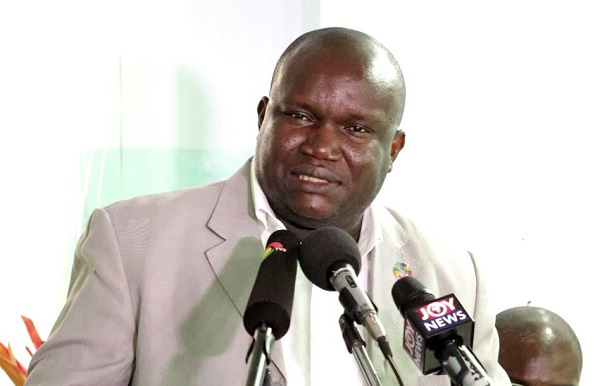
The Chief Executive Officer (CEO) of the Ghana Chamber of Telecommunications, Kenneth Ashigbey, has asked government to increase the electronic transaction levy's exemption threshold to ¢200 per day.
He said that will enable many micro and small companies that use mobile money to continue using the service.
"From the way they want to implement it [the e-levy], it is going to be between your mobile money if you’re transferring money in the same network to another person if you had done a debit card payment at a point of sale if you transfer money from your mobile money to another bank account or from a bank account to another person’s mobile money."
"Our suggestion is that even this particular levy may be increased to ¢200 per day, but it should be on a wallet," he said on Joy FM's Super Morning Show on Monday.
In announcing the levy in the 2022 budget, the Finance Minister, Ken Ofori-Atta, indicated that the ¢100 limit for the e-levy is meant to protect the poor and vulnerable in society.
Deputy Finance Minister, Dr John Kumah, also explained that “we noticed that about 30 per cent of people who use Momo in Ghana do not do more than ¢100 a day and that covers the poor category of Momo users.
"This policy exempted any Momo transaction that is up to ¢100 and below ¢100," he spoke on Joy FM’s Super Morning Show on Thursday, November 18.
Mr Ashigbey bemoaned the labelling of the levy as 'MoMo' tax, saying it is discriminatory and unfair because it is meant for all electronic transactions and transfers.
He said efforts being made to push QR code payment in the country might not yield the desired results due to the introduction of the electronic levy.
"So all of these conversations are things that we need to look at, and we should ensure that we can generate the revenue that government needs without killing the digitisation agenda of government [and] without impacting on financial inclusion.
"More importantly, it should be equitable. This should be an electronic transaction tax, not a mobile money tax," he added.
Meanwhile, Policy Risk Analyst, Dr Theo Acheampong, has also proposed that the ¢100 limit “should also be increased. I think [it] could possibly go up to about ¢175 a day and that, cumulatively, is around ¢5,000 a month.”
Latest Stories
-
Philanthropist Alhaji FuZak donates Da’wah bus to Ambariya Sunni community
2 minutes -
GUTA calls for suspension of Publican AI system over trade disruptions, demands temporary halt in import activities
5 minutes -
TTAG raises alarm over proposed recruitment of 7,000 teachers, demands national posting roadmap
38 minutes -
Civilians feared killed after reports of air strike on Nigerian market
48 minutes -
Bishop Simon Kofi Appiah installed as new Jasikan Diocese Bishop
49 minutes -
Trump’s Strait of Hormuz blockade threat raises risks and leaves predicaments unchanged
51 minutes -
US Court backs extradiction of former MASLOC CEO Sedina Tamakloe-Attionu’s to Ghana
1 hour -
Seven arrested as NAIMOS dismantles illegal mining camp, seizes firearms at Boin River
1 hour -
Fire erupts at Madina Ritz Junction, destroys multiple wooden structures and containers
1 hour -
Daniel-Kofi Kyereh returns from long-term injury, registers assist for Freiburg U23
2 hours -
Knifeman calling himself ‘Lucifer’ slashes three at NYC’s Grand Central
2 hours -
Brands are built from within to without
2 hours -
Matriculants urged to pursue excellence as gov’t reaffirms support for Maritime education
2 hours -
See the areas that will be affected by ECG’s planned maintenance on Monday, April 13, 2026
2 hours -
GPL 2025/26: Salim Adams double fires Medeama back to summit after Kotoko rout
2 hours