

Audio By Carbonatix
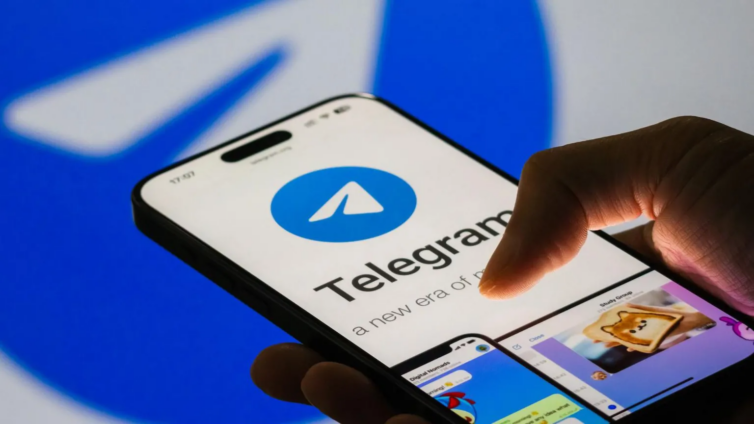
The social media platform Telegram uses an algorithm that promotes extremist content, a new study shared exclusively with the BBC has revealed.
The report, from the US civil rights organisation the Southern Poverty Law Center (SPLC), found that the "similar channels" feature introduced last year recommends extremist channels even to users browsing subjects such as celebrities or technology.
A professor also showed BBC Panorama how he found someone within moments on Telegram who offered to ship an Uzi submachine gun to the UK for £850.
Telegram says users are "only presented with content they have chosen to engage with" and it removes millions of pieces of harmful content daily.
The company's founder, Russian billionaire Pavel Durov, is under formal investigation in France accused of failing to stop criminality on his platform. He has denied the allegations.
Best known as a messaging app marketed with secretive features, Telegram also allows its almost one billion users to set up groups where they can broadcast messages and videos to up to 200,000 people at a time.
SPLC researchers looked at 28,000 of these Telegram channels for their report Telegram's Toxic Recommendations.
It found that users browsing mundane topics would be recommended extreme content - while users looking at one form of extreme content, such as anti-government conspiracies, would be pushed towards other extremist ideologies such as antisemitism or white nationalism.
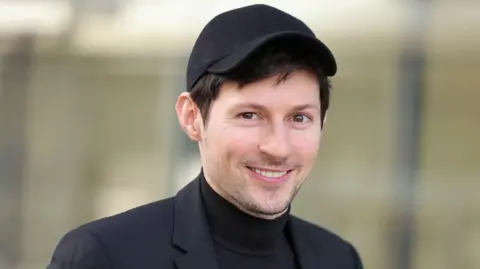
Lead researcher Megan Squire demonstrated how the algorithm works by searching for "Donald Trump" in a newly set up Telegram account.
Immediately in the "similar channels" recommendations were multiple examples of channels promoting the Q-Anon conspiracy, which maintains with zero evidence that Mr Trump is waging a secret war against elite Satan-worshipping paedophiles in government, business and the media.
Another search for "UK riots" showed a meme about Adolf Hitler as the first result, followed by suggestions for a series of channels run by violent far-right groups.
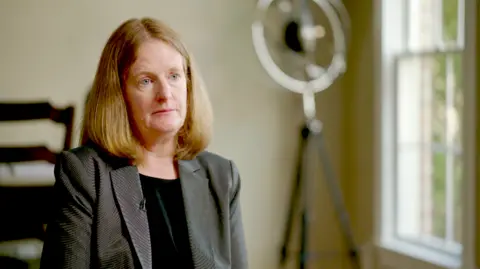
"Some of these groups are pretty active. You're not just on Telegram getting memes, you're getting shuffled into to actual events. They're having events on the ground with people showing up," Ms Squire said.
In the hours after the Southport knife attack in August, which prompted riots, Telegram users posted some of the first calls for protest, along with false claims the suspected attacker was an asylum seeker.
Ms Squire told BBC Panorama that the research showed Telegram had become a "digital threat".
"On a scale of one to 10, Telegram I would say is an 11. It's dishing out enormous amounts of criminal content, and extremist content. It is extremely dangerous in my opinion," she said.
A former insider who was part of Telegram's inner circle for six years, Elies Campo, told Panorama that he had challenged Pavel Durov about extreme material in 2021.
"His stance was it's not up to a platform like us to decide who should be speaking out. It was clear that he didn't want to dedicate more resources to it," Mr Campo said.
"I think if he could choose, he would choose more a stand where he doesn't have to moderate anything."
Prof David Maimon from Georgia State University, who has spent six years studying illegal content on Telegram, said there were tens of thousands of channels offering everything from tools for scammers to guns.

"Telegram is definitely one of the most important platforms criminals are using now for criminality," he said.
He showed Panorama how within moments of posting a message saying he needed "an Uzi and a shotgun", a seller posted a picture of an Uzi and said he could "get it fast-tracked" to the programme's address in Belfast within two or three days.
The French authorities have accused Pavel Durov of complicity in drug dealing, organised crime and sharing child abuse images on Telegram. He is currently on bail and is not allowed to leave France.
Telegram says it takes extremist and illegal content very seriously and its moderation teams and AI tool remove millions of pieces of harmful content each day.
It says its users only receive the content to which they have subscribed - as Telegram does not "inject or promote content".
"The 'channel suggestions' feature shows only channels with the same topic as those a user already follows. This approach ensures that users are only presented with content they have chosen to engage with. This is completely different from how other platforms make suggestions," the company said.
Telegram said ''it does not amplify content but instead shows topic-based suggestions tied to user choices".
Latest Stories
-
Anti-LGBTQ Bill: Forget the rumour mongers, I’m a man of action, and will pass the bill – Speaker
11 minutes -
Women and children among those killed in Sudanese army shelling of wedding celebration
14 minutes -
President Mahama is not sincere with Ghanaians on LGBTQ bill matter – Hassan Tampuli
32 minutes -
Gov’t to establish Prison Industrial Hub to equip inmates with income-generating skills – Prison Service boss
51 minutes -
Alhassan Tampuli donates cement, roofing sheets to support storm victims in Gushegu
51 minutes -
Alhassan Tampuli appeals for urgent support for storm victims in Gushegu
54 minutes -
The hypocrisy must stop; pass Anti-LGBTQ+ Bill now – Alhassan Tampuli to Mahama
58 minutes -
Imprisonment should be rehabilitative, not punitive – Ghana Prisons boss at UNGA
1 hour -
Ga Adangbe traditional priests petition Mahama over McDan aviation licence revocation
2 hours -
Anti-LGBTQ Bill: NDC’s arrogance is worrying – Hassan Tampuli
2 hours -
Let’s give OSP time to mature, not to scrap it – Hassan Tampuli
2 hours -
Nigeria convicts 386 Islamist militants in mass trials
2 hours -
Djibouti president wins election with 97.8% of vote, state media says
2 hours -
We don’t have mandate to deduct tax from rent allowance of security services personnel – Interior Ministry clarifies
2 hours -
Ablakwa receives Presidential Special Envoy on Reparations to advance global agenda
2 hours