


Audio By Carbonatix
In a small shop nestled inside the heart of Accra, Patience Golo prepares to stitch yards of African wax print for a wedding dress she is making for a client.
The fabric is rich in colour: pops of papaya-coloured lines run through jewel-toned boxes.
Across from her hangs a suit made of emerald green and opalescent champagne-hued fabric.
Its pattern forms an intricate composition of designs -- just about as complex as the fabric's past.
Golo, born and raised in Ghana, rarely uses anything other than wax print for her designs: "It portrays our culture. It's our cloth," she said.
'Dutch' print.
But oddly enough, African textiles aren't African. In 1846, Dutch entrepreneur Pieter Fentener Van Vlissingen learned that there was a high demand for printed cotton.
With the big boom of the Industrial Revolution happening at the time, he discovered that he could mechanize the method used to make prints on batiks, a popular cloth worn in Indonesia.
His company, Vlisco, introduced the printed materials to the Gold Coast (now Ghana), where it exploded on the scene and immediately took off throughout the continent.
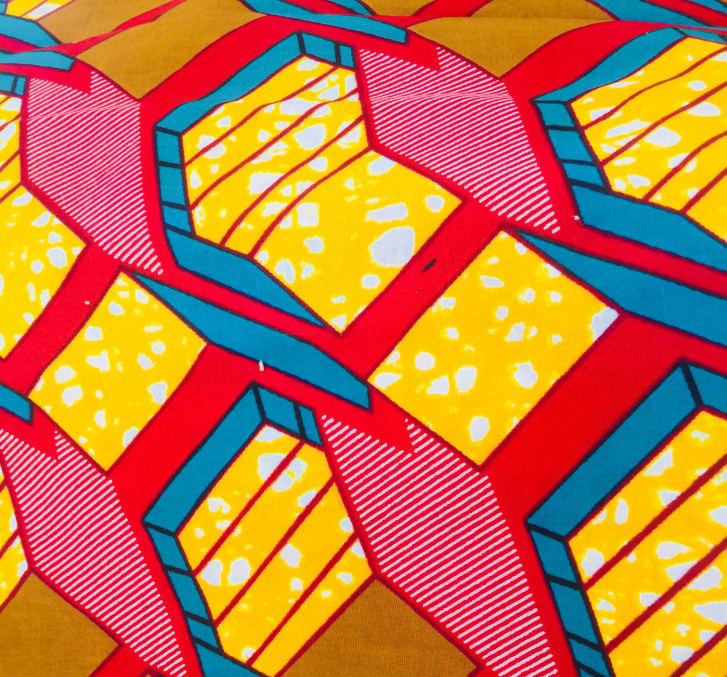
Since then, the fabric has become deep-rooted in Africa, and has since spread and seeped into societies across the world.
Rapid accelerations in technology have made the prints easily accessible and at the disposal of those who choose to wear them. And some historians wonder what lies ahead for the cloths in coming years.
"The fabric has gained an African identity and African fashion designers have contributed to emphasize the visual power of this material.
Sadly, nearly all African textile print factories have shut down because of international competitors," Anne Grosfilley, a French anthropologist and African textile historian, said in a phone interview.
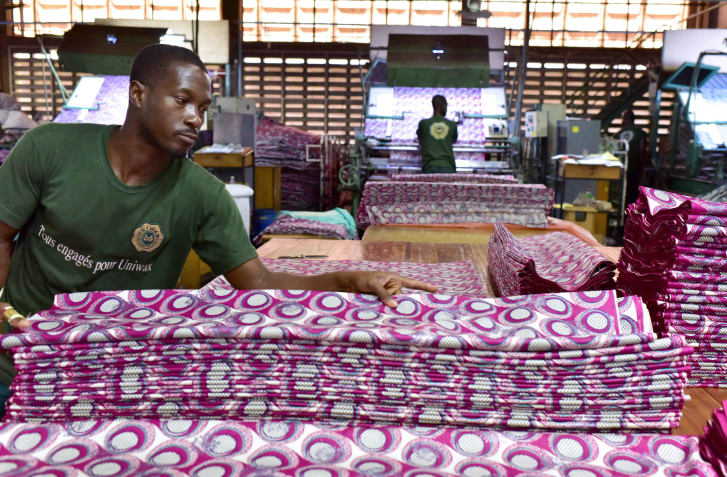
Many of those international competitors initially rejected the fabrics, partly due to its imperfect geometric patterns, according to Alexander Sarlay, an Austrian business consultant and expert of the African textiles market.
"That was a discrepancy to European mainstream, where developments are driven by a desire for perfection, but the African consumer saw the print's imperfection as an identifying feature," he said in a phone interview.
Historically, African consumers don't care about flawless precision, but tend to see other values in textiles like the fabric's origins, colors, patterns and signs, Sarlay thinks.
More than a fashion statement.
Belinda Compah-Keyeke is the owner and lead designer of Zoharous, an African fashion line that featured at Accra's Fashion Week in July.
For her, the print signifies something more than a fashion statement." African print is literally our first point of contact to our culture as Africans because when we are born, we are wrapped in a wax print," she said.
"It is a major part of every African's heritage and every wax print tells a unique African story."
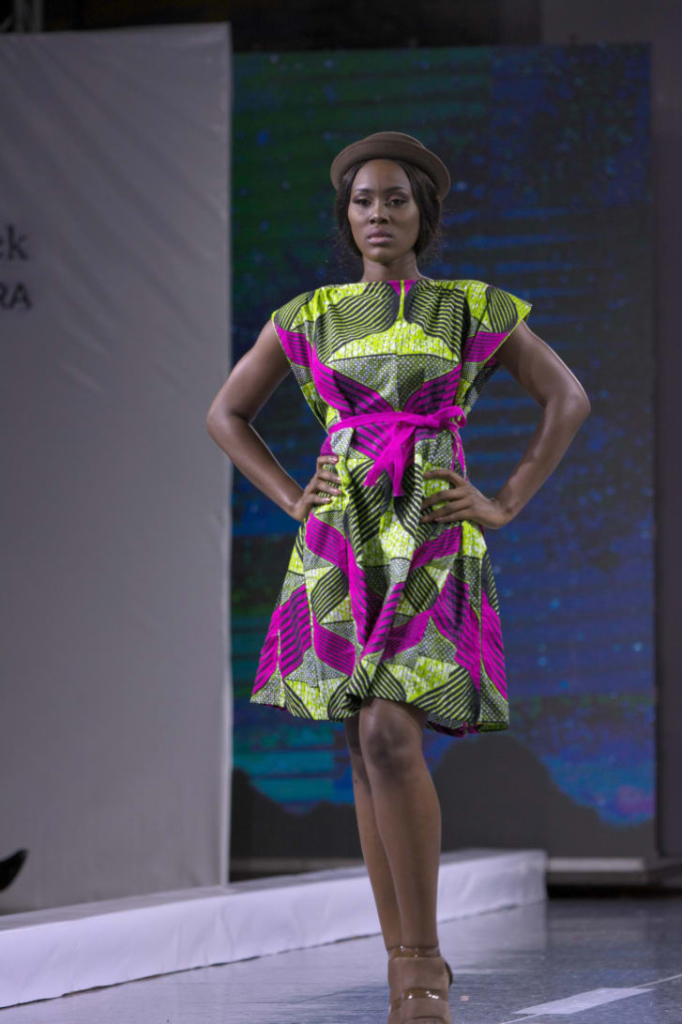
Take for instance the Nkrumah Pencil print, a popular 1960s print named after Ghana's first president, Dr. Kwame Nkrumah.
The cloth symbolizes the power Nkrumah's pen had to sign orders used to control political opponents. In a 2012 study titled "Symbolic Significance Of African Prints: A Dying Phenomenon In Contemporary Print Designs In Ghana," researchers wrote: "Abstract names are given to the prints to suggest an important event, personality or a popular proverb. According to the merchandisers, the wearer uses the symbolism of the print as a form of visual communication."
Years later, technology has allowed for cheaper wax prints to be produced at a quicker rate, allowing designers to evoke their own modern takes on the patterns they design, which influences the general image of African wax prints.
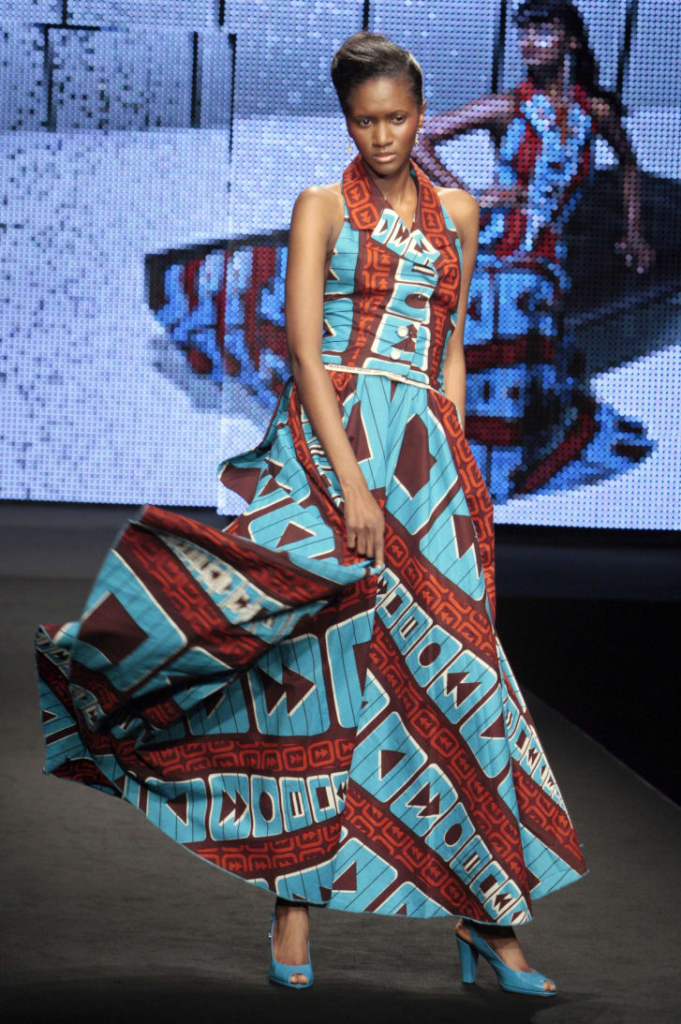
The outcome will be a mixed bag, according to Sarlay. "There is no clear definition of what is authentic and what is not authentic.
And established companies find no clear communication of what they are and what they want," he said.The result could be damaging for the African textile industry.
"The only dynamic wax print company based in Africa is Uniwax in the Ivory Coast. Therefore, except for the Uniwax customers, no one contributes to the development of Africa while wearing wax print," said Grosfilley.
Compah-Keyeke has a different perspective, and foresees "people worldwide having a vast understanding of the value every print holds."
Regardless of expert and designer predictions, Golo says the fabric will always deeply be part of Africa. "We should be proud of it. No one can ever take it away from us."
Latest Stories
-
Embassy of Denmark celebrates World Maritime Day
3 minutes -
Linking LEAP to productive inclusion could cut extreme poverty by 2030 – UNICEF
1 hour -
Trade Ministry backs use of creative arts to rehabilitate prison inmates
1 hour -
Negotiations with government to continue despite strike suspension – GNAT
1 hour -
‘Ghana cannot afford to waste public resources; every cedi has a job’ – Ato Forson
1 hour -
Ghana expects economic boost as World Assemblies of God Congress brings 10,000 delegates to Accra
1 hour -
Joy in Nayilifong as Farouk Aliu Mahama donates 100kVA transformer to improve power supply
2 hours -
Chief Justice urges employers to tackle mental health stigma in workplaces
3 hours -
Analysis: Ghana’s yellow fever numbers reveal a gap between vaccination and protection
3 hours -
Education Ministry welcomes suspension of teachers’ strike
3 hours -
Vice Chancellors Ghana appeal to striking university administrators to resume work
4 hours -
KNUST postpones 2026/2027 academic year reopening indefinitely amid GAUA strike
4 hours -
Fire destroys mattress factory at Sokoban in Kumasi
4 hours -
ECOM-SMS Ghana launches ‘Agriculture Our Future Clubs’ to address threat of ageing farmer population
4 hours -
Nicholas Atsu Kumi
4 hours