

Audio By Carbonatix
In the dimly lit, bustling sheds of Accra’s commercial nerve centres, a dangerous alchemy is taking place.
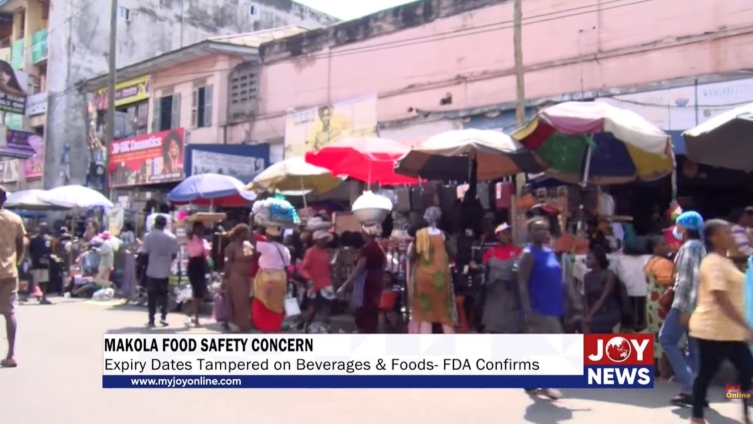
As the festive season approaches, unscrupulous traders are engaging in a widespread illicit operation: chemically altering expiry dates on unwholesome consumable products to resell them to unsuspecting households.
With inflation driving the cost of living upward, the demand for affordable groceries has never been higher. However, an investigation by JoyNews reveals that this economic desperation is being exploited by syndicates who use dangerous solvents to wipe away the history of expired goods, putting millions of Ghanaians at risk of food poisoning and chemical contamination.
The "Mashkey" Conspiracy
The operation is rudimentary but effective. Traders employ common solvents—including methylated spirit, kerosene, and nail polish remover—to dissolve the ink stamping the "Best Before" dates on cans, plastics, and metallic foils. Once the slate is clean, a new, future date is often stamped on, or the product is sold "as is" to food vendors who care only about the price.
Speaking to JoyNews on condition of anonymity, a trader at Makola Market exposed the disturbing supply chain that feeds some of the city's most popular street foods.
“You can’t go for the goods and throw them away,” the trader revealed, offering a justification rooted in economic survival. “So, these market women bring the goods to people who use spirit, kerosene, or any solvent that can clean off the expiry date. There are a lot of places where they do this, especially around Christmas.”
The trader detailed how these products infiltrate the prepared food market: “For instance, when Nido expires, they use it to make ‘mashkey’ [Bottled mashed kenkey to sell]. What can you do? The woman selling the 'mashkey' can’t afford to buy non-dairy powder, so she buys the expired one and uses it. If you don’t drink it, your brother will. As for the marketplace, it is a hellish place. Start from here and go to Agbogbloshie, those big markets; that is the business they do.”
The "Donkomi" Trap: Inventory vs. Safety
The motivation for this fraud is purely financial. In a retail environment characterized by high inventory costs and sluggish sales, goods often approach their expiration dates while still sitting in warehouses.
Rather than write off these losses as required by the Public Health Act, 2012 (Act 851)—which criminalizes the sale of unwholesome food—vendors push them into the market through aggressive clearance sales known locally as "donkomi."
“The things we sell usually have a one-year shelf life. When you buy them and check the dates, you may realize they expire early next year. As Christmas approaches, you are forced to reduce the price,” one trader explained.
Another added, “Sometimes the retailer thinks an item has three months left before it expires, but by the time you bring the goods, they are not bought on time. So, as for expired items, we will keep eating.”
A third vendor bluntly admitted the strategy: “It’s true. When the goods are two to three months to expiry, we do ‘donkomi’ to clear them.”
A Public Health Ticking Time Bomb
The health implications of this trade are severe. According to the World Health Organization (WHO), unsafe food containing harmful bacteria, viruses, parasites, or chemical substances causes more than 200 diseases ranging from diarrhea to cancers.
In Ghana, the risk is twofold:
- Bacterial Growth: Expired dairy and canned products (like tomato paste and mackerel) can develop Clostridium botulinum, a bacterium that produces lethal toxins.
- Chemical Poisoning: The use of kerosene and industrial spirits to clean packaging can lead to residue seeping into porous packaging or accidental ingestion if the cleaning agents are handled near open food.
The Food and Drugs Authority (FDA) regularly destroys tonnes of unwholesome products—ranging from aphrodisiacs to canned foods—during their "Safe Holidays" campaigns. In 2023 alone, the Authority safely disposed of hundreds of tonnes of regulated products that were deemed unsafe, yet the sheer volume of informal trade makes total policing nearly impossible.
Consumer Vigilance: The Last Line of Defence
Shoppers are left to navigate this minefield with varying degrees of caution. While some remain eagle-eyed, checking for the tell-tale signs of tampering—such as scratches on cans, glossy patches where ink was removed, or dates that look hand-stamped—others are blinded by the low prices.
“Mostly I check. I have to confirm that the item has at least a year left before it expires,” one diligent shopper noted.
However, price creates a false sense of security for others. “I know the prices of certain things. So if the price has suddenly been reduced, it means it has expired and they’ve changed the date. I won’t buy,” another consumer stated.
Alarmingly, some have resigned themselves to the risk. “Sometimes I check and sometimes I don’t. If something expensive suddenly becomes cheap, it means it has expired,” one admitted, while another confessed, “I do not check at all. During Christmas, they change the prices of some items.”
FDA Response
The Food and Drugs Authority (FDA) acknowledges the spike in these activities during the last quarter of the year. Joyce Aidoo, the Principal Regulatory Officer of Food Enforcement at the FDA, confirmed that the Authority is active on the ground but requires public collaboration.
“It is something that we receive complaints about throughout the year. It is not a one-time thing,” Aidoo said. “As part of our schedule, we conduct checks in retail shops and supermarkets. Along the line, we chance upon these products and get them destroyed.”
Ms. Aidoo issued a stern warning for the weeks ahead: “I will entreat consumers especially around Christmas to be vigilant. They should also look at other attributes of the product. And I encourage the public if they see anything suspicious, they should report immediately to the FDA.”
Consumers are advised to avoid rusted or bloated cans, check that the expiry date font matches the batch number font, and report suspicious "donkomi" deals to the FDA via their consumer hotlines.
Latest Stories
-
Brandon Asante and Coventry all but promoted to Premier League despite Sheffield Wednesday draw
17 minutes -
GPL 2025/26: Late Kwartemaa strike downs Hearts in Tema
24 minutes -
Ghana Faces Sierra Leone Moment as Prosecutorial Powers come under strain
33 minutes -
Don’t consume fish or seafood from Tema Shipyard until further notice – FDA warns
38 minutes -
Why volunteering might be Africa’s most underrated career accelerator
44 minutes -
ActionAid Ghana raises concern over gender gaps in Feed Ghana Programme
46 minutes -
Windstorm wreaks havoc in Gushegu, displacing nearly 2,000 residents and damaging schools
49 minutes -
Friends of Bridget Bonnie Marks her 35th birthday with donation to Kasseh Model Health Centre
2 hours -
From Ekumfi Kokodo to the Pulpit Stage: Essi Donkor’s gospel journey takes shape
2 hours -
Landfilling waste management creates no value, it’s an economic waste
2 hours -
Photos: Speaker Bagbin Commissions MPs constituency office under parliamentary decentralisation programme
2 hours -
Black Stars technical advisor Winfried Schäfer sacked as GFA shakes up backroom staff
2 hours -
Wenchi water project almost complete, critical to gov’t agenda – GWL MD
3 hours -
Anti-LGBTQ+ bill not part of government’s legislative agenda – Inusah Fuseini
3 hours -
Anti-LGBTQ Bill: Forget the rumour mongers, I’m a man of action, and will pass the bill – Speaker
3 hours