

Audio By Carbonatix
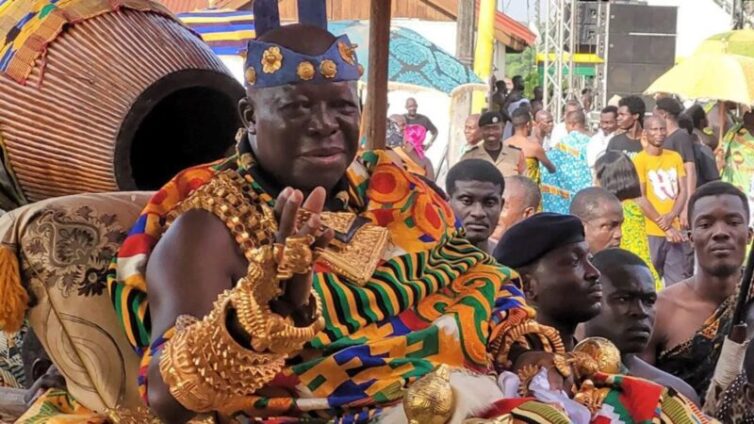
Kwadwom is a traditional art form used to praise and extol Asante kings in their royal courts. Therefore, it serves as a powerful oral tribute to the present occupant of the Golden Stool, Otumfuo Osei Tutu II, the revered King of Asante Kingdom and Chancellor of the Kwame Nkrumah University of Science and Technology, Kumasi.
More than mere song, this praise poetry embodies a living testament to the King's stature, performed with solemn reverence immediately before his pronouncements at public gatherings.
The ceremonial prelude to the Kwadwom often involves the evocative melodies of the Ntahera Trumpets creating a moment of profound anticipation.
While the poetic Akan lyrics may employ archaic or nuanced language, their performance evokes widespread admiration and deep cultural appreciation among audiences both within Ghana and across the globe.
The duration of the Kwadwom varies significantly depending on the context. At university events such as congregations and special ceremonies, the rendition is typically concise, averaging around 2 minutes and 10 seconds. In more traditional Asante settings, however, a fuller version unfolds, stretching to approximately 7 minutes and 13 seconds, weaving intricate layers of praise, ancestral invocations, and philosophical reflections that underscore the deep historical and spiritual roots of the Asantehene's authority.
Intriguingly, while the core lyrical structure of the Kwadwom remained largely consistent for many years, subtle yet significant evolutions began to emerge around 2019.
These adaptations, particularly noticeable around the seventh line of the chant, introduce contemporary themes that reflect the evolving dimensions of Otumfuor's reign.
Concepts such as peace, unity, and national strength have been woven into the fabric of the praise poetry, acknowledging his increasingly prominent role as a unifying figure and statesman in modern Ghana.
Illustrative examples highlight this dynamic evolution. At the United Nations General Assembly in New York in 2024, the Kwadwom included the powerful line: "Wo pɛn so na wode nkabom ne asomdwoeɛ brɛɛ Asanteman ne Ghana man nyinaa" ("You rose and brought unity and peace to Asanteman and the entire nation of Ghana."). This inclusion directly acknowledges the King's efforts in fostering harmony on a national scale.
Conversely, at the 56th KNUST Congregation on March 17, 2023, this specific line was absent, suggesting a return to a more traditional rendering for that particular occasion.
Again, during a visit by NPP officials to the Manhyia Palace in 2024, it featured the line: "Wo na ɛnam wo so na nkabom, mpuntuo ne nkɔso baa Ghana ne Asanteman mman mu" ("It was through you that unity, progress, and development reached the communities of Ghana and Asanteman."), explicitly linking the King to national and regional advancement.
Further demonstrating this responsiveness to contemporary events, the November 2024 edition of the 57th Congregation introduced another variation: "Wo pɛn so na wode anuonyam, mpuntuo ne nkɔso brɛɛ Ghana ne Asanteman" ("You rose and brought honor, progress, and development to Ghana and Asanteman."). This subtle shift in wording continues to underscore the King's impact on national progress.
At the 58th KNUST Congregation in 2024, the chant included “Krobea Asante Kotoko Asomdwoeɛ Hene”, meaning “Noble Asante Porcupine, King of Peace”, a phrase that highlights Otumfuo’s royal heritage, strength, and his role as a peacemaker.
These lyrical adaptations transcend mere artistic expression; they serve as a dynamic reflection of Otumfuo's evolving legacy. Otumfuo Osei Tutu II is not only celebrated as the custodian of Asante tradition but also increasingly recognized as a pivotal figure in national development, a respected peacemaker, and an influential international statesman.
The Kwadwom, therefore, is far from a static relic. It is a living, breathing narrative that adapts to the times, poetically chronicling significant achievements and reinforcing the enduring connection between the Asante Kingdom's rich heritage and its contemporary relevance on both national and global stages. Through these evolving chants, the powerful voice of the Asante Kingdom resonates across diverse settings, from ceremonial gatherings to university campuses and international forums, serving as a potent reminder that tradition, when vibrant and adaptive, remains an unparalleled form of storytelling, bridging the glories of the past with the realities of the present.
Latest Stories
-
Bahass Foundation launches vocational skills training to support mental health recovery in Wa
15 minutes -
NPP orders parliamentary aspirants and their supporters to suspend campaign activities
48 minutes -
Techiman unites against child marriage: Joy Impact Makers Awardee leads charge on International Day of the Girl Child
60 minutes -
Ghana Psychological Association calls for greater involvement of people with lived experience in mental health care
2 hours -
Ablakwa says Ghana could evacuate more citizens from South Africa if the situation worsens
3 hours -
Violence against girls must be tackled through individual responsibility – Gender advocate
3 hours -
Ghana’s BRICS bid must be guided by national interest – International Affairs Analyst
3 hours -
Journalists look back on a decade of breast cancer reporting in Ghana
3 hours -
President Mahama ends Resetting Ghana tour of Ahafo Region
5 hours -
African negotiators seek delivery of climate commitments at COP31
5 hours -
BoG develops AI rules for financial sector
5 hours -
‘Big Push’: Government assures contractors of prompt payments
6 hours -
Court fines miner for breaking into gold buying shop
6 hours -
Tarkwa court jails labourer for three years over GH¢123,000 theft
7 hours -
GAEC must retain nuclear scientists for Ghana’s nuclear ambitions – Minister
7 hours