

Audio By Carbonatix
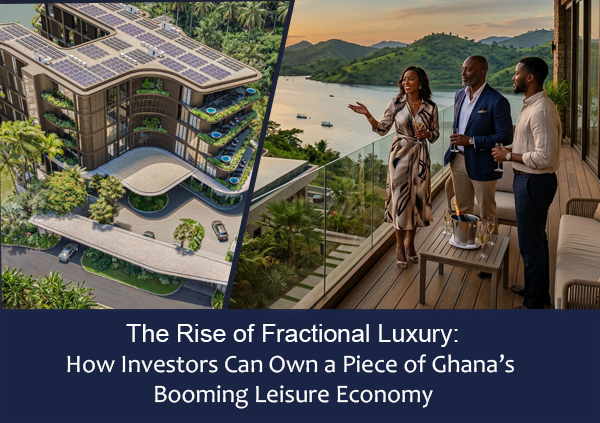
Ghana's real estate market is entering a new phase. For years, most property investment conversations have focused on land, apartments, gated communities, and rental homes in Accra. But a different kind of opportunity is beginning to emerge, one that sits at the intersection of luxury real estate, tourism, hospitality, and lifestyle investment.
It is called a fractional luxury resort investment.
Instead of buying an entire resort, villa, or hotel property, investors can participate in a professionally managed hospitality asset and potentially earn income from its commercial performance. The model gives investors access to Ghana's growing leisure economy without the full financial burden and operational stress of owning and managing a complete resort.
As tourism, diaspora visits, corporate retreats, destination weddings, weekend escapes, and premium leisure experiences continue to shape Ghana's hospitality market, fractional resort ownership is becoming an increasingly attractive topic of conversation among investors seeking more than traditional property ownership offers.
What Is Fractional Luxury Resort Investment?
Fractional resort investment allows multiple investors to participate in the economics of a high-value hospitality property. Instead of one person buying and managing the entire asset, investors buy into a structured model connected to a resort, hotel room, villa, or managed hospitality unit.
In simple terms, the investor may receive a right linked to a room, unit, share, leasehold interest, or income participation structure. The resort operator then manages the property professionally, handling bookings, guest experience, housekeeping, maintenance, marketing, pricing, and overall operations.
This is different from simply buying land or an apartment. It is also different from a standard short-let business where the owner personally handles guests, platforms, repairs, pricing, and management.
Fractional resort investment is designed to give investors access to hospitality income while leaving operations in the hands of a professional resort manager.
Why This Model Is Gaining Attention in Ghana
Ghana's leisure economy is growing because people are no longer travelling only for business or family visits. They are also travelling for experiences.
Today's premium guest wants more than a room. They want privacy, scenery, good food, water activities, wellness, photography-friendly spaces, professional service, and memorable leisure moments.
This is why places such as Akosombo, Ada, Aburi, Cape Coast, Prampram, Busua, and other leisure destinations are attracting more attention from investors and developers. These destinations offer something Accra cannot always provide: space, calmness, nature, water, scenery, and escape.
Akosombo is especially interesting because it is close enough to Accra for a weekend trip but far enough to feel like a proper getaway. Its lakefront setting, connection to the Volta River, Adomi Bridge, cruises, retreats, and resort culture give it strong hospitality potential.
For investors, this creates a clear opportunity. Instead of only investing in urban apartments competing for tenants, they can consider hospitality assets designed to serve tourists, diaspora visitors, corporate groups, couples, families, and premium leisure seekers.
Investment Spotlight: aQuaaba Resort Hotel
Ghana's leisure market is moving beyond ordinary weekend travel. aQuaaba Resort Hotel is positioning Akosombo as a premium riverfront destination for investors who want hospitality exposure without managing a resort themselves.
Set in one of Ghana's most established leisure corridors, aQuaaba is designed around luxury tourism demand, wellness, lifestyle experiences, managed rental programs, and exclusive personal use. For investors looking at Ghana's next wave of hospitality-backed real estate, aQuaaba offers a direct way to explore resort investment in Akosombo.
A New Way to Think About Real Estate Returns
Traditional real estate investment usually depends on rent, resale value, or capital appreciation. A fractional resort model introduces a different kind of return: income from hospitality activity.
That means the asset does not only sit and wait for long-term appreciation. It can actively generate revenue from guests who book rooms, attend events, join retreats, take holidays, or visit for luxury experiences.
In a well-structured model, investors may benefit from pooled room revenue after deducting operating costs. This means income is not necessarily tied only to whether one specific room was occupied. Instead, revenue from the property can be pooled and distributed proportionally according to the agreed-upon structure.
This approach can reduce the risk of one room outperforming another. It also encourages all investors to care about the performance of the entire resort, not only their individual unit.
The Lifestyle Advantage
One of the most attractive parts of fractional luxury investment is the lifestyle benefit.
Some models allow investors to enjoy limited personal use of the resort each year. This means an investor can potentially earn from the resort while also enjoying occasional stays.
For many investors, especially diaspora Ghanaians and high-income professionals, this combination is attractive. They are not only investing in a property; they are buying into a lifestyle.
They can visit Ghana, enjoy a premium resort experience, host family, relax outside Accra, and still participate in the asset's income potential.
However, personal use must be clearly defined. Investors should know how many nights they can use, whether peak periods are included, whether the exact unit is guaranteed, how bookings are made, and whether owner-use nights affect revenue distribution.
Professional Management Is the Heart of the Model
The success of fractional resort investment depends heavily on management.
A beautiful resort can fail as an investment if it is poorly managed. Hospitality requires consistent service, pricing discipline, guest satisfaction, maintenance, strong branding, and effective marketing.
This is why centralised professional management is important.
When one operator controls reservations, housekeeping, pricing, maintenance, staff, guest experience, and marketing, the resort can protect its brand and maintain consistent standards. It also prevents individual owners from weakening the property by listing rooms separately, discounting prices, or offering inconsistent guest experiences.
In luxury hospitality, brand control matters. Guests are not only paying for accommodation. They are paying for trust, service, comfort, and experience.
Why Investors Must Look Beyond the Marketing
The opportunity may be attractive, but investors must be careful. Fractional resort investment should not be treated as a simple emotional purchase.
The most important question is not, 'How beautiful is the resort?'
The most important question is, 'What exactly do I own?'
An investor must know whether they are buying a deeded property interest, a leasehold-backed unit, shares in a company, or a contractual right to income. Each structure has different implications for ownership, tax, control, inheritance, resale, and legal protection.
This is where many investors make mistakes. They focus on the resort images, income projections, location, and lifestyle benefits, but they do not fully understand the legal and financial structure behind the investment.
A serious investor must review the documents before committing capital.
Prime Accra Opportunity: Manora Residence
For investors who prefer city-based rental demand, Manora Residence offers a different but highly relevant angle. Located in Airport Residential, just minutes from Kotoka International Airport, Manora is designed for professionals, business travellers, tourists, families, and long-stay tenants seeking premium living in Accra.
With studios, apartments, and penthouse options, plus lifestyle amenities such as an infinity pool, gym, residence lounge, meeting room, restaurant, rooftop bar, cafe, co-working space, indoor play area, and games room, Manora speaks directly to the buy-to-rent investor. Through Q5 property management, owners can benefit from professional tenant handling, property upkeep, and occupancy support.
For investors looking beyond hospitality resorts but still interested in managed income property, Manora Residence presents a prime Airport Residential buy-to-rent opportunity.
The Legal Structure Matters
In Ghana, land and property rights must be properly documented. A hospitality investment becomes stronger when the ownership structure is clear, enforceable, and supported by proper title, lease, registration, or company documentation.
Investors should confirm whether the underlying land documents are clean, whether the project has the necessary approvals, whether the interest being sold is registrable, and whether the investor’s rights are clearly protected.
For foreign investors, this is even more important because Ghana places restrictions on land ownership by non-citizens. Foreign investors must pay close attention to lease terms, ownership structure, and whether the investment vehicle complies with Ghanaian law.
This does not mean foreigners cannot invest. It simply means they must invest through the right legal structure.
Understanding the Revenue Waterfall
Before buying into any fractional resort opportunity, investors must understand how revenue becomes profit.
This is called the revenue waterfall.
A proper revenue waterfall should explain what counts as gross room revenue, which costs are deducted, how management fees are calculated, how reserves are funded, when distributions are paid, and what reports investors will receive.
For example, a resort may generate strong gross revenue, but after staff costs, utilities, repairs, marketing, taxes, platform commissions, insurance, management fees, and reserves, the distributable amount may be much lower.
This does not mean the investment is bad. It simply means investors must understand the numbers clearly.
A credible structure should be transparent about income, expenses, reserves, and distribution timelines.
The Importance of Exit Rights
One of the most overlooked parts of fractional resort investment is exit.
Many investors ask about income but forget to ask how they can sell later.
Can the investor resell the interest? Does the operator have to approve the buyer? Is there a resale platform? Is there a buy-back option? Are there transfer fees? How is the investment valued on exit? Can the investor sell to another private buyer? What happens if the resort is sold as a whole?
These questions matter because fractional hospitality investments are usually less liquid than listed shares or standard apartments. Without clear exit terms, an investor may find it difficult to recover capital when needed.
The exit clause is not a small detail. It is one of the most important parts of the investment.
Luxury Living in Cantonments: The Autograph
For buyers seeking a luxury address in one of Accra's most prestigious neighbourhoods, The Autograph brings a compelling residential investment option to the conversation.
Located in Cantonments on Josif Broz Tito Street, The Autograph is designed for residents and investors who value exclusivity, access, design, and long-term rental appeal. Its offering includes studio, one to three-bedroom apartments and penthouses, with amenities such as an infinity pool, rooftop lounge, communal gardens, smart access control, basement parking with EV charging, gym and wellness spaces, restaurant, café, concierge services, and co-working areas.
For professionals, families, diplomats, short-stay tenants, and diaspora buyers, Cantonments remains one of Accra's most desirable locations. For investors seeking a luxury home with rental potential and property management support, The Autograph offers a refined entry into Cantonment's real estate.
Why Akosombo Is a Strong Leisure Investment Location
Akosombo has a unique advantage in Ghana's hospitality market.
It is close to Accra, yet it offers a completely different environment. The lake, hills, bridge, river, cruises, and calm scenery make it one of Ghana's most recognisable leisure destinations.
This gives Akosombo a strong appeal for weekend getaways, corporate retreats, destination weddings, diaspora holidays, honeymoons, private events, family vacations, wellness escapes, group travel, and premium short-stay tourism.
For a well-managed resort, this mix of demand can support multiple revenue channels beyond normal room bookings.
The strongest hospitality assets do not depend on one type of guest. They serve couples, families, businesses, event groups, tourists, and diaspora visitors across different seasons.
The Role of Diaspora Capital
Ghana's diaspora continues to play an important role in real estate, tourism, and lifestyle investment.
Many diaspora investors want a connection to Ghana but may not want the stress of building from scratch, managing tenants, or supervising construction remotely. A professionally managed resort model can appeal to this group by offering both emotional and financial value.
The investor can feel connected to a premium Ghanaian destination while participating in a structured hospitality asset.
This is especially powerful when the property is located in a place that already has tourism value and can attract both local and international guests.
What Can Go Wrong?
Like every investment, fractional resort ownership has risks.
The first risk is unclear ownership. If investors do not understand what they are buying, disputes may arise later.
The second risk is weak management. A resort depends on marketing, service, pricing, maintenance, and guest experience. Poor management can reduce occupancy, damage the brand, and weaken returns.
The third risk is title or documentation problems. If land documents, leases, approvals, or registrations are not properly handled, the investor's rights may be exposed.
The fourth risk is over-optimistic projections. Hospitality income can fluctuate. Weekends may be strong, while weekdays may require corporate bookings, retreats, and events to support occupancy.
The fifth risk is poor exit planning. If resale terms are unclear, investors may struggle to liquidate their position.
These risks do not mean investors should avoid the model. They mean investors must approach it professionally.
What Investors Should Ask Before Paying
Before investing in any fractional resort project in Ghana, an investor should ask for a complete document pack.
This should include the ownership structure, land documents, lease documents, site plan, purchase agreement, management agreement, revenue-sharing formula, reserve policy, owner-use rules, tax explanation, transfer terms, resale process, reporting rights, and dispute resolution terms.
Investors should also speak to an independent lawyer, tax adviser, and property professional before committing funds.
The goal is not to slow down the opportunity. The goal is to protect the investor.
A good investment should survive proper due diligence.
Why This Model Could Shape the Future of Ghanaian Real Estate
The future of real estate in Ghana will not only be about owning physical space. It will also be about owning access to income-generating experiences.
Hospitality, tourism, wellness, short-stay leisure, destination events, and diaspora travel are becoming stronger parts of the property economy. Developers who understand this shift will not only build rooms. They will build destinations.
Fractional luxury sits directly inside this future.
It allows investors to participate in high-value resort assets while allowing professional operators to focus on hospitality performance. If structured properly, it can create value for developers, investors, guests, and local tourism economies.
Final Thoughts
Fractional luxury resort investment is one of the most interesting real estate trends emerging in Ghana. It gives investors a way to participate in the country's growing leisure economy without buying or managing an entire resort.
The model can offer income potential, lifestyle benefits, exposure to tourism growth, and access to professionally managed hospitality assets. But it must be approached with discipline.
Investors should not buy only the dream, the images, or the marketing promise. They should buy the structure, the documents, the management quality, the legal protection, and the numbers behind the opportunity.
When those elements are strong, fractional luxury can become more than a lifestyle purchase. It can become a serious investment pathway into Ghana's booming leisure economy.
Latest Stories
-
Mahama urges African governments to treat healthcare as an investment, not budget cost
27 minutes -
Bawumia congratulates John Boadu and new NPP executives, pledges support ahead of 2028
28 minutes -
‘No talent should be left out’ – Bawumia pledges inclusive NPP campaign for 2028
34 minutes -
Prof. Mike Oquaye recounts how he blocked Special Prosecutor’s attempt to arrest Bawku Central MP
50 minutes -
Make health sovereignty a priority for Africa – Mahama
1 hour -
Dorimon Naa, Wa West DCE lead massive clean-up exercise; threaten sanctions against recalcitrant residents
1 hour -
Photos From Adom FM Y2K Jam
1 hour -
Praye Tiatia steals the show at Adom FM Y2K Jam [Watch]
2 hours -
Boakye Agyarko congratulates John Boadu, pledges support for NPP leadership
2 hours -
Antwi HiMight thrills fans with Antwi ne Antwi hits at Adom FM’s Y2K Jam [Video]
2 hours -
Amb. Edward Boateng congratulates Boadu, Kodua on election wins
2 hours -
John Boadu pledges to rebuild NPP from grassroots and restore ‘winning machinery’
2 hours -
Ashaiman Assembly deploys monitoring system to curb dumping in storm drain
3 hours -
John Boadu must rebuild, unite NPP for 2028 – Edward Boateng
3 hours -
Executive intimidation of opposition undermines separation of powers – Prof Oquaye
3 hours