

Audio By Carbonatix
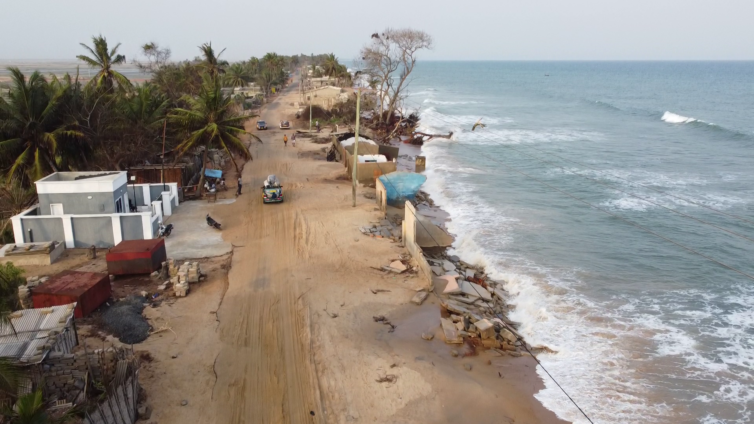
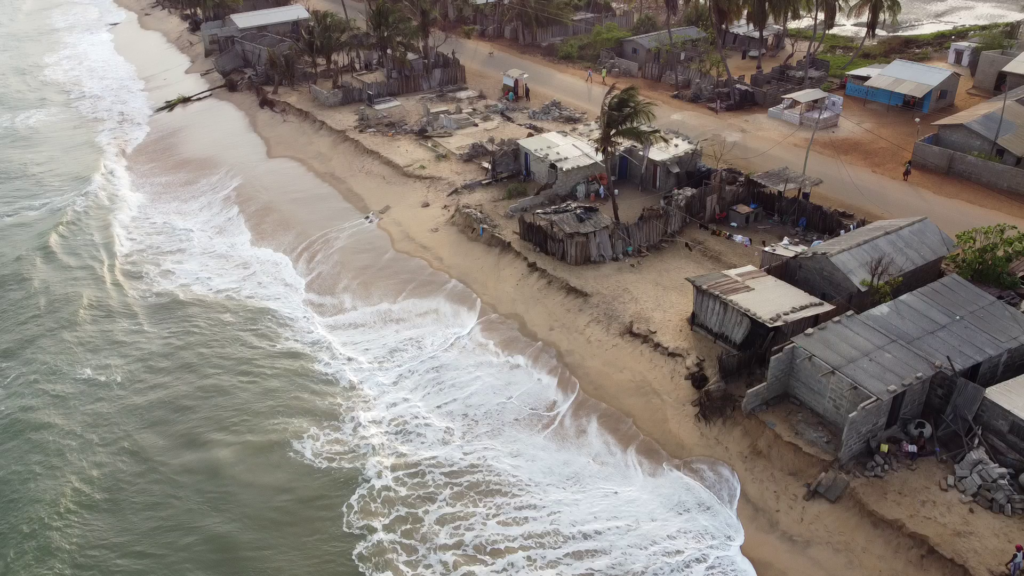
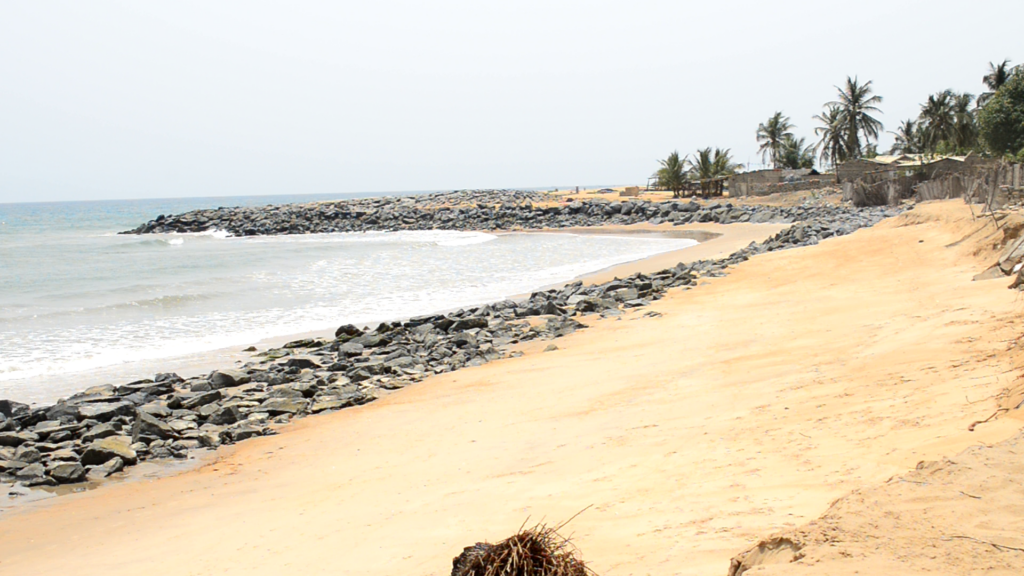
Residents of Agavedzi have time immemorial endured the ravaging effects of coastal erosion caused by high waves. The majority of the community has all gone beneath the sea due to continuous erosion.
This year’s incident is said to be one of the most horrific ones as it has caused great devastation within the last month, sandwiching the community between the sea and the Lagoon.
I observed a worrying situation in Agavedzi, one that leaves both psychological and physical traumas.
Residents affected by the erosion
Evelyn Setu, one of the victims, sits in her almost-sinking compound staring at the sea.
One would imagine she was communicating with the sea to tone down and cease the destruction.
6 units of rooms in her household constructed by her children working in Nigeria have been washed away by the sea.
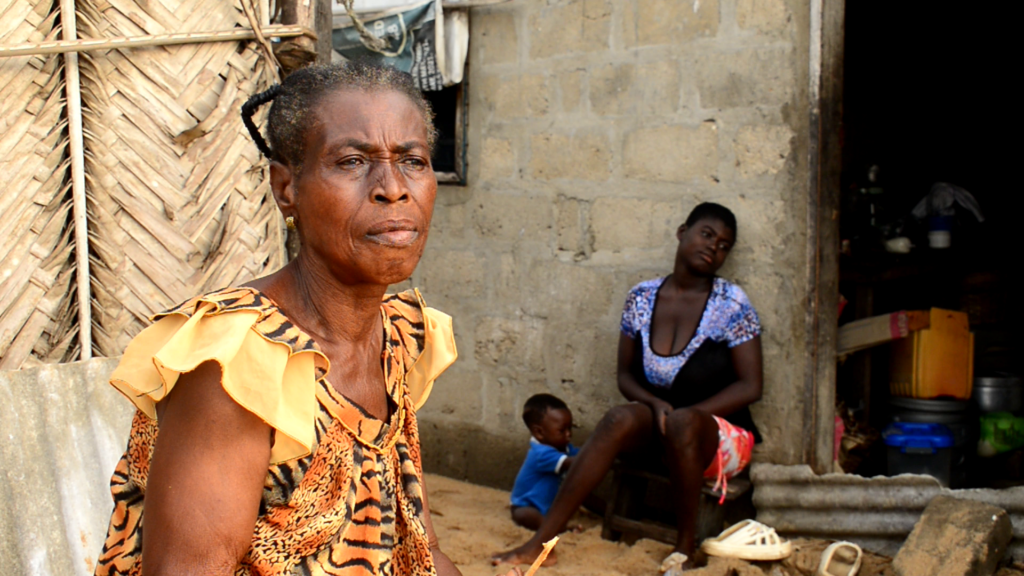
“The sea has been disturbing us since they constructed the defense wall on the other side. 6 units of rooms are lying beneath the sea. I am occupying this one which my children wanted to use to set up a health center. It is under threat, the sea keeps hitting it at night”, she lamented.
Makafui Atayi is also suffering from a similar predicament.
She lost 10 units of rooms of the household and other properties her parents left behind to coastal erosions. She is one of the hardest-hit residents in the Agavedzi community.
“The building you came to see on Thursday has been swept away by the sea. This is how the sea is disturbing us. The waves are more intense in the night. We can't sleep because the sea keeps hitting the walls and it makes a loud noise”, she narrated.
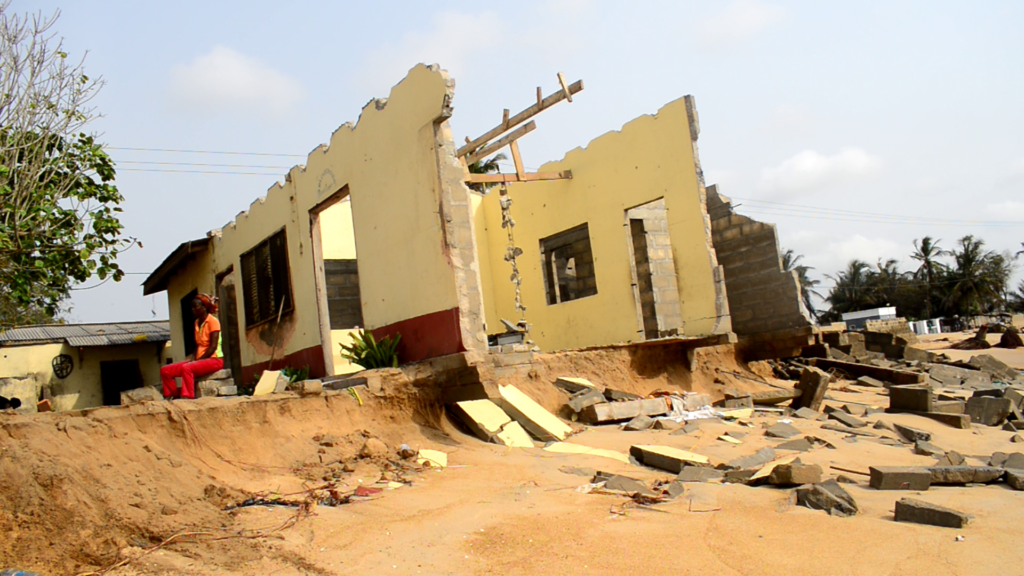
Makafui has been wondering where to pack out when the sea takes the last room of the household.
As the waves get high, she is left with no option but to deroof two units of the room prone to collapse before sunrise.
Victims erecting makeshift structures
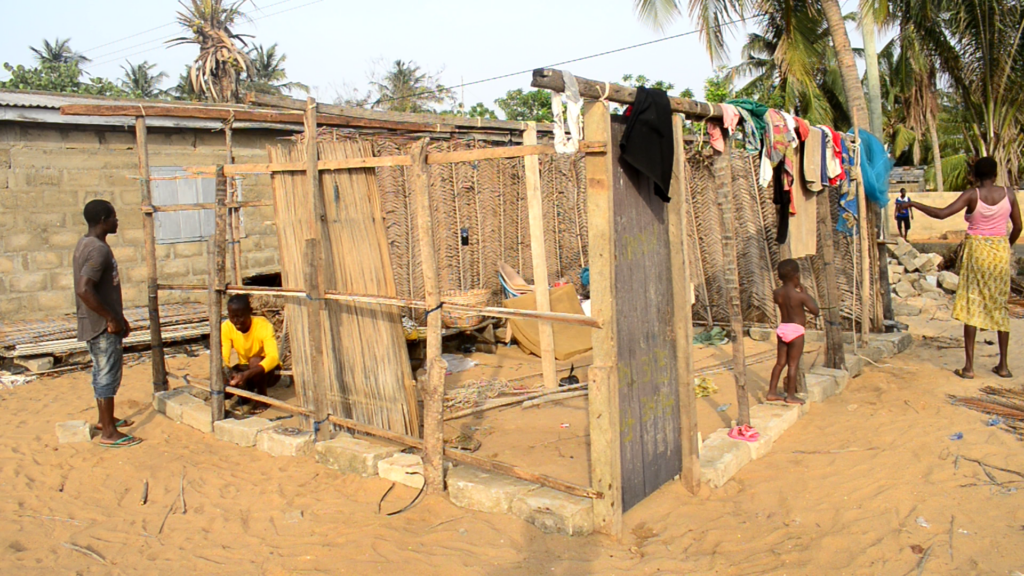
Some victims who have completely lost their homes are preparing makeshift structures with the remnants of their buildings.
They relied on wood, sponge, ropes, coconut, and palm fronds to erect structures at locations they identified to be safer.
However, the sea keeps coming at the vicinities of the structures put up across the roads. This is mostly experienced in the evening and at dawn.
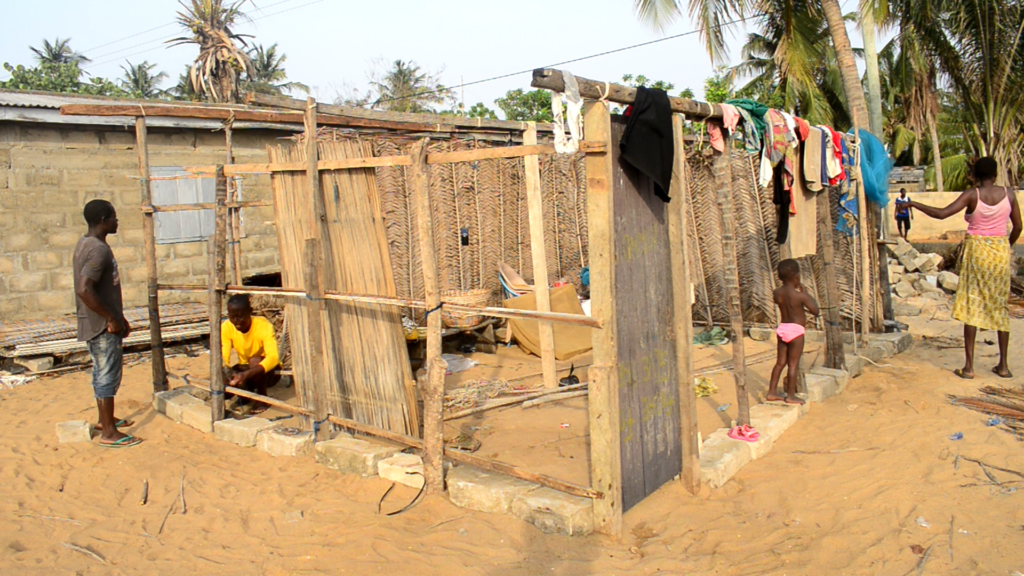
Others were compelled to sleep in the open because their homes had been destroyed by the sea.
Others who have no option are sleeping in the open, exposed to mosquitoes among other unfavorable conditions.
Data on Victims
Checks at the center for coordinating the disaster have so far collated data on about 300 residents who have been affected by the erosion, in one or the other, as of 3rd March, 2025.
About 51 households have also been broken down and washed away in the community.
The assembly member for the Agavedzi Electoral Area, Eben Assah said measures have been taken to secure a section of the community basic school and the community center to accommodate the victims.
“We were able to convince the Headmaster of the school and then the staff so they released the KG block for us and the community is also having an uncompleted community center. So these are what we are hoping for so that in case of emergency, quickly, then we rush these people to these centers that I have mentioned”, he said.
Denu-Keta highway under threat
The Denu-Keta highway is gradually becoming the shoreline, as the sea keeps clearing walls in its way. The sea breaks through the community at this section every evening and dawn.
It swept sand onto the highway. The sand has taken over a lane of the stretch in the affected area, compelling drivers to rely on just one lane.
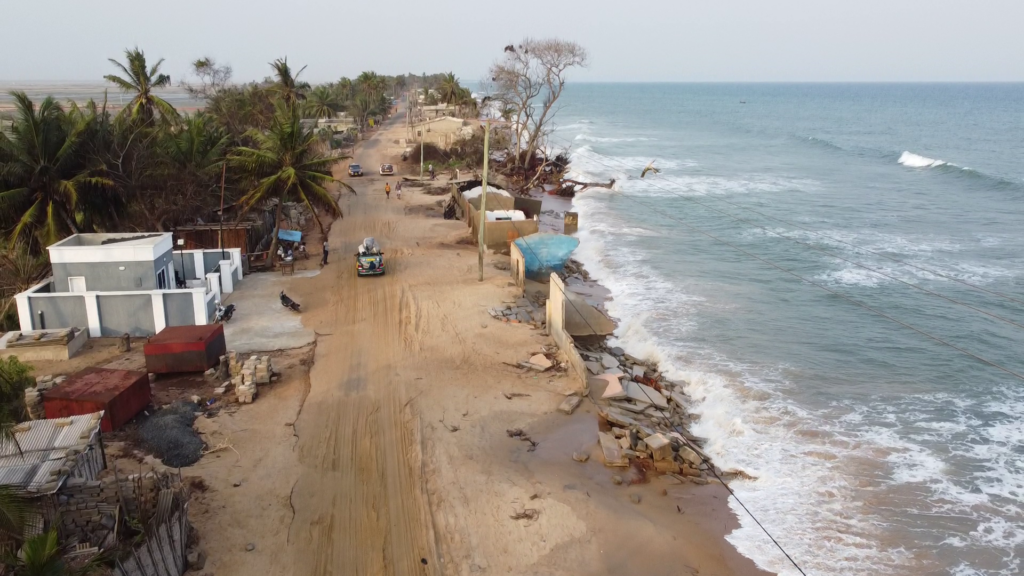
If the waves continue to get high, the sea may break through the community and join the lagoon on the other side, and cause further destruction.
Residents fear a delay in relocating high-tension poles by the Electricity Company of Ghana could result in a catastrophe. These poles are very close to the new shoreline of the sea.
Public health threat
The disaster has also become a threat to public health as cemeteries were affected.
Some residents were compelled to exhume the mortal remains of their loved ones without any protective apparel, or abiding by safety protocols.
One of the residents who was digging up a grave at the cemetery, Etse Akporogua said that they cannot allow the sea to wash away the remains of their loved ones, hence their decision to relocate them to a safer place.
He acknowledged the risk accompanied by the exercise they were undertaking but explained they had no choice but “to do the needful”.
Toilets and cesspits in the area have been broken partly by the coastal erosion, risking an outbreak of communicable diseases.
Call to action
However, life is bubbly on the other side of Agavedzi. Fishing and other economic activities were ongoing un-abated.
It used to suffer a similar fate until the sea defense walls were constructed in 2016.
The project is expected to continue under the West African Coastal Areas (WACA) project financed with a $150 million loan facility from the World Bank.
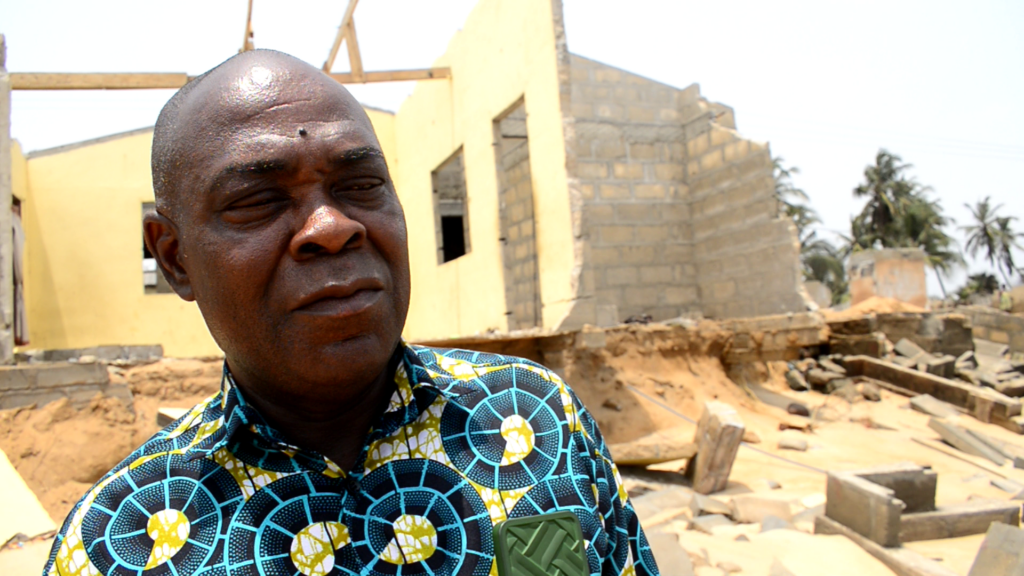
The Volta Regional Chairman of the steering committee of the West African Coastal Areas Project, Edward Kwadzo Eddah said they had completed surveys at Benin and Togo, which are also beneficiaries of the project and submitted their reports.
He appealed to the stakeholders to expedite action on the project to safeguard the lives and properties of people living in the affected areas.
“The information we have is that the World Bank money is already at the Bank of Ghana. So, the proposed procedures that the Ministry of Environment, Science and Technology will have to do, we are appealing that the processes should be faster“, he said.
Residents in Salakope and Amutinu are also experiencing the devastation by the high waves.
The Some Traditional Council was struck by the disaster, which had displaced about 600 residents in the area.
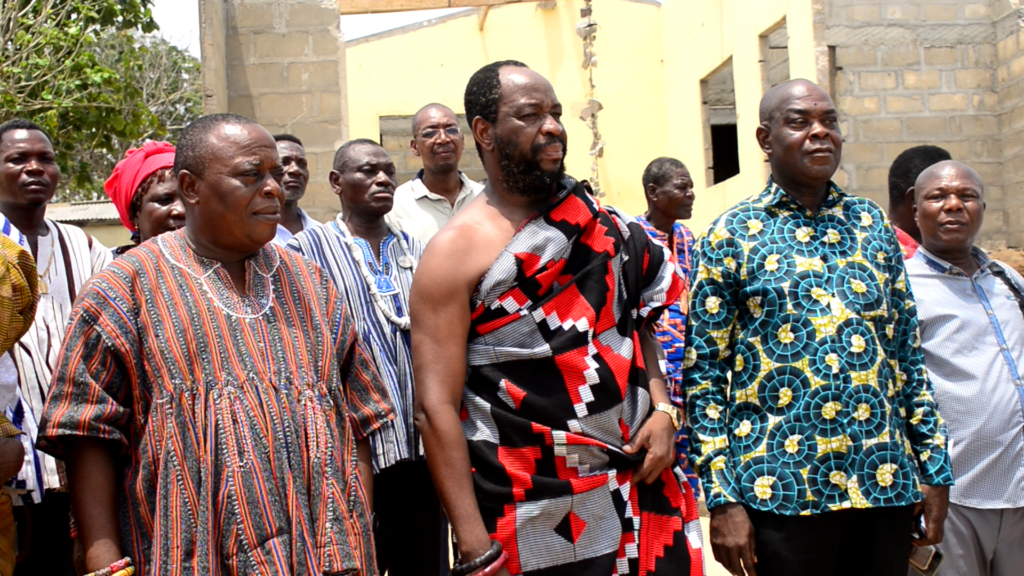
The Paramount Chief of Some, Togbe Adammah III, entreated the government to attach some urgency to responding to the disaster and implement all the necessary measures, including resuming the construction of the sea defense wall Project and the 15-unit housing project being undertaken by the Ghana Gas Company.
“The government should see the current tidal waves onslaught on our communities as an emergency and call on the contractor who started the Sea Defense Project from Blekusu to parts of Agavedzi to return or resume work immediately to save the rest of the communities”, he said.
The disaster has affected all aspects of social life and risks the existence of Agavedzi.
Residents fear the entire community will be wiped out before June if immediate actions are not taken to stop the devastation.
Latest Stories
-
Government’s dismissal of my cocaine intelligence emboldens traffickers – Ntim Fordjour
11 minutes -
Video: Immunity should be exercised without creating classism – Inusah Fuseini on cocaine bust
25 minutes -
Ghana Air Force passes out 293 recruits after six months of intensive training
33 minutes -
EOCO vrs Baffour Awuah: EOCO should have secured warrant before arrest attempt at court – Inusah Fuseini
37 minutes -
Triple fibre cuts disrupt telecom services across Northern, Oti regions – Sam George
40 minutes -
Politicisation could undermine parliamentary probe into cocaine seizures – Dr Osae-Kwapong
47 minutes -
EOCO chases MP: Can Section 41 cure lacuna in EOCO Act? – Inusah Fuseini asks
50 minutes -
GNFS, GWL inspect fire hydrants in Ministries enclave; 23 found faulty
55 minutes -
Gov’t directs release of 50,000 bags of grain to ECOWAS
57 minutes -
Ghana, Germany deepen cooperation on railways, labour mobility
1 hour -
Huge crowds greet Pope in Paris for open-air Mass
1 hour -
‘I never said I’ll declare a state of emergency’ – President Mahama on galamsey
2 hours -
Bobby Banson condemns EOCO’s attempted arrest of Nana Agyei Baffour Awuah
2 hours -
When Kumasi begins to look like somebody is in charge
2 hours -
Parliamentary probe into cocaine seizure would be a waste of time – Inusah Fuseini
2 hours