


Audio By Carbonatix
One of the reliable constants in Dubai is the pace of change.
Half a century of transformation from humble backwater to global city has seen new islands dredged from the ocean, new towers drive the skyline higher, and a new population of international visitors arrive.
But one distant corner of the Emirate is prized for its quiet continuity.
The Hatta Mountain Conservation Reserve is found in the Hajar Mountains that stretch from the east coast of Oman into the northern UAE.
The Reserve falls within a tiny exclave of Dubai that is surrounded by the neighboring emirates of Ras al-Khaimah and Ajman, and Oman to the South.
The arid landscape and temperatures that touch 55 degrees Celsius might seem inhospitable. But Hatta is swiftly becoming one of Dubai's most popular attractions and worst-kept secrets.
The reserve is subject to a program to develop its assets for tourism, with visitors drawn to the "glamping" experiences, the hiking trails - and the surprisingly rich wildlife.
"We have approximately 4,000 arthropods (in the UAE) -- bees, wasps, spiders, and other organisms," says Brigitte Howarth, an ecologist at Zayed University who has long studied the region. "We would probably find 30-40 per cent in the Hajar Mountains."
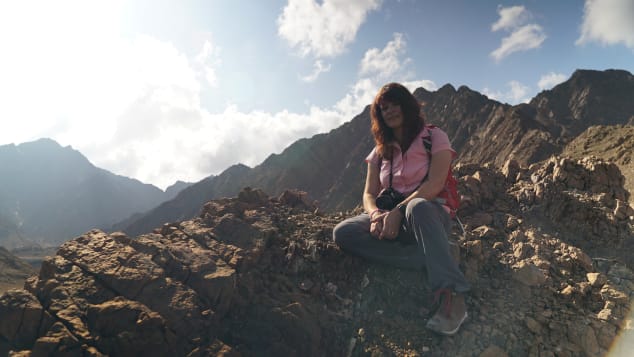 Ecologist Brigitte Howarth studies wildlife in the Hatta reserve. Edward Scott-Clarke
Dozens of species entirely new to science have been discovered in the region since a series of studies were commissioned in 2008, the ecologist adds.
There are larger species here too, including mammals.
"The Arabian spiny mouse does very well in some of the elevations," says Howarth. "Also Wagner's gerbil...(and) we sometimes find certain owls."
The Arabian Tar -- a species of wild goat -- is well adapted to the steep slopes and "very prominent" in the mountains, she adds.
Hardy plants can also make a home here. "We know of a small lily that occurs right on the top of the mountains," says Howarth.
One native plant comes with its own history lesson, the Ziziphus spina-christi, or Christ's thorn tree, is believed by some to have supplied the thorns that formed Jesus Christ's crown of thorns.
Ecologist Brigitte Howarth studies wildlife in the Hatta reserve. Edward Scott-Clarke
Dozens of species entirely new to science have been discovered in the region since a series of studies were commissioned in 2008, the ecologist adds.
There are larger species here too, including mammals.
"The Arabian spiny mouse does very well in some of the elevations," says Howarth. "Also Wagner's gerbil...(and) we sometimes find certain owls."
The Arabian Tar -- a species of wild goat -- is well adapted to the steep slopes and "very prominent" in the mountains, she adds.
Hardy plants can also make a home here. "We know of a small lily that occurs right on the top of the mountains," says Howarth.
One native plant comes with its own history lesson, the Ziziphus spina-christi, or Christ's thorn tree, is believed by some to have supplied the thorns that formed Jesus Christ's crown of thorns.
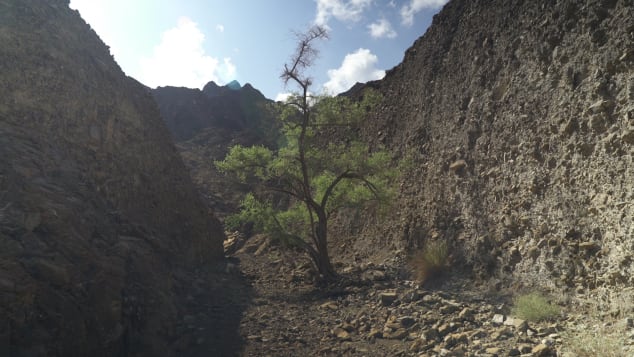 The Ziziphus spina-christi, or Christ's thorn tree. Edward Scott-Clarke
New discoveries have fueled greater interest in the region. Howarth says she collaborates with leading institutions such as the Natural History Museum in London with research on Hajar mountain species.
But the growing popularity of Hatta brings challenges as well as benefits, and the ecologist sounds a note of warning.
"Eco tourism, if it's done well, is extremely valuable," she says. "There should always be learning opportunities for people to appreciate and understand the biodiversity of areas such as the Hajar Mountains."
"Unfortunately, some eco tourism does not necessarily take into consideration that we shouldn't impact on the biodiversity...at times it is still impacting negatively."
The Ziziphus spina-christi, or Christ's thorn tree. Edward Scott-Clarke
New discoveries have fueled greater interest in the region. Howarth says she collaborates with leading institutions such as the Natural History Museum in London with research on Hajar mountain species.
But the growing popularity of Hatta brings challenges as well as benefits, and the ecologist sounds a note of warning.
"Eco tourism, if it's done well, is extremely valuable," she says. "There should always be learning opportunities for people to appreciate and understand the biodiversity of areas such as the Hajar Mountains."
"Unfortunately, some eco tourism does not necessarily take into consideration that we shouldn't impact on the biodiversity...at times it is still impacting negatively."
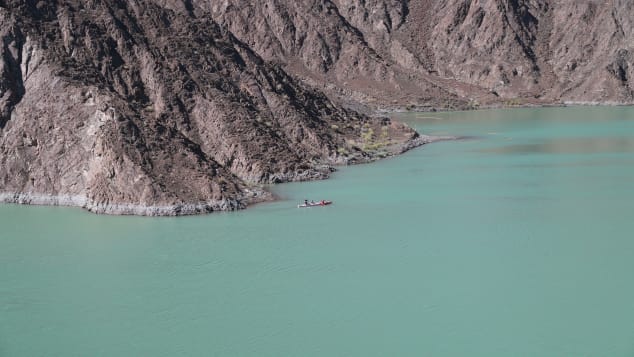 Visitors row a kayak in Hatta reservoir, one of the reserve's few bodies of water. Edward Scott-Clarke
Ecologist Brigitte Howarth studies wildlife in the Hatta reserve. Edward Scott-Clarke
Dozens of species entirely new to science have been discovered in the region since a series of studies were commissioned in 2008, the ecologist adds.
There are larger species here too, including mammals.
"The Arabian spiny mouse does very well in some of the elevations," says Howarth. "Also Wagner's gerbil...(and) we sometimes find certain owls."
The Arabian Tar -- a species of wild goat -- is well adapted to the steep slopes and "very prominent" in the mountains, she adds.
Hardy plants can also make a home here. "We know of a small lily that occurs right on the top of the mountains," says Howarth.
One native plant comes with its own history lesson, the Ziziphus spina-christi, or Christ's thorn tree, is believed by some to have supplied the thorns that formed Jesus Christ's crown of thorns.
The Ziziphus spina-christi, or Christ's thorn tree. Edward Scott-Clarke
New discoveries have fueled greater interest in the region. Howarth says she collaborates with leading institutions such as the Natural History Museum in London with research on Hajar mountain species.
But the growing popularity of Hatta brings challenges as well as benefits, and the ecologist sounds a note of warning.
"Eco tourism, if it's done well, is extremely valuable," she says. "There should always be learning opportunities for people to appreciate and understand the biodiversity of areas such as the Hajar Mountains."
"Unfortunately, some eco tourism does not necessarily take into consideration that we shouldn't impact on the biodiversity...at times it is still impacting negatively."
Visitors row a kayak in Hatta reservoir, one of the reserve's few bodies of water. Edward Scott-ClarkeDISCLAIMER: The Views, Comments, Opinions, Contributions and Statements made by Readers and Contributors on this platform do not necessarily represent the views or policy of Multimedia Group Limited.
Tags:
DISCLAIMER: The Views, Comments, Opinions, Contributions and Statements made by Readers and Contributors on this platform do not necessarily represent the views or policy of Multimedia Group Limited.
Latest Stories
-
A source of excellence across generations – Vice President Opoku-Agyemang lauds Mfantsipim
17 minutes -
(Photos) Mfantsipim School launches historic 150th anniversary
40 minutes -
Knights and Ladies of Marshall group backs Catholic Bishops’ stance on anti-LGBTQ+
2 hours -
Bright Simons writes: All the Filla in the Ibrahim Mahama/E&P – Gold Fields Saga
2 hours -
Monetise Idiocy In Ghana
2 hours -
The Ghanaian prophet and the mysterious death of his scottish wife Charmain Speirs
3 hours -
Nearly 400 sentenced in Nigeria for links to militant Islamists
3 hours -
Ghana’s recovery supported by gold strength despite global oil price pressures – Standard Bank Research
3 hours -
Methodist Church hails Mfantsipim@150; calls for “fresh consecration” to excellence
4 hours -
‘Excellence is our inheritance’ – Nana Sam Brew-Butler hails Mfantsipim’s 150-year reign in leadership
4 hours -
Kwaku Azar writes: A-G vs OSP
4 hours -
Mfantsipim–Adisadel rivalry built excellence, not division – Sam Jonah
4 hours -
Vice President launches Mfantsipim’s 150 years of shaping Ghana’s greatest mind
5 hours -
I assure Otumfuo, Mahama will join him to commission KNUST Teaching Hospital by end of this year – Haruna Iddrisu
5 hours -
Barcelona dominate derby to extend La Liga lead
5 hours