

Audio By Carbonatix
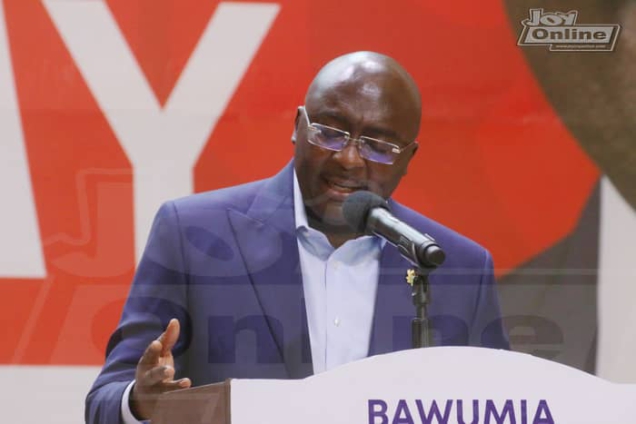
The average exchange rate depreciation of 6.8% during the 2017-2021 is more than twice as stable than during the 2013-2016 period where the average depreciation rate was 18%, Vice President, Dr. Mahamudu Bawumia has mentioned.
“In fact, in the history of the Fourth Republic, the worst performances for exchange rate depreciation happened during 1993-2000 and 2009-2016.”
Speaking on the “State of the Economy”, the Vice President said data shows a clear dichotomy for the depreciation of the cedi between 2013-2016 and 2017-2021, adding, the cedi depreciation reached a high of 32.5% in 2014 and declined to 9.7% by 2016.
The rate of depreciation further declined to 4.7% in 2017 before increasing to 12.9% in 2019 and declining again to 3.9% in 2020 and registering 4.1% in 2021.
Dr. Bawumia attributed the sharp depreciation of the cedi in the first quarter of 2022 to a number of factors.
This included investor perception that the projected 40% increase in revenue underpinning the budget would likely not materialize and therefore the fiscal deficit will be higher than projected; the chaotic battle in parliament over the 2022 Budget which created uncertainty and signaled to the markets that the government may not be able to get most of its programmes passed in a tightly balanced parliament and delays in implementing major tax reforms such as the benchmark policy reversal, tax exemptions bill, common platform for property tax.
To add this to this negative market sentiment, the Vice President said there was a sovereign credit ratings downgrade by Fitch and Moodys as a result of concerns about fiscal and debt sustainability. This resulted in an unwillingness of foreign investors to rollover holdings of domestic debt. They demanded foreign exchange to repatriate their investments.
Other factors such as increases in interest rates by Central Banks in the US and other advanced economies also made cedi assets less attractive and led to disinvestment of cedi holdings.
In addressing the depreciation of the cedi, Dr. Bawumia said there will be appropriate fiscal adjustment to address the structural rigidities and also ensure that the fiscal targets for 2022 and beyond are met.
“Basically we needed to cut expenditure and increase revenues of the magnitudes that would allow us to be on the path of fiscal and debt sustainability”, he added.
He added “our assessment is that it is not a financing problem. So more borrowing will not solve the problem unless it provides fiscal space to undertake critical reforms on the expenditure and revenue sides of the budget as well as increasing economic growth.”
Government, he emphasised has taken the decision and announced some revenue and expenditure measures in this regard.
These were announced by the Finance Minister, Ken Ofori-Atta.
Coupled with the monetary policy measures by the Bank of Ghana, the cedi appears to have remained relatively stable for now on the foreign exchange market.
Latest Stories
-
Julius Debrah, ‘man to beat’ as NDC’s James Agbey dismisses Musah Dankwah’s polls
1 minute -
GPRTU in Savannah Region to protest alleged eviction in Damongo
30 minutes -
Re: Reinsurance does not replace process — A response to the SIGA–SIC defence
45 minutes -
Gender Ministry supports Harriet Amuzu in ongoing abuse case
58 minutes -
AG joins plaintiff to scrap OSP ?: We should be mindful of the mischief in this – Bobby Banson
1 hour -
Samson Lardy Anyenini questions willingness of Attorneys-General to prosecute political colleagues
1 hour -
It is only fair the OSP is heard in Supreme Court case – Bobby Banson
1 hour -
Asiedu Nketia resumes Ashanti tour, second leg kicks off on Sunday
1 hour -
NLA denies salary cut claims, threatens legal action over reports
1 hour -
BoG Governor honoured for stabilising cedi, improve inflation
1 hour -
Kyebi Easter Homecoming 2026: A resounding success!
2 hours -
RNAQ divorce ruling: What the noise is hiding
2 hours -
Trade Minister applauds GUTA as a pillar of economic growth; Prez Mahama honoured
2 hours -
President’s brother’s takeover of Damang Mines is ‘untidy’ – Alhassan Tampuli
3 hours -
It’s not true that gov’t decided not to renew the lease for Gold Fields – Bobby Banson
3 hours