

Audio By Carbonatix
Japanese motor industry giants Toyota and Honda say they have agreed to give their workers in the country the biggest pay rises in decades.
They are the latest firms in the world's third-largest economy to increase wages as prices jump.
Official figures published last month showed Japan's rate of inflation was at its highest level in over 40 years.
That has put pressure on businesses and authorities to help people as their spending power shrinks.
Each year Japanese firms typically hold pay talks with unions for weeks before announcing their decisions around the middle of March.
The car makers have not said why this year's announcements were made earlier than usual.
On Wednesday, Toyota said it will meet union demands for pay and bonuses, with wages increasing by the most in 20 years.
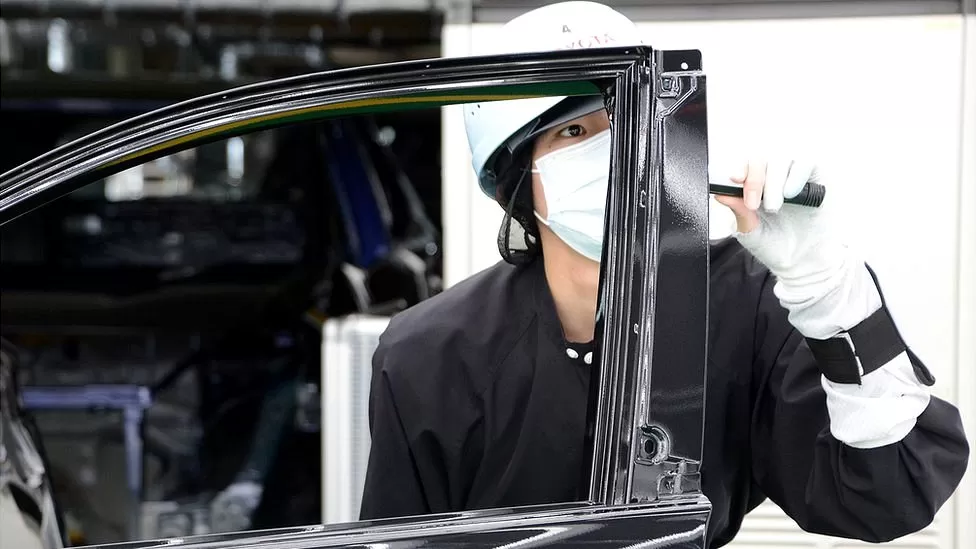
Toyota's incoming president Koji Sato said that he hoped the move would have a positive impact across Japan's motor industry and "lead to frank discussions between labour and management at each company."
The company declined to provide further details when approached by the BBC.
Meanwhile, rival car maker Honda told the BBC that it had "fully answered" union requests for wage increases and bonuses.
The company said it will raise salaries by 5%, marking the biggest increase since 1990 and above Japan's rate of inflation.
A Honda spokesperson said the extra money will largely be distributed to younger employees as starting salaries are boosted.
"Despite the severe business environment, management has a strong desire to create an environment in which all employees can... push forward with their work with a sense of urgency," the spokesperson added.
Earlier this year, Japan's prime minister Fumio Kishida called on firms to raise wages to help people struggling with rising prices.
In January, the owner of fashion chain Uniqlo, Fast Retailing, said it would raise the pay of staff in its home country by up to 40%.
The company said the new pay policy would apply to full-time employees at its headquarters and company stores in Japan from the beginning of March.
For decades both prices and wage growth in Japan had been stagnant.
In recent months inflation around the world jumped as countries eased pandemic restrictions and the war in Ukraine pushed up energy prices.
In December, Japan's core consumer prices rose by 4% from a year earlier, double the central bank's target level and the highest rate in 41 years.
Latest Stories
-
Power restoration fault suspected in Kumasi Central Market fire
1 hour -
The 7-foot giant of Ngleshie Amanfro: Seven-foot Ghanaian Ephraim Saawa dreams of joining the national basketball team
2 hours -
Government promises support for Kumasi Central Market fire victims
2 hours -
Vibes The Movie: Big Ghun’s Ghanaian film earns five nominations at 2026 REFFA
3 hours -
MamaCare CEO warns unresolved conflicts among health workers could undermine maternal and neonatal care
3 hours -
Health professionals urged to translate medical knowledge into practice to save mothers
3 hours -
Conflicts among care providers linked to maternal, neonatal deaths – Expert
5 hours -
GIS marks 10th TIME conference, champions improved teaching practices
5 hours -
BRICS Or Balance? What Ghana’s bid really means
5 hours -
GPRTU wants full TRAFFITECH-GH implementation to start in 2027
5 hours -
Mahama announces plans to import electric wheelchairs for PWDs
6 hours -
KGL U17 Colts 2026: Western beat Prempeh Elite Academy to set up final final with Greater Accra Region
6 hours -
Late Solanke strike salvages 10-man Spurs draw at Man United
6 hours -
Gender Ministry to monitor welfare of Nana Akua Addo’s children amid domestic violence case
6 hours -
Benedict Okyere Yeboah: Ghana’s football problem goes beyond sacking a coach
6 hours