

Audio By Carbonatix
The US Chamber of Commerce has filed a lawsuit against the Trump administration's new $100,000 (£74,000) fee on H-1B visas for skilled foreign workers.
The fee "will make it cost-prohibitive" for US employers to use the programme, said Neil Bradley, Chief Policy Officer at the pro-business group.
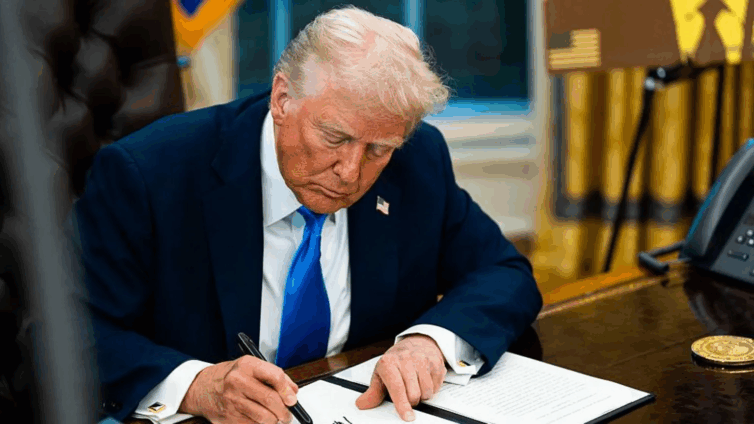
Trump signed an executive order last month instituting the fee, arguing the visa programme has been abused. Critics have said it undercuts the American workforce. It is used heavily by the US tech sector, both by major companies and small startups.
The White House responded to the suit by calling the fee lawful and a "necessary, initial, incremental step towards necessary reforms" to the programme.
Mr Trump's order only applies to new visa requests in the programme and vows to restrict entry unless a payment was made.
The move drew the ire of tech executives, including billionaire Elon Musk, who have argued that the H-1B programme enables the US to attract top talent from around the world.
Mr Musk, Microsoft's Satya Nadella, and Sundar Pichai, the CEO of Google-parent Alphabet, are among the executives who began their careers in the US on H-1B visas.
Mr Trump also set up a new "gold card" to fast-track visas for certain immigrants in exchange for fees starting at £1m.
The Chamber of Commerce argued in its complaint Tuesday that if implemented, "the fee would inflict significant harm on American businesses," forcing them to either dramatically increase their labour costs or hire fewer highly skilled employees."
But in a press release, the Chamber, which represents more than 3 million businesses, also praised Mr Trump for an agenda of "securing permanent pro-growth tax reforms, unleashing American energy, and unravelling the overregulation that has stifled growth."
US Commerce Secretary Howard Lutnick argued in support of Trump's order and said "all of the big companies" were on board with the fee.
"The company needs to decide... is the person valuable enough to have a $100,000-a-year payment to the government, or they should head home, and they should go hire an American," Lutnick has said.
Many H1-B visas holders come to the United States from India and China.
Tech companies argue that workers brought into the US cannot readily be replaced by American workers.
But White House spokesperson Taylor Rogers said the administration's action on H-1B visas discourages companies from "driving down American wages."
Latest Stories
-
Association of Small-Scale Industries empowers trade executives in Bono East with a mentorship programme
4 minutes -
AMA evacuates refuse along Graphic Road, warns against indiscriminate dumping
9 minutes -
STC interdicts driver over Pokuase overtaking incident
13 minutes -
Ekumfi: How $6m EXIM participation built a $53m industrial asset — now poised for a 24-Hour Economy breakthrough
14 minutes -
4 arrested, 142 parcels of suspected Indian hemp seized as officers reject GH¢50k bribe
14 minutes -
No MMDCE can say they don’t see galamsey – Local Government Ministry
16 minutes -
Ghana, Germany explore stronger partnership in technical and vocational education
22 minutes -
AMA urges motorists and road users to comply with traffic regulations
23 minutes -
Sam George urges One Million Coders participants to complete all three levels
23 minutes -
Communications Minister announces 2,800-site telecom expansion during Volta visit
25 minutes -
Impunity fuelling sexual abuse in Ghana – Angela Dwamena-Aboagye
26 minutes -
NUGS condemns alleged sexual abuse by Obuasi SHTS headmaster, calls for prosecution
29 minutes -
President Mahama urges investors to employ trained local residents as 1,238-acre industrial park takes off
33 minutes -
Media doing its job, but politicians fuelling insults on social media – NMAG president
35 minutes -
Child protection must be the state’s responsibility, not NGOs’ burden – ARK Foundation Boss
41 minutes